Betsy Johnson’s UNIFORM Turns Its Gaze on the Spectator
Fashion — 19.09.26
Words: Seth Sherwood
Fashion is built around looking: at clothes, at bodies, at one another. But what happens when the gaze is turned back on its audience? For her latest UNIFORM presentation, Betsy Johnson complicated the relationship between spectator and subject, using the runway less as a straightforward display of clothing than as a study of observation and control.
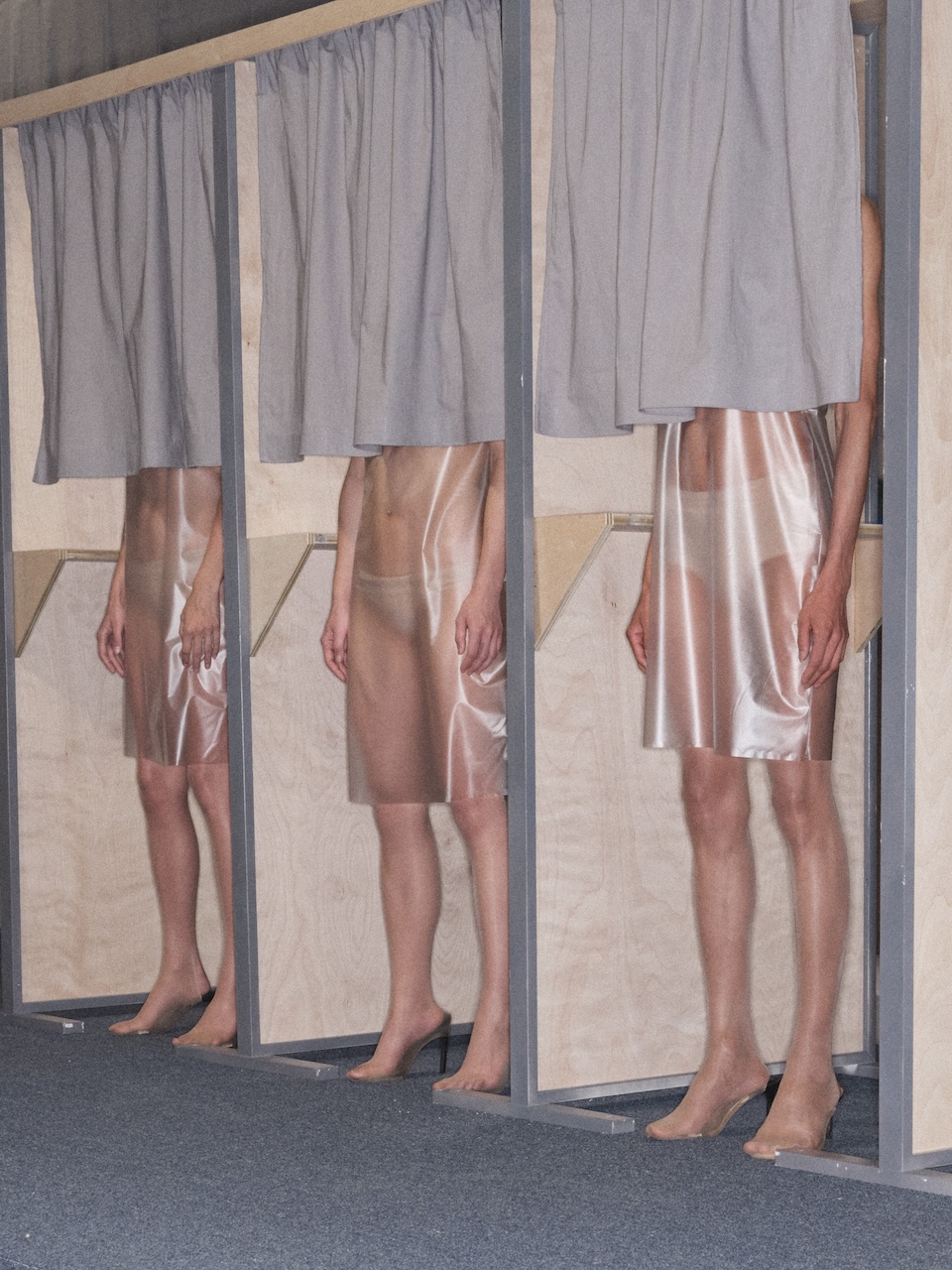
Photography by Krischan Singh. Courtesy of UNIFORM.
Following her Paris Fashion Week show earlier this year, staged as part of Lyas’ LA Watch Party at Théâtre du Châtelet, Johnson brought UNIFORM to New York Fashion Week with another performance-driven presentation. Installed at Stage at 401 Broadway, the designer transformed the space into a UK polling station: cold, minimal, and deliberately disordered. Despite its references from across the pond, the setting carried an immediate familiarity. The rituals of civic participation became a backdrop for something more ambiguous, blurring the boundaries between public and private, individual and collective, watcher and watched.
-
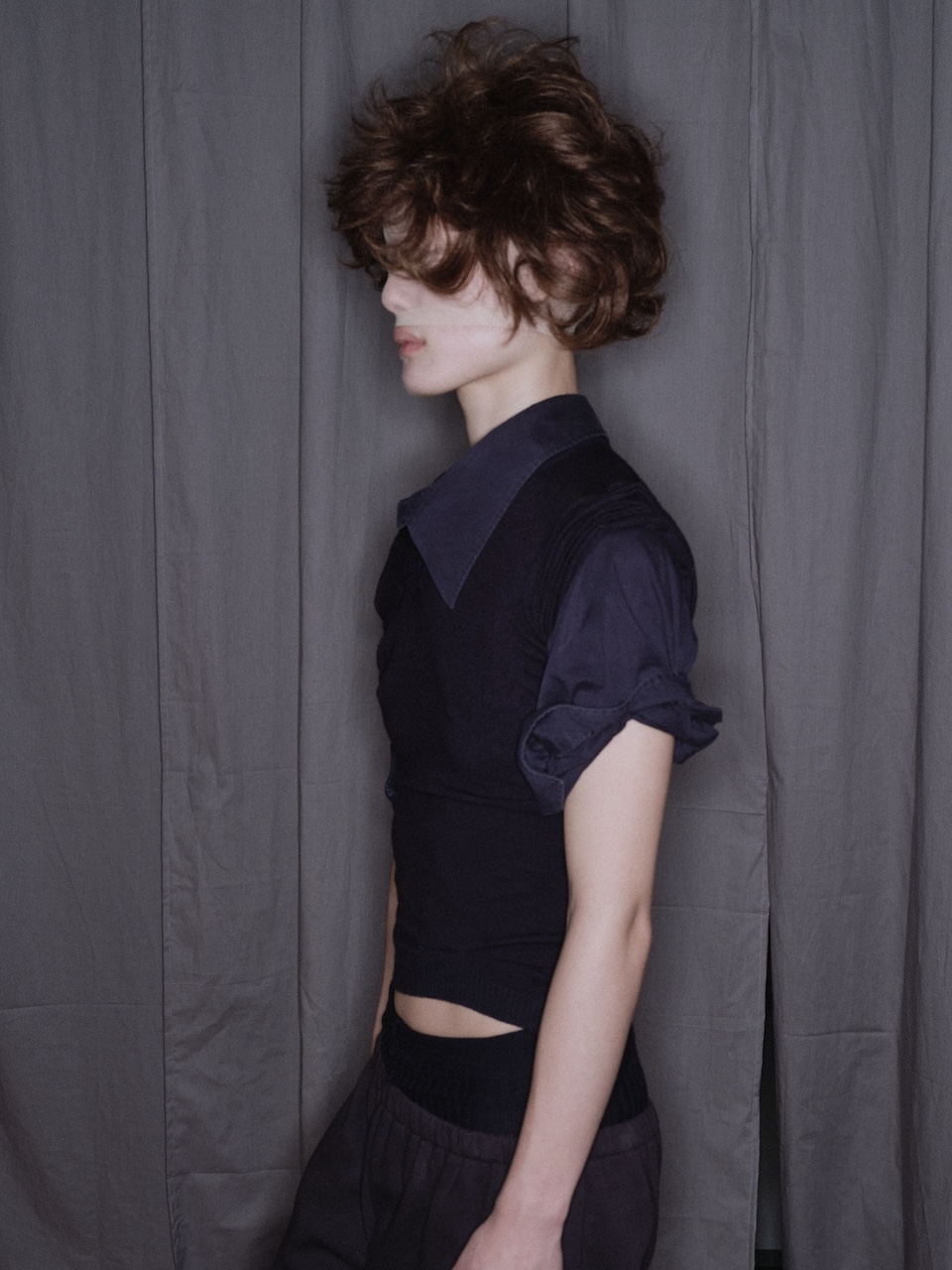
- Photography by Krischan Singh. Courtesy of UNIFORM.
-
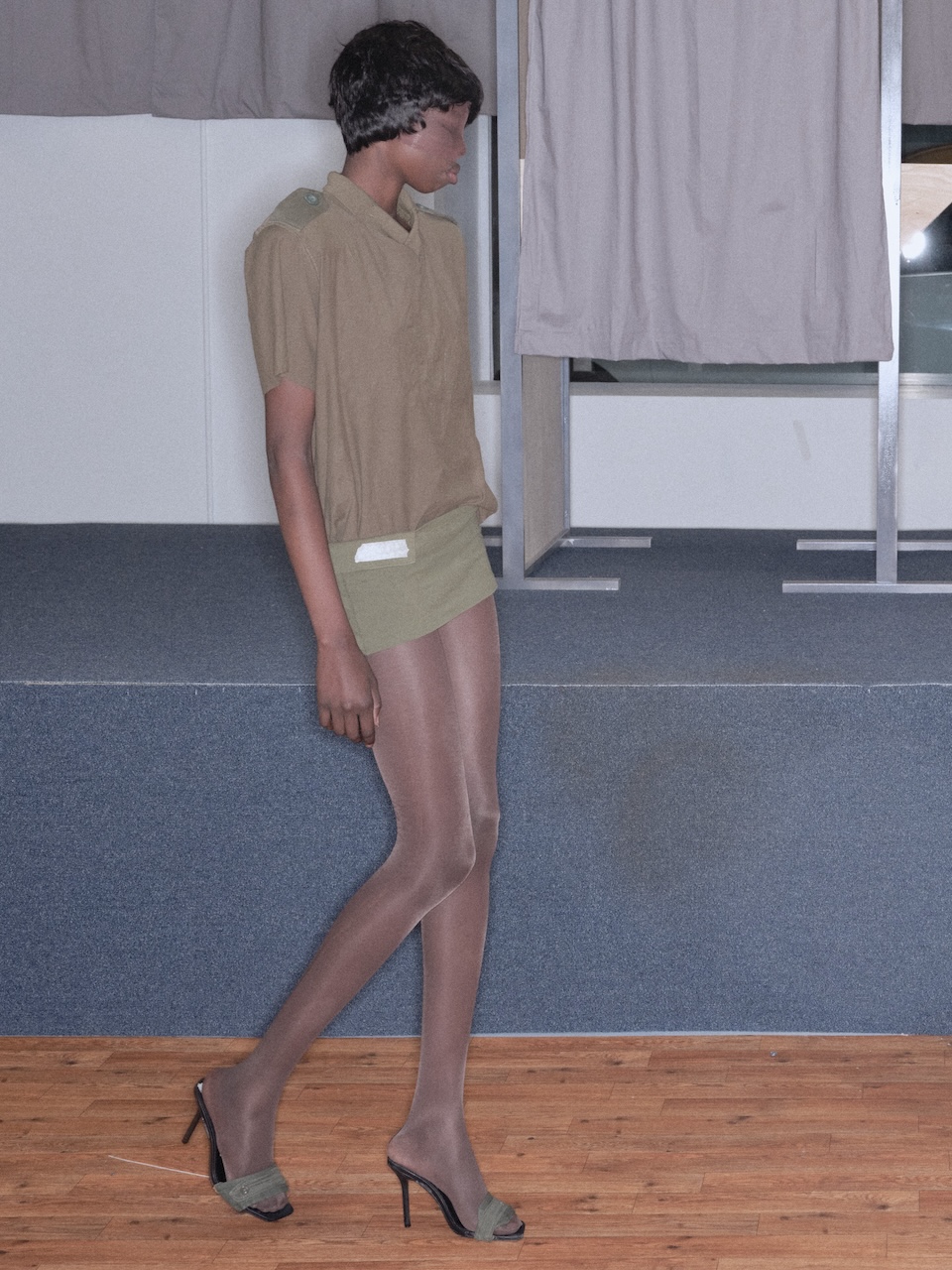
- Photography by Krischan Singh. Courtesy of UNIFORM.
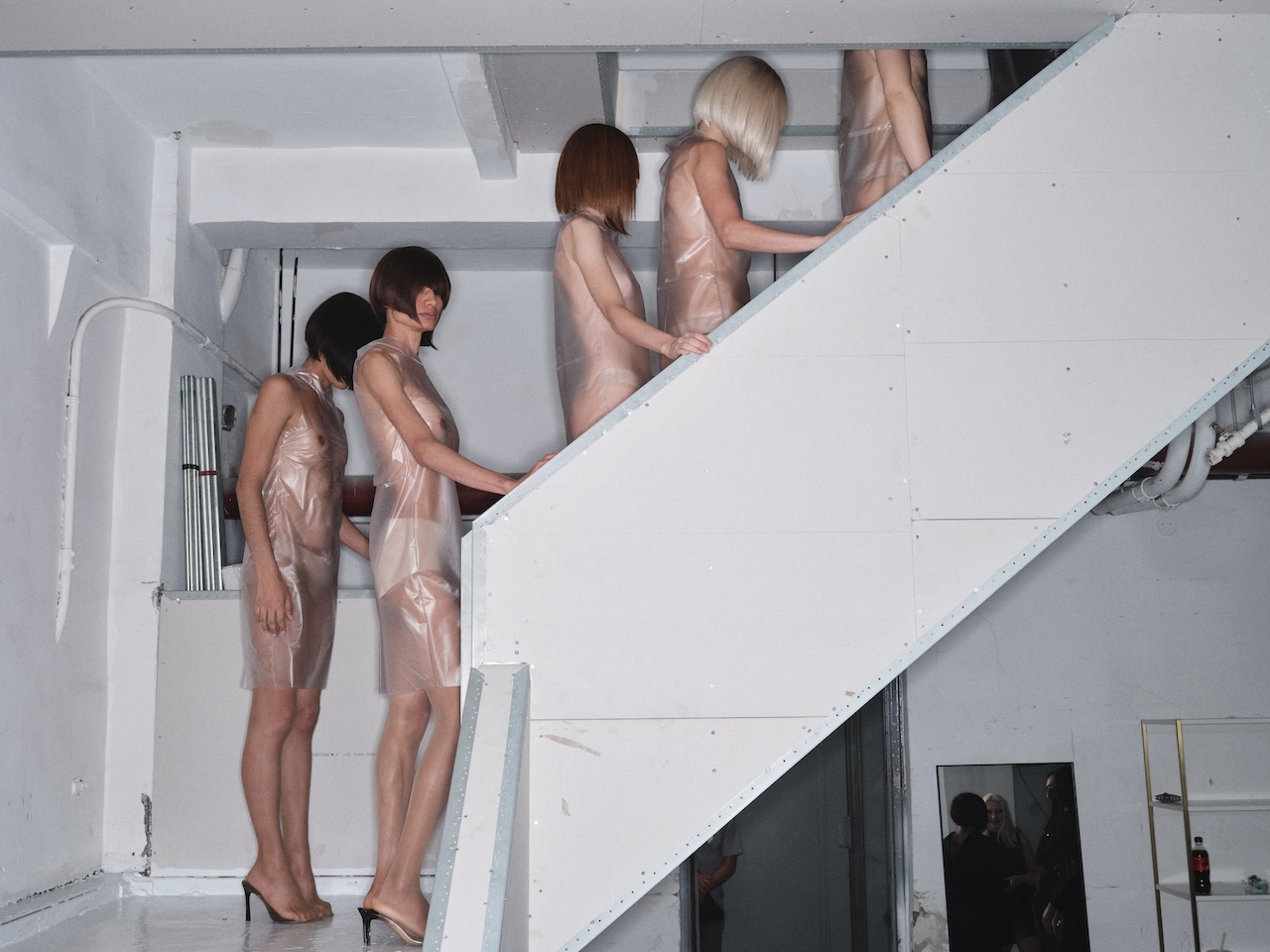
The garments, a combination of new designs and reworked pieces from Collection 1, extended that tension. Sweatsuits and office wear appeared in understated blacks, greys, and olives, connected by the recurring geometry of square shoulders and pointed heels. Rather than conventional runway models, figures moved through the space more like anonymous pedestrians, their faces obscured and identities withheld. Some appeared restrained by straitjacket-like constructions; elsewhere, glossy PVC dresses exposed the body while simultaneously encasing it.
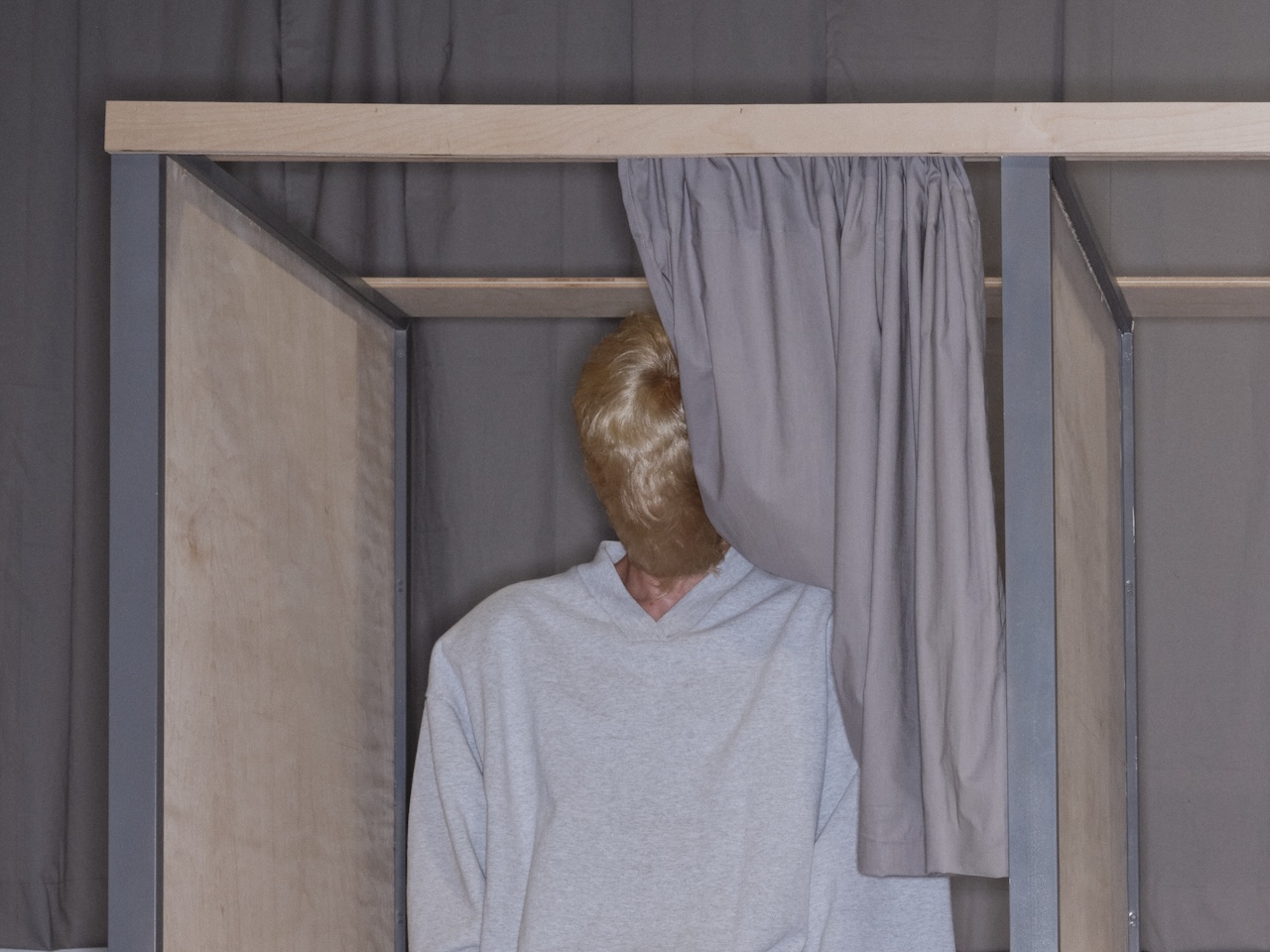
Photography by Krischan Singh. Courtesy of UNIFORM.
Set against the drone of rainfall, Green Day’s “American Idiot,” and Depeche Mode’s “Policy of Truth,” the performance returned repeatedly to the question of who, exactly, holds the gaze. Johnson called into question who the observer truly is, and whether the average person has any control within the panopticon, framing a working-class struggle with no physical boundary.
Photography by Krischan Singh. Courtesy of UNIFORM.
As YOU = LOVE founder Tricia Klinkhamer cleaned up the remnants of the performance, the show closed with an unexpected shift in tone. A line from David Lynch appeared: “the future’s looking bright.” Against the presentation’s somber, controlled atmosphere, the sentiment landed almost defiantly optimistic.
The installation will remain open for three weeks at 401 Broadway, with pieces from UNIFORM available at EMCEE.