On Patina, Ritual, and the Life of Objects: A Conversation with Jeremy Joo of JDH Projects
Culture — 05.06.26

Jacket A.Presse, Shirt Kaptain Sunshine, Trousers ssstein, Rings Jeremy’s own, Shoes Lemaire
Tree rings are synonymous with time. They mark layers of annual growth: light-colored wood from spring, and darker wood from late summer and fall. These recordings draw a throughline to Jeremy Joo’s practice. The rings are visible in the grain lines of the wood his pieces are made from, and are compounded with time and use. As a furniture designer, he pays respect to this materiality by embracing its temporal nature.
In 2018, Jeremy launched his design studio, JDH Projects. It wasn’t long after that I first encountered his work, specifically a series of eight stools “that can be stacked in any amount of ways.” The geometry called to mind works by Donald Judd and Sol LeWitt’s Variations of Incomplete Open Cubes. While sharing a reverence for the truth of materials, Jeremy’s practice defies the cold austerity often associated with minimalism. Instead, he presents objects and furniture that bear traces of the environments and bodies they come into contact with, revealed through marks and patina.
The Club Chair, Reading Bench, and Low Table are just some examples of this intention. The vegetable-tanned leather is rich with tawny blemishes; the white oak lightly scratched with wear. They sit against the sun-filled backdrop of the windowpanes at HAVEN, a menswear shop in Toronto, the same city where Jeremy is based. The low forms, ubiquitous in his work, feel grounding under the vaulted ceilings of the space and provide a place for rest and conversation.
Between commissioned projects and exhibitions, Jeremy expands his practice into a form of worldbuilding where his works become objects of use and gathering. As many of his personal rituals surround food, the sharing of meals is a natural way to highlight his furniture. I’ve had the pleasure of attending experiences like TEAHOUSE last year. In the company of friends, I enjoyed an ochazuke meal seated at his Square Dining Set, followed by a tea session on his Tatami Platform.
These are everyday objects. And today, as Jeremy reflects on his design philosophy and humble beginnings in antique restoration, it’s clear that they only get better with time.
-
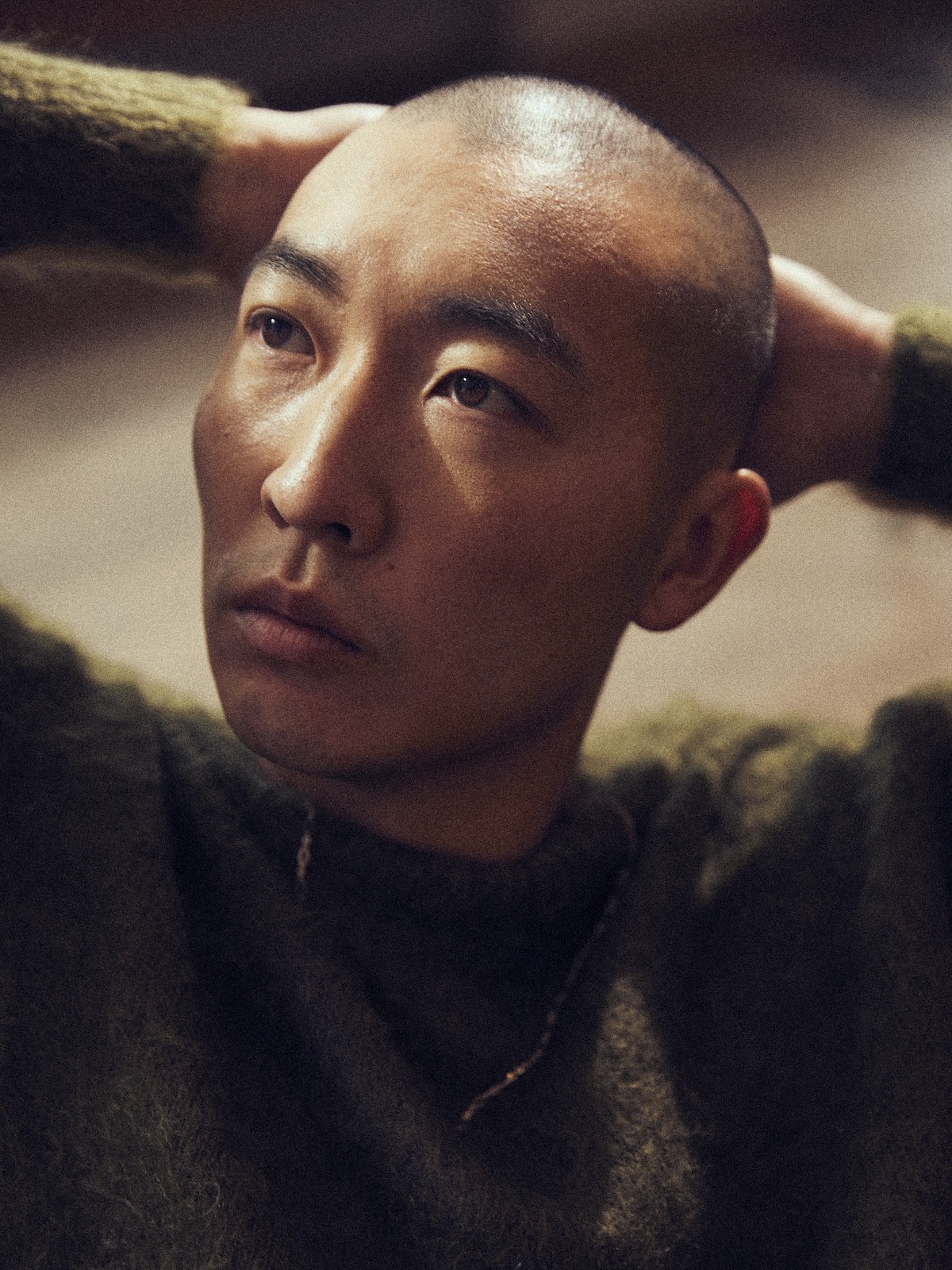
- Sweater Auralee
-
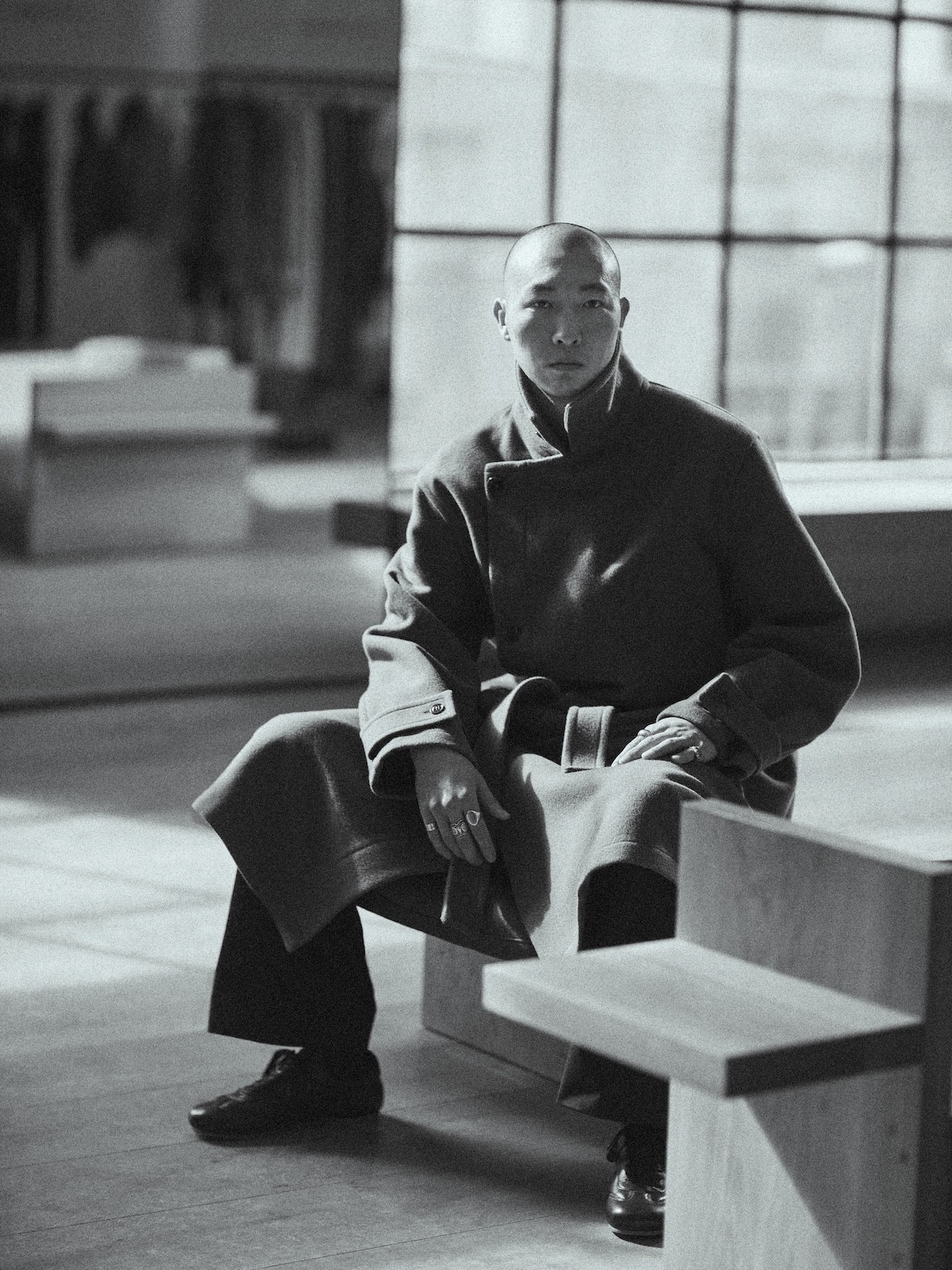
- Coat & Shoes Lemaire, Pants ssstein, Rings Jeremy’s own
You previously apprenticed for an antique restorer. Can you tell us about this experience and how it influenced your own practice?
I apprenticed under a master artisan, Diego Valotti, who specializes in antique restoration and French polishing. His restoration lineage goes back five generations of uncles in Milan, and he worked on antiques for museums, galleries, and the Versace Mansion under Gianni Versace until Gianni was murdered. Diego has been pivotal to my approach to work, beyond just the technical and artisanal skills, even now in his 70s. He taught me reverence and respect for the furniture, tools, and materials we worked with; the importance of celebrating patina and the marks only time can make; the patience it takes to do the work correctly; and, of course, countless pasta recipes. I owe my foundational approach to furniture to his wisdom, experience, and guidance. He has called me the sixth-generation nephew, and it’s a title I hold very close to my heart.
Building this foundation in restoration feels closely tied to your design philosophy, where furniture is lived in and shows signs of life. How do you think time—as material—plays into your work?
When it comes to my work, I always say that time is as much a material as the wood species and upholstery. The furniture is a platform for life to be lived, and the patina and wear show the participation of the lives that have interacted with the pieces. My design philosophy is predicated on simple forms and proportions anchored in time and natural materials. There is no replicating what time does to a piece, nor is there a comparative tool that can demarcate experience and memory quite like it. It’s a personal thing to interact with a piece of furniture, and every scratch, ding, and mark left on it is a trace of a moment and a life.
Have you ever thought about documenting your pieces over time? It would be fascinating to watch that process of patina unfold.
Yes, absolutely. I love integrating my well-used pieces among new works in exhibitions and experiences to highlight how beautifully they change over time through use. I am diametrically opposed to treating my works as untouchable units; they are meant to be used and loved. We’ve documented some pieces over time, a primary example being the first Reading Bench that was commissioned by my good friend, art director, and photographer Sid Singh for Synonym. He and his wife have taken the outdoor bench from Hamilton to the places they’ve lived in Toronto, Los Angeles, and Miami. The patina that has accrued on the piece is remarkable: rubber marks from bicycles, rings from countless coffees and whiskeys, and checks and cracks from environmental changes across the various cities they’ve lived in. They all tell a story of their lives, and the bench has witnessed the life of their dog and the birth of their child. It is a special thing to contribute to anyone’s life, let alone the lives of loved ones.

Jacket & Jeans Lemaire, Sweater Yoke, Rings Jeremy’s own
Food and furniture often go hand in hand, whether consciously or not. What draws you to creating pieces that sit low to the ground?
As a Korean, much of my life has been spent sitting on the ground, eating and studying at low tables, watching films, and talking with family. Lowness feels comfortable and grounding to many cultures around the world, particularly in parts of Asia and Africa, where I find a lot of inspiration. I create many low and generously proportioned works with the intention of providing space and furniture aligned with the bodies, cultures, customs, and ceremonies of these places. I find that being closer to the ground while having tea ceremonies, shared meals, and moments of reflection helps me feel more present and connected to my body and space.
The recent headrest you exhibited stood out to me as an unexpected form to render in wood. What sparked the idea?
I am constantly inspired by the shared forms and customs of Asia and Africa. The headrest I exhibited was a piece that had always been in my mind since the first time I spent time in a sauna in Korea. There were wooden blocks with a curved face where your neck would rest. It was a form I could not get out of my mind, and years later, I learned about Ethiopian headrests that would be carried around and provide rest while protecting traditional hairstyles. These headrests from Korea and Ethiopia became another red thread connecting the design sensibilities of the two continents, which has become a fascination and point of research in my practice. Many people in Asia and Africa sleep without a formal bed, and these headrests were placed directly on the ground. They are remarkably comfortable, despite how they are perceived.
Ritual feels deeply embedded in your work. Is it something you consciously think about while designing?
It’s an integral part of the JDH philosophy. It is not merely about consistency and comfort; to me, it is much more about reverence, attention to the mundane, and pride in the quotidian. For example, when I was working with the master artisan Diego, the last half hour of the day was spent returning tools to their designated spots, cleaning rags and brushes, and resetting the workshop to the way it was at the beginning of the day, and consequently the same at the end of each day. This ritual of resetting the workshop taught me to work tidily, to delineate the end of the work and the workday, and to put to rest all that happened that day. Rituals like this can provide catharsis, reprieve, or energy for the things to come. They realign us to the present moment and ground us in the here and now.
-
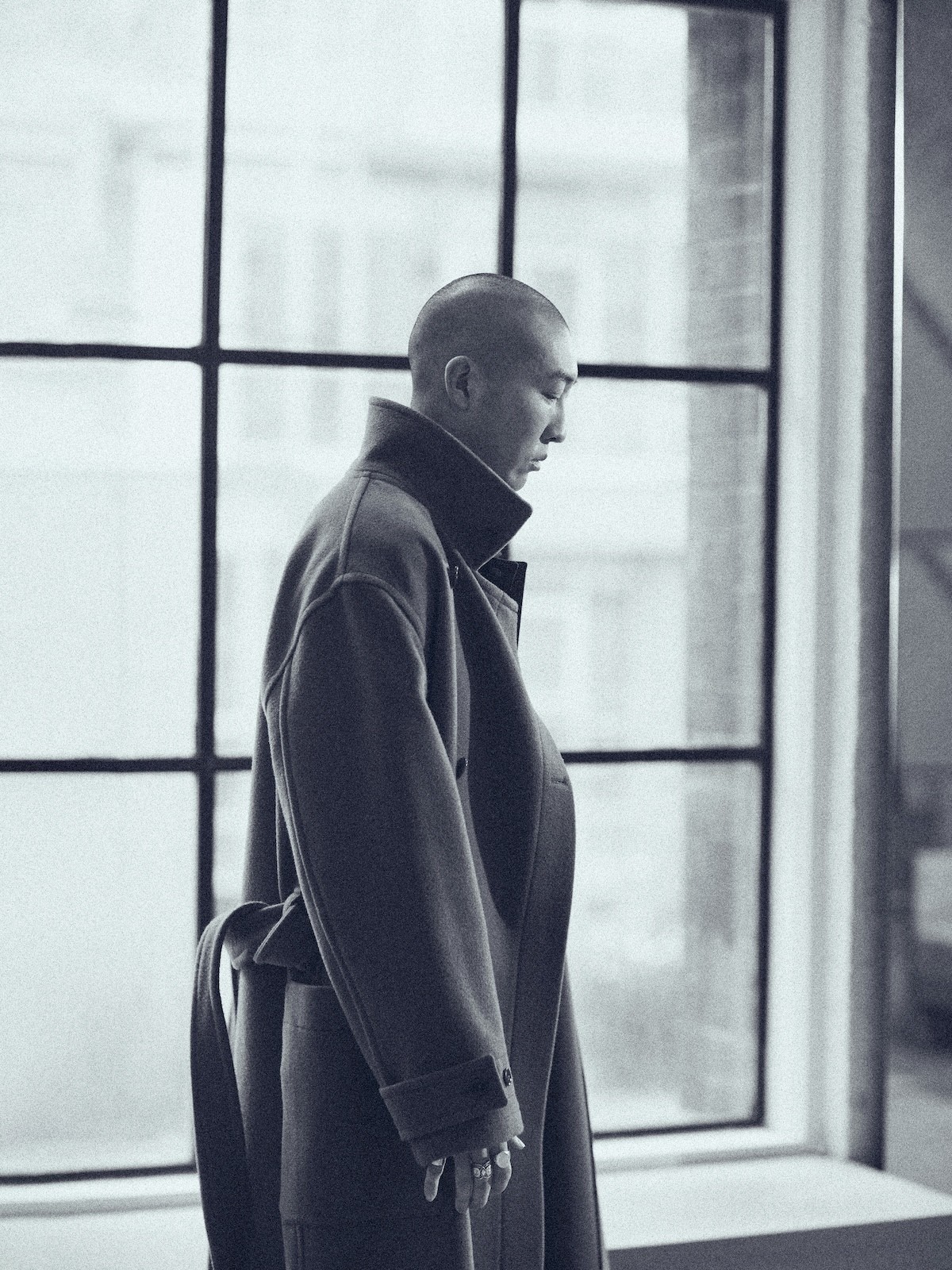
- Coat Lemaire, Pants ssstein, Rings Jeremy’s own
-
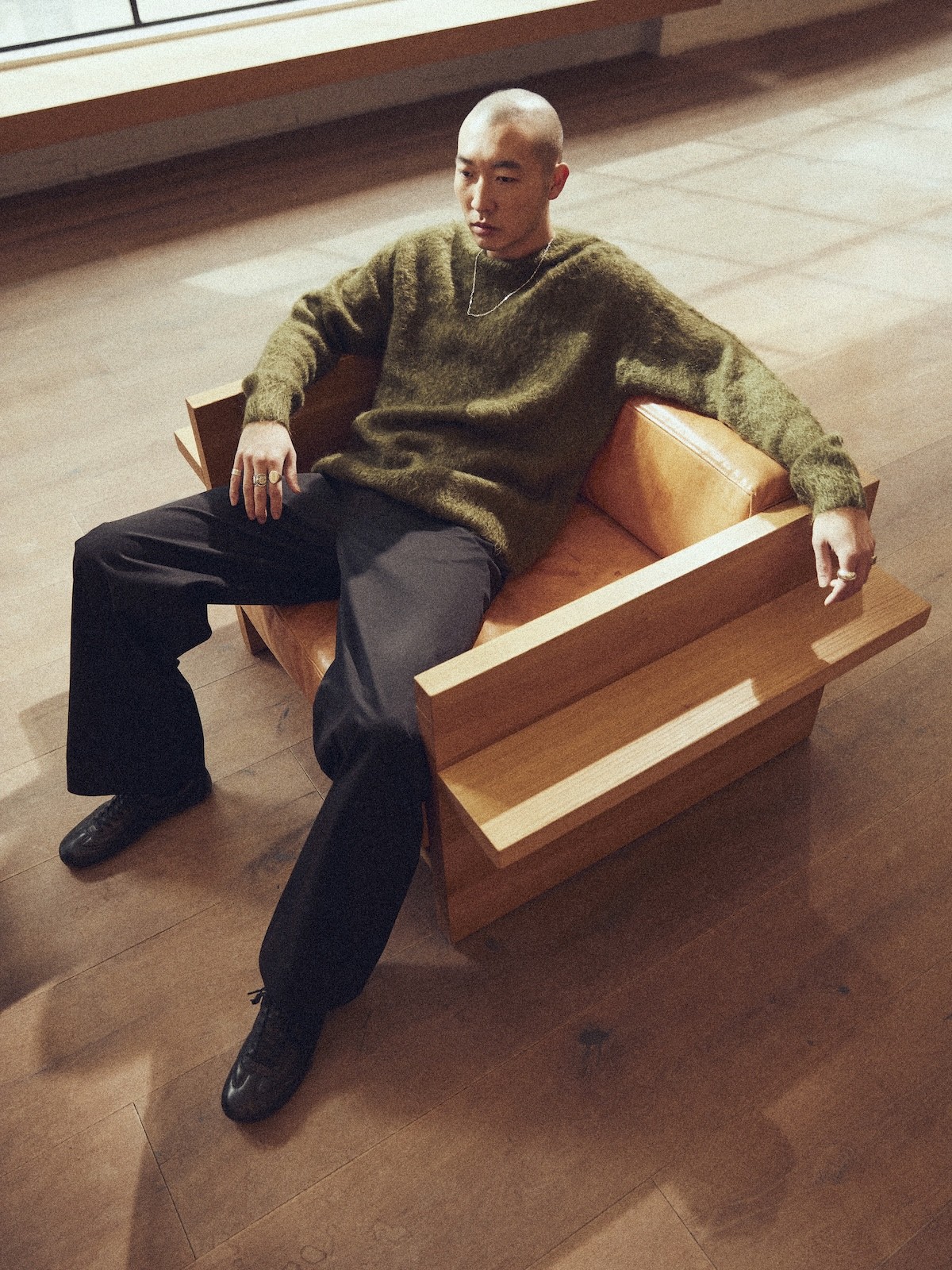
- Sweater Auralee, Pants & ShoesLemaire, Necklace Maple, Rings Jeremy’s own
Is there an object in your home or studio that has become part of your own personal rituals?
I love making tea and coffee for friends and family. My tools and wares have grown so much over the years, with additions from all over the world. I am particularly fond of a tea strainer from Korea made of a twig and local hemp treated with traditional lacquer. It is so beautiful. I also have many handmade brass utensils and small silver dessert picks that I find great enjoyment in using and sharing. Many of my personal rituals surround food and drink, as these are the things that provide me with the most comfort and reflection. There is power in acts of ritual.
Something is grounding about rituals, especially when life feels unpredictable. Has there been a moment when the unpredictability of wood itself—its movement, its response to environment or time—surprised you or shifted the way you work with it? Besides wood, what other materials would you like to explore?
Wood naturally reacts to environmental conditions, swelling and contracting to find stasis. It yearns to find stability, much like we do. It is one of my favorite parts of working with natural materials. My background in antique restoration has given me perspective on the beauty in the checks and cracks, misalignments, and reactivity of wood. The wood I find most beautiful lately is black cherry. It is very reactive to UV light, so if a book is left on the surface and exposed to sunlight, an impression will be left behind. Over time, the black cherry darkens from a pale reddish-orange to a deep red-brown, by which point the UV impressions from objects are no longer visible.
I work in metal and upholstery textiles as well. They each react differently and convey different elements and emotions. The next natural progressions in the practice are working with stone and other materials like cork and bronze. In 2023, I attended a workshop in Amsterdam with ECCO Leather and explored working with mycelium as a leather alternative. This was very interesting and sparked a new interest in material research. I stick mostly to traditional natural materials in my work, but I am always interested in discovering new alignments between materials and my design philosophy.
Is there anything you’ve encountered in recent memory, perhaps an object, material, or experience, that has really stayed with you?
This past year, I’ve been fortunate to visit Jeju Island in South Korea. The moments spent by the sea, watching storms roll in, feeling the saltwater breeze, and seeing how life revolves around the elements really opened my eyes to the impact of landscape on design and quotidian life. My favorite reflection came from my hike up Hallasan, a shield volcano and Korea’s highest summit. As I ascended the mountain before dawn and crested it as the sun rose, I reflected on all the changes in the mountainscape and the countless materials I encountered on the way up. And as I ran down the mountain—to catch a lunch reservation, nonetheless—I realized how small we are compared to the vast and expansive land and sea in front of us. This is not new to me or to many of us, but its importance is not lost. It reminded me of a quote by Donald Judd, speaking about his work but also applicable to nature: “Things that exist, exist, and everything is on their side.”
Follow Jeremy Joo and JDH studios via Instagram and website to stay up-to-date with products, launches and news.