Mouth Full of Golds: Inside the Making of Grill Culture
Culture — 02.05.26
There is a list. Eddie Plein keeps it filed somewhere in the grey matter, and when he begins to recite it, the room tilts. Just-Ice. A teenage Jay-Z. Salt-N-Pepa. Flavor Flav. OutKast. Ludacris. Allen Iverson. The list scroll–three decades of mouths and the metal they wore–and the man saying the names is doing it without inflection, the way you’d recite the contents of a kitchen drawer.

Famous Eddie’s Gold Teeth Atlanta. Courtesy of Rich Anthony.
That moment, captured in a Brooklyn basement around 2012, is when Lyle Lindgren—a London filmmaker who’d been circling gold teeth since his older brother handed him a Gravediggaz cassette–looked away from the viewfinder and understood that the unassuming Surinamese man in front of him was a load-bearing pillar of late-twentieth-century American visual culture, and that almost nobody under thirty knew his name.
What Plein did, between roughly 1983 and 2006, was invent the modern American grill. The gold cap had already existed throughout diasporas: West Indian neighborhoods, the Deep South, in the mouths of blues singers and dopeboys. What Eddie did was customize it. Hearts. Champagne flutes. Volvo logos. Weed plants. Layouts shaped to the architecture of a specific person’s teeth. He pioneered the removable set, freed it from the dentist’s chair, moved from Brooklyn to Atlanta and watched Southern hip-hop discover itself in the mirrors of his shop. Then he stepped out of the game in 2006—the exact moment the world was migrating online–and disappeared from search results that hadn’t yet been written. By the time Lindgren walked into that basement, there was not a single article about Plein on the internet.
Thirteen years later, the work spans book, film, and now a third printing. Mouth Full of Golds first appeared in 2021 as a 400-copy run stacked in Lindgren’s hallway, then returned in 2023 as a second edition through London’s IDEA. Alongside it: 78 on 79th, Lindgren’s 2017 Channel 4 short—a fictional drama set in the world of gangster dentistry on Miami’s 79th Street, with Eddie’s brother Lando in the cast, and a feature-length documentary, also titled Mouth Full of Golds, set for its world premiere at the 2026 Tribeca Film Festival. The third printing arrives now: a 1,000-copy re-edition, Japanese Icon-style softcover, the yellow obi band closing out a trilogy whose red, green, and yellow are drawn from the flag of Suriname, the country Eddie left behind.
What follows is a conversation with both men—director and subject, archivist and archive—about why this story almost didn’t survive, and what it means now that it has.

Top Four with Deep Cuts and Solid Canines, Atlanta, Mid 90s. Courtesy of Eddie Plein.
LYLE LINDGREN
You’d been circling gold teeth since childhood, since your brother handed you the Gravediggaz album. When you walked into Eddie’s basement and heard the full story, what was the specific moment you knew this had to be a book and not just a film?
Eddie’s basement was almost like a representation of himself—humble, with only a handful of objects that hinted at his history. W started filming his piece to camera, very cinematic documentary vibes, with Goldie to the right of camera, and as Eddie got into it, he casually reeled off this customer list that started from Just-Ice, a teenage Jay-Z, Salt-N-Pepa, all the way up to Andre 3000 and Ludacris. The list just kept growing, icons falling out of his grey matter so nonchalantly. And you start to remember the sets he’s referring to—the gold canines Ludacris wore in the Southern Hospitality video, the gold teeth grimacing on Just-Ice’s Kool & Deadly album cover. I remember peering around the camera to have a proper look at Eddie as he talked, and he was so egoless, down to earth, and I remember thinking, As a hip-hop head, why don’t I know this story?
Eddie’s legacy almost disappeared because he never digitized his story—no website, no social media, no archive. There’s an irony in the fact that IDEA, a publisher that essentially monetized Instagram faster than anyone, is the one preserving an analog story. What did you think about that tension?
When we started this project, Instagram was only just bubbling. This was around 2012, and at that point, there wasn’t one single article online about Eddie. He’d bowed out of the game just as the world went online in 2006 and had just missed that crossover point—printing flyers, running ads in magazines. I wasn’t honestly thinking about Instagram, blogs, etc. As a medium, film felt right.
Then COVID hit, we had to stop filming, and that’s how the book began. To be honest, this is when I had to develop as a creative. I had to push myself to learn about the world of publishing, to push the story into other mediums and not be so precious about solely pursuing a film. I was massively inspired by Tom Gould and Thirstin Howl’s Bury Me With the Lo On book—Thirstin had shown me a copy in Miami in 2016, and that idea of scanning your archive and doing it yourself just hung around in the back of my mind from then.

Nas and Kelis at Famous Eddie’s Gold Teeth, Atlanta, 2004. Courtesy of Eddie Plein.
The book has existed in three editions: 400 copies self-published in 2021, 2,000 through IDEA in 2023, and now 1,000 in this (Re)Edition. Each time the format changes: hardcover to clothbound to this Japanese Icon-style softcover with gatefolds. Why this format for this moment?
When we did the first edition, I had all of the copies stacked up in the corridor of my house. I didn’t think anyone would actually want to buy a copy. It felt very self-indulgent, very niche—it laid out how the film would have flowed if it ever got made, which at that point felt a million miles away. The trilogy nods to Eddie’s origins—a color palette that he rocks daily.
With the film dropping, there’s a new energy, a new audience that wants to learn more. At the same time, I’m conscious of the supporters that grabbed V1 and V2, and didn’t want to just re-do V2 for the clout. The Japanese Icon-style format was presented to me by IDEA, and it was interesting because of the link it has to film culture—it’s often an unauthorized bootleg of the film or the studio’s work. I liked the idea of almost bootlegging your own work to keep it in the consciousness. It reminded me of Nigo bootlegging BAPE himself back in the day. I wanted to include Grillz Jewelz from Tokyo in a future edition, as he is one of the most cutting-edge grillmakers from recent times.
The book collects radically different relationships to the same object—A$AP Rocky wants to go full Michèle Lamy, all platinum and precious stones, while others treat grills as neighborhood craft. Were you consciously building a spectrum of what gold teeth mean, or did the polyphony emerge organically?
Pretty organic. You’d find all these different influences existing across the culture: there were the early influences in ’80s NYC coming from West Indian / Caribbean culture—young kids being inspired by the one or two gold caps that a family member might sport, or the stones set in an artist like Big Youth’s front teeth. Then you’d see the permanent gold crown culture in the South that had ties to blues musicians like Ma Rainey and heavyweight champion Jack Johnson, through to infamous dopeboys like Isaac “Big Ike” Hicks and Convertible Burt. When Eddie arrived and brought that customizable element to gold caps, it enabled people to really put their own spin on the teeth they rocked. Teeth become a canvas unique to that individual. It’s this element that I think really drives the form to keep evolving.
Early on, I decided it needed to be broken up into chapters to give each city, each style, its moment in the spotlight. I gotta shout out Kamil Abbas quickly—he has an incredible set of permanent teeth at the moment, each tooth different, and a nod to this evolution.
-
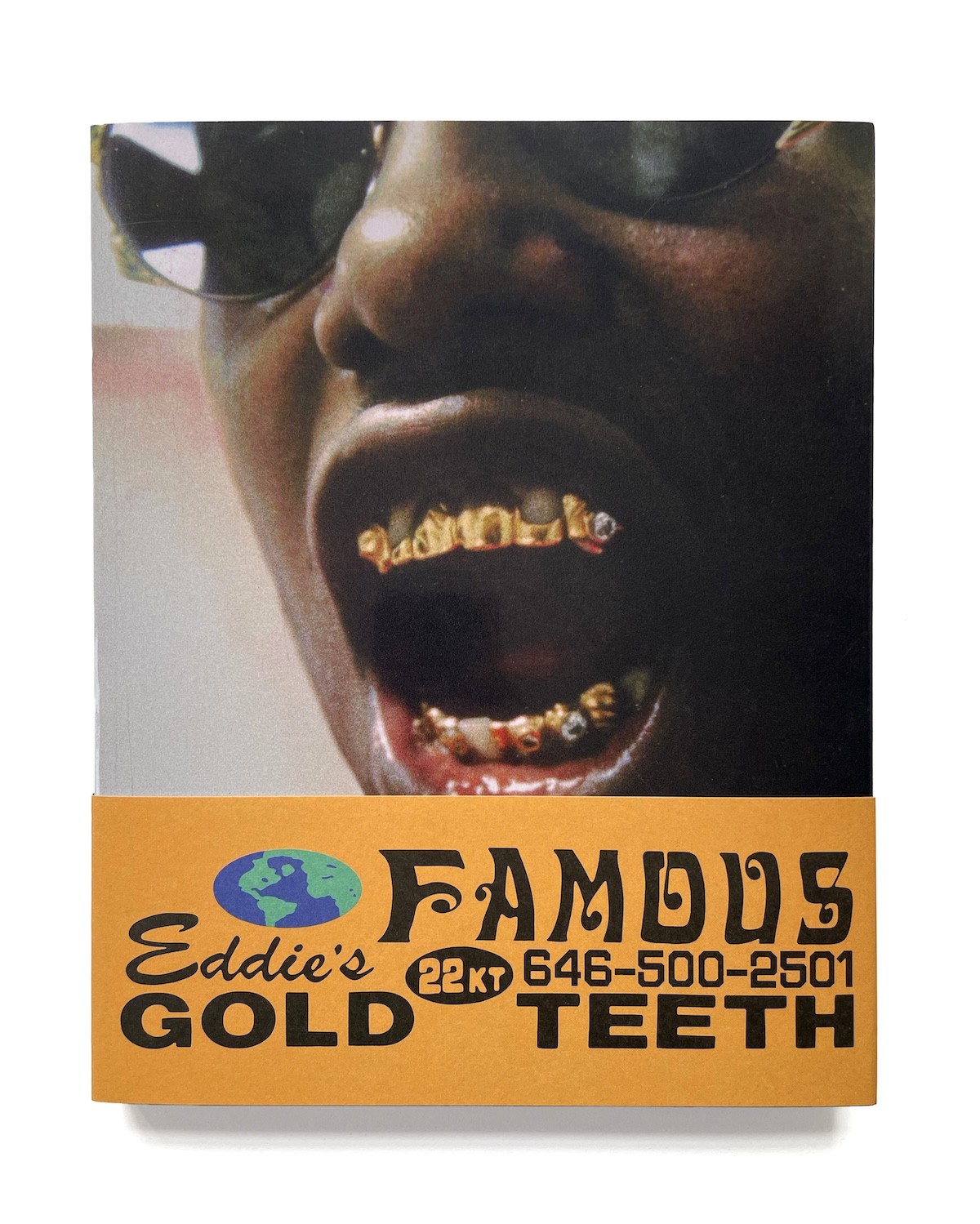
- Front Cover.
-
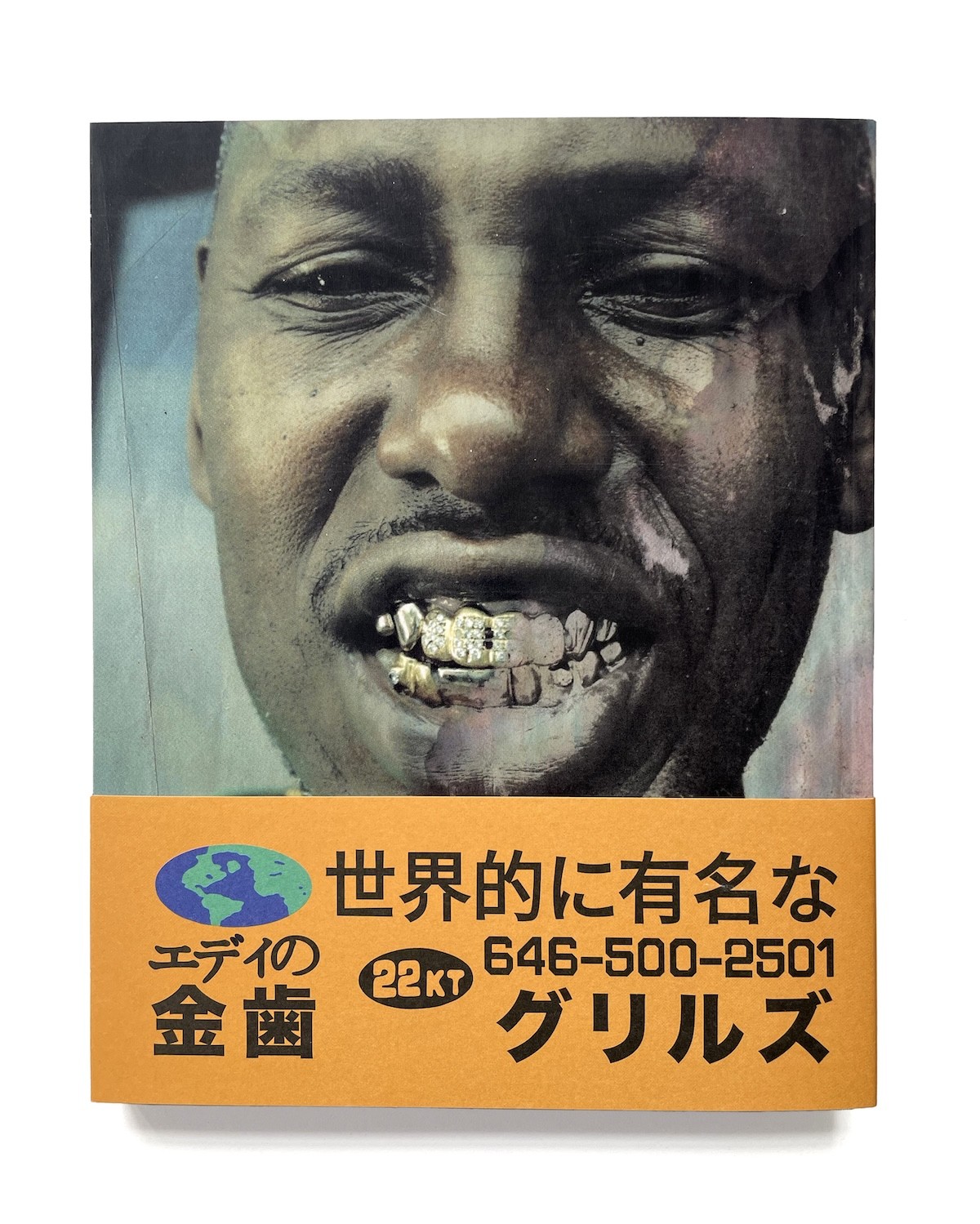
- Back Cover.
You cast non-actors in 78 on 79th—the on-screen dentists were the actual guys working in the shop. The book similarly privileges first-person testimony over critical distance. What’s your philosophy on who gets to narrate a culture?
We’re at a point now where people are seeing the story in full—Instagram pages are regurgitating it as their own piece, TikTokers are rehashing it using the flicks from the book. But there were seven to eight years where people were not interested. Platforms didn’t want to commission the film; they saw no potential in the story, and investors didn’t want to fund it. The amount of no’s we’ve heard has been insane. The only way to tell this story has been through first-hand testimonies and myself connecting the dots. There are times when there is no budget, and the only way to push it forward is to keep working on it regardless—a lot of late nights and unpaid hours. Hours and hours of researching, editing, phone calls, production docs, pitching to dead ends, begging brands to collaborate. The reality is, there is no immediate pay-off, and at times, there was no end in sight. All you can do is will it into existence.
This (Re)Edition adds Grillz Jewelz from Tokyo. The documentary features Dolly Cohen from Paris and Michèle Lamy. When did the story stop being a New York story and become a global one?
In all honesty, Rocky made it global to a contemporary audience. With the rise of Instagram in 2012, you could follow the hashtags to find grillmakers anywhere in the world—but Rocky getting his sets made by Dolly was a real jumping-off point. It was no longer just confined to the United States. You had Snow Vuong in London displaying her incredible work online, Grillz Jewelz in Tokyo, Gabby Elan’s renaissance in Manhattan—and it was exciting because all of these creatives were finding each other, acknowledging each other’s work, and I think it motivated them all to keep innovating.

Heidi Klum and Gabby Elan Albee Square Mall, Brooklyn, 2003. Courtesy of Gabby Elan.
You made this book during COVID because you were terrified Eddie’s story would be reduced to “a pitch document and a 3-minute teaser trailer.” Now the documentary is actually happening. How does the book change in meaning once the film exists alongside it?
The book was really the ultimate proof of concept. Without it, the film would never have gotten made. It showed people the story in its entirety using first-hand testimonies and archive images, and it’s weighty—200-plus pages to give you the full picture. For me, as a filmmaker, it was a great exercise to plot out the story, figure out where the story beats should hit, the highs and the lows, who should jump in to hammer Eddie’s point home. By the time we came to start shooting, V1 was out in the world and getting a lot of love, so it was only right to use the book as the blueprint for the film’s structure. The edit is composed in the same linear fashion, broken into the same five chapters as the book, so we can clearly run through the history of each city at a specific time.
The only real differences are that there are more on-screen anecdotes from Goldie and Eddie’s brother, Lando, about their time together in Miami in the late ’80s. When I interviewed Lando and Goldie on camera, they had all these extra little stories that were so vivid. The final chapter of the film is a more developed telling of the book—we dramatized Dolly Cohen’s origin story for the film. Dolly is an icon and incredibly private as a person, so we hadn’t been able to collaborate on the book; I think there was a little apprehension on her part. When Dolly pulled up to the Paris cast and crew screening, it made my day.

Extended Silver Fangs, Atlanta, late 90s. Courtesy of Eddie Plein.
EDDIE PLEIN
Shirt King Phade says you were “the first guy to brand his teeth”—comparing gold caps to Jordans. Did you ever think of what you were doing as branding or design, or was it just the work?
Phade called it branding in retrospect. At the time, I was more into mastering and creating different designs. I loved to make each gold look different—I’d recommend different ideas to the customers. People came with their own ideas, and I’d help them settle on a definitive one. Girls loved to get hearts, champagne glasses, any initial. Guys wanted Volvo designs, Mercedes signs, weed plants. Every day was different. I wouldn’t have considered myself a creative or a designer in them days. I was a fútbol fanatic; I lived to kick ball. Of course, we heard and knew some designers like Dapper Dan in Harlem, the Shabazz Brothers, the Bell Brothers, but I really just created a category for myself. Created my own lane in this world.

Eddie Wearing Gianni Versace Mod S64 Sunglasses, Atlanta 1998. Courtesy of Eddie Plein.
Gold teeth sit at an intersection that few cultural objects occupy. When you’re looking at a finished set in someone’s mouth, what do you see first?
I see the satisfaction of a job well done. What we created spiraled into a nationwide phenomenon. The ones who couldn’t get to me, especially from the Midwest, had to force their dentist to perform on their teeth…but permanently. This had been happening in the South since ’92. One year in, I had customers coming from as far as Indiana, Ohio, driving 8, 9, or even 10 hours. Because we promised same-day service, sometimes—many times—they’d have no choice but to spend a night in the A. I would take my new friends to any club that was poppin’ at that time: Magic City, the Gentleman’s Club, etcetera, etcetera.screening, it made my day.
We wasn’t looking at everything that was going on from such a zoomed-out perspective. We was just living in the moment, witnessing the Freaknik, the Olympics, seeing hip-hop change in so many ways. All of these aspects of culture, the Black experience, was just evolving around us. I think that shows you, as a culture, how resilient we are. How creative and industrious we as people can be.
The book opens with A$AP Ferg’s foreword and collects testimonies from people across three decades of hip-hop, but you’re the gravitational center—the man whose work defined a visual culture and who was then almost erased from it. If you could put gold in anyone’s mouth today—anyone, any era—and that single set of teeth would be the one image people remembered from this entire project, whose mouth would it be?
I’m honestly fulfilled. I feel like I made teeth for anyone who was everyone—not just in music, but in the streets, and in sports. Shout out, Allen Iverson. I’ve made thousands and thousands of sets, all by hand, waxing them up. It’s hard to remember who came through. I know Doom came through, but I wasn’t aware. I didn’t know. Westside Gunn was a customer, but this was when he was in his teens, I believe.
So I’m straight. I have no regrets. I do wish I had flicks of the first sets of teeth I made for my mom and pops, though. They’d be pretty defining. They show that they believed in me—in this crazy idea that I had.

ASAP Rocky, London, 2016. Courtesy of Mike Simpson.
Mouth Full of Golds (Re)Edition is published by IDEA in a limited run of 1,000. The accompanying documentary, directed by Lyle Lindgren, premieres at the 2026 Tribeca Film Festival.