Irving Penn’s Legacy Takes Center Stage at Gagosian Gstaad
Art — 09.02.26
Words: Moe Wang
When Irving Penn returned to Seine Rowboat in 1974, he had already produced the image in dye transfer, gum bichromate, and platinum, following its first conception in the 1950s. For nearly two decades, the photographer continued to experiment with various printing techniques, scrutinizing minute details—how the grain intensified, the pigment deepened, and the coating developed.
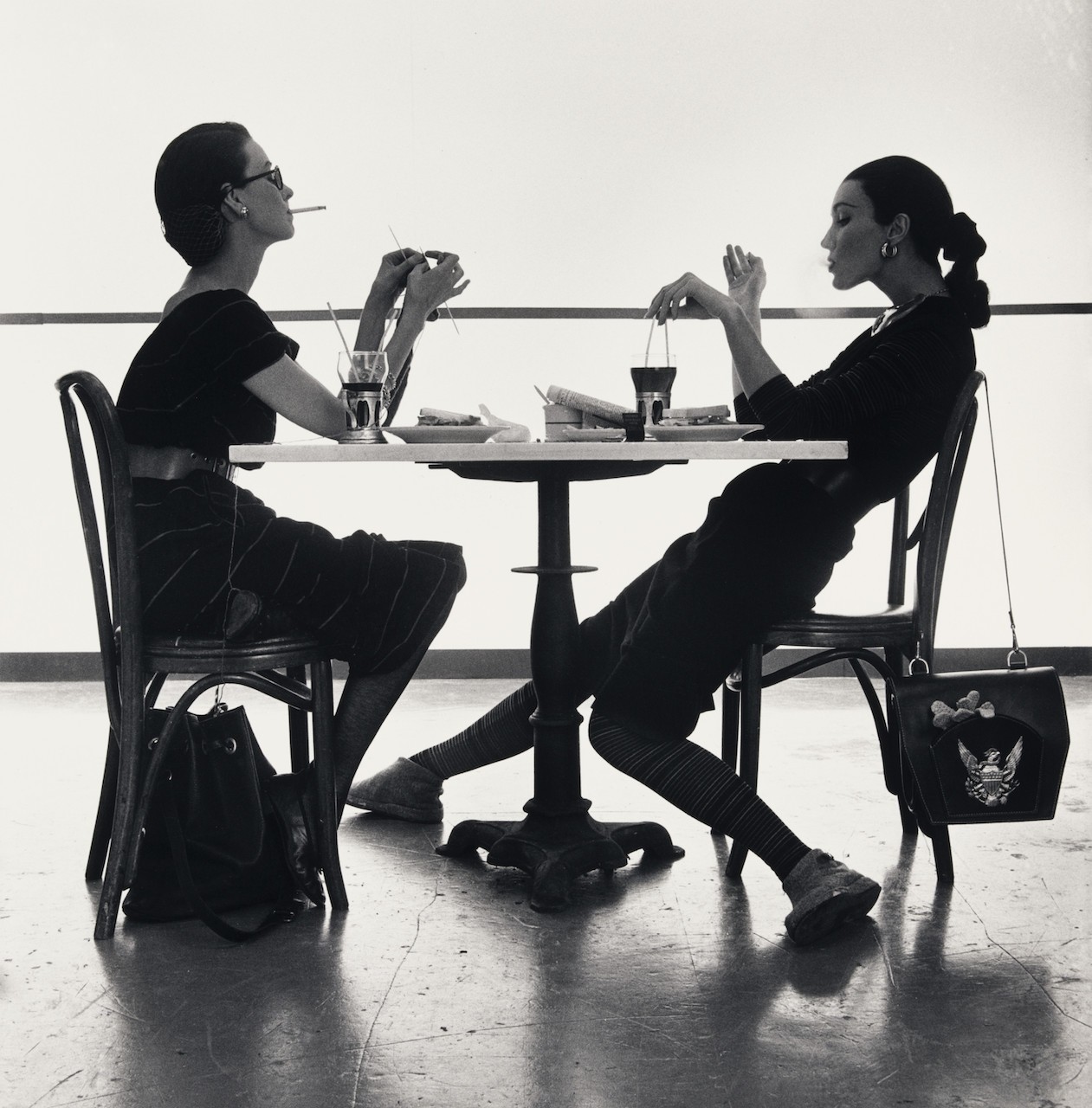
Women In Wartime (Dorian Leigh & Evelyn Tripp), New York, 1950 © The Irving Penn Foundation. Courtesy of Gagosian.
Penn eventually produced ten variants of the image, each featuring a solitary man rowing through the Seine’s hazy expanse; one graced in yellow tones, while another sealed in emerald green. Now beginning February 12, three versions of Seine Rowboat, France (1951), alongside a selection of fashion, portraiture, and still life works spanning Penn’s seven-decade career, will be on view at Gagosian Gstaad starting February 14 through April 6.
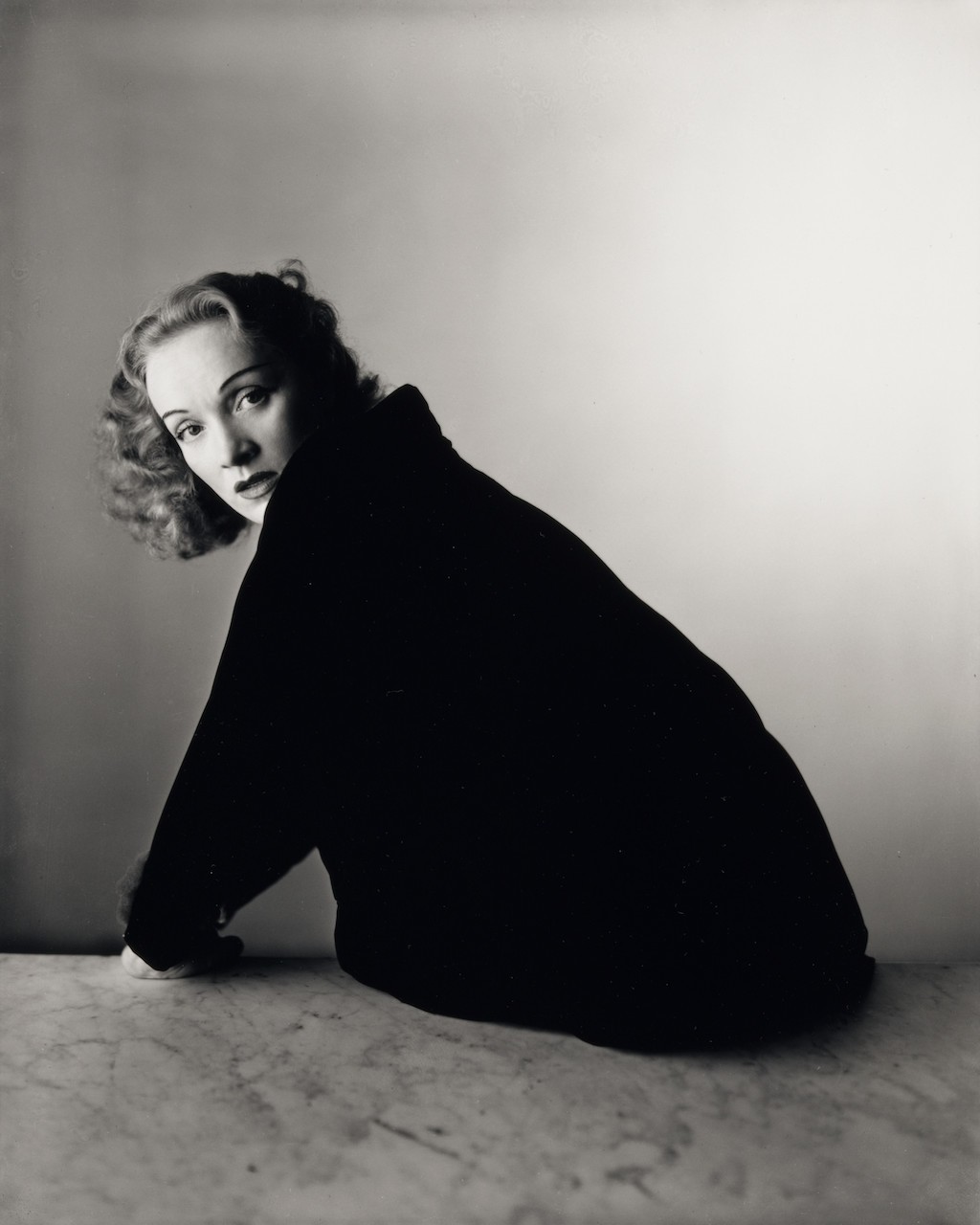
Marlene Dietrich (B), New York, 1948 © The Irving Penn Foundation. Courtesy of Gagosian.
A devotee of printmaking, Penn firmly believed in photography as a printed medium. His still lifes of flowers are presented in heightened color and form, while his close-up of cigarette butts zero in on debris and decay. The works are carefully printed using opulent platinum-palladium processes, marked by deep, velvety blacks and a wide tonal range. Moving beyond printmaking alone, the exhibition also guides viewers through Penn’s photographic processes. In studios, he channeled his exacting precision into the construction of backdrops and the use of directional light. Highlights include Marlene Dietrich (B) (1948) and Grace Kelly (1954), portraits that anchor Penn’s ability to endow his subjects with presence through pose and composition.
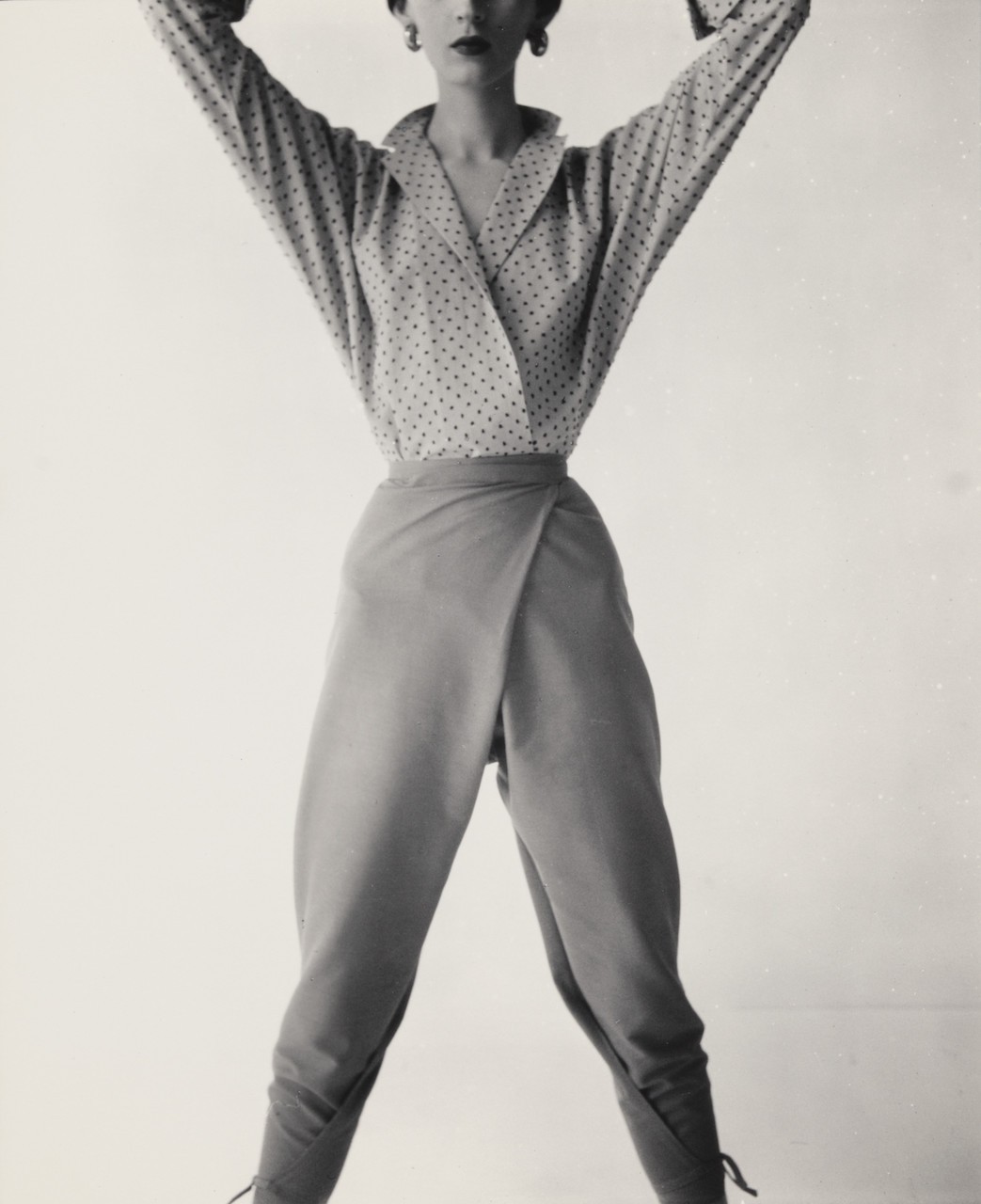
Dovima, New York, 1949 © The Irving Penn Foundation. Courtesy of Gagosian.
Known for capturing images that seamlessly merge commercial and fine-art photography, Penn framed fashion through architectural compositions. Take Women In Wartime (Dorian Leigh & Evelyn Tripp) (1950), in which two subjects in black dresses sit across from one another, smoking nonchalantly, as glass cups and plates are scattered across a round table. The image, along with Dovima (1949), showcases Penn’s documentation of postwar fashion in New York and Paris from 1949 to 1950. The exhibition is also set to showcase images originally published in Vogue that have rarely been seen outside the magazine’s pages.
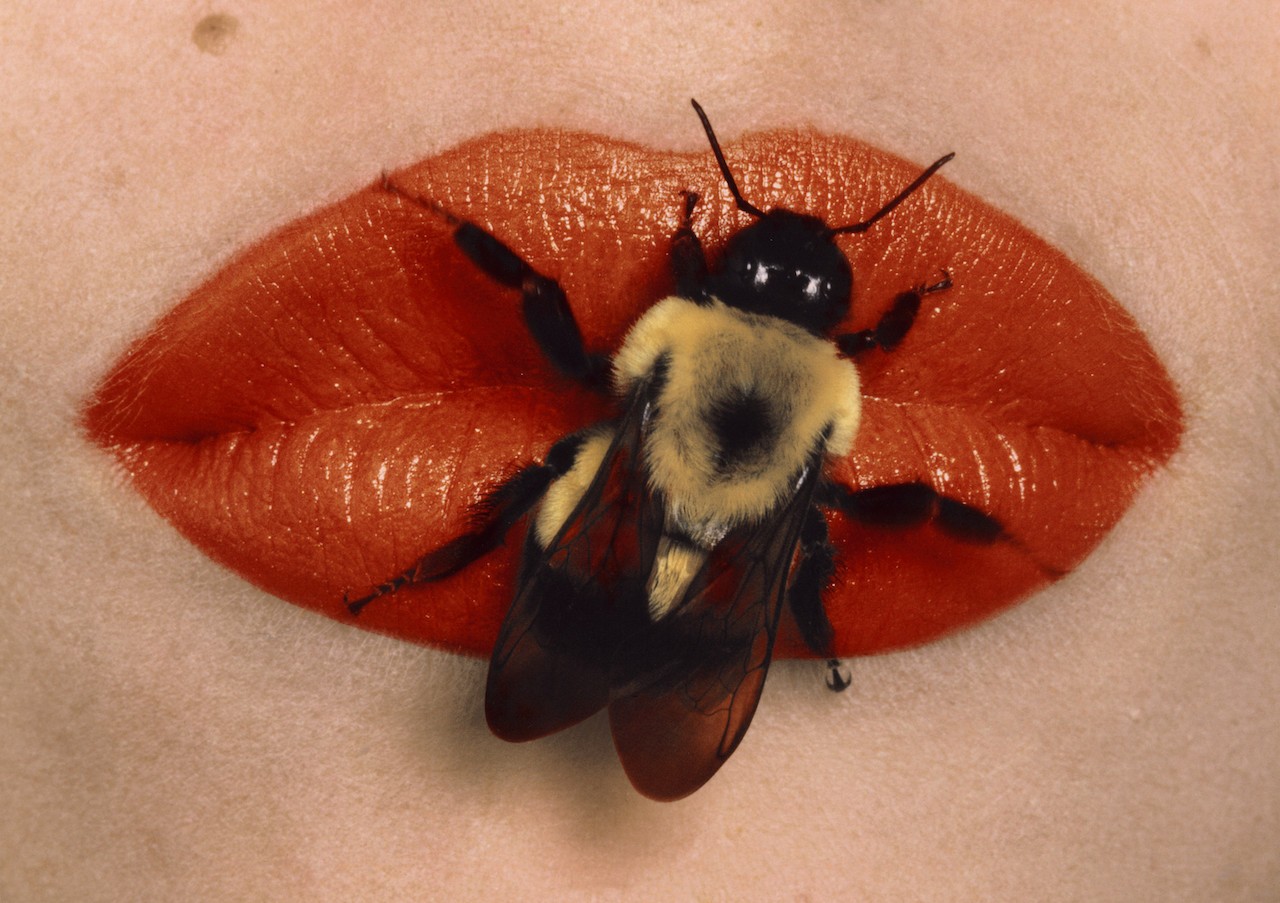
Bee on Lips, New York, 1995 © The Irving Penn Foundation. Courtesy of Gagosian.
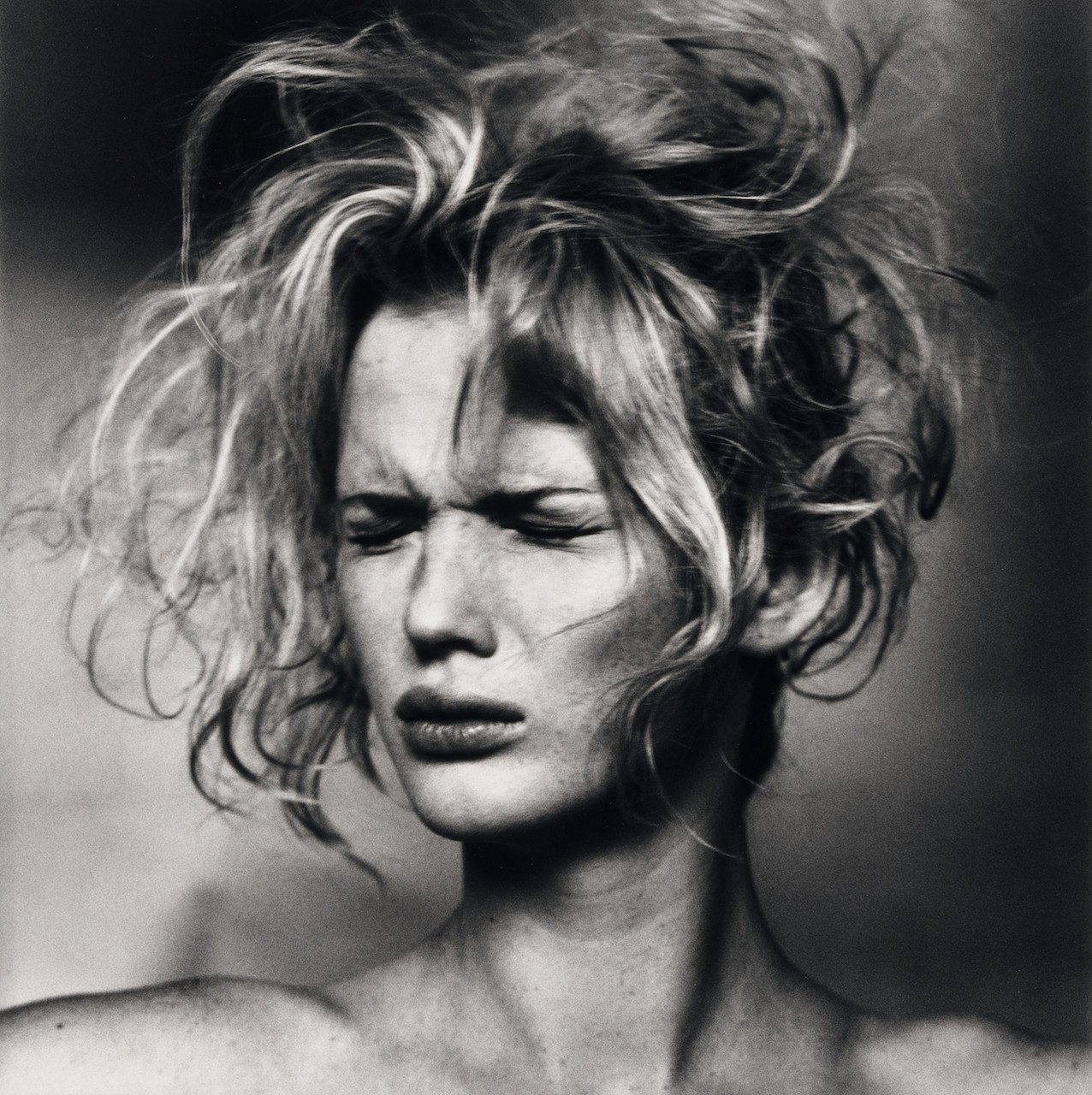
Young Woman Hearing Noise, New York, 2003 © The Irving Penn Foundation. Courtesy of Gagosian.
Across his editorial works, like Young Woman Hearing Noise (2003) and Bee on Lips (1995), the photographs are marked by a striking visual impact, defined by their color, contrast, and tonal intensity. Beyond printmaking itself, Penn’s exacting engagement with his objects and subjects distilled an unmistakable aesthetic vision, securing his place among the most influential image-makers of the twentieth century.
Gagosian’s upcoming Irving Penn exhibition will be on view from February 14 until April 6 in Gstaad. Plan your visit at Gagosian’s website.