In Paris, Dedar Milano Unveils its 2026 Textile Collection
Art — 30.01.26
Words: Moe Wang
Raffaele Fabrizio traces his earliest memory of Dedar Milano to journeys through Anatolia or India with his parents in search of rugs. Alongside his sister Caterina, he grew up surrounded by fabrics and carpets, born into a multi-generational textile family. Founded in 1976 by Nicola and Elda Fabrizio, the interior design label has been guided by the two siblings since 1997. What began as a small artisanal fabric house nestled in Como has since unfurled across Milan and London, and now, the latest 2026 textile collection gently unfolds in the Paris showroom.
Photography by Andrea Ferrari. Courtesy of Dedar Milano.
Fabric creates emotion and tells a story—this much Raffaele, now Dedar’s Creative Director, knows. For the 2026 collection, plain and patterned fabrics propose new ways of shaping interior spaces. “The Dolomites, the Beaubourg, underground railway lines, the night sky,” Raffaele says of the inspiration behind the latest capsule. “This collection is the reflection of personal and collective memories, of everyday experiences and of textile archetypes placed side by side and intermingled to offer new expressive potential to contemporary living.”
-

- Photography by Andrea Ferrari. Courtesy of Dedar Milano.

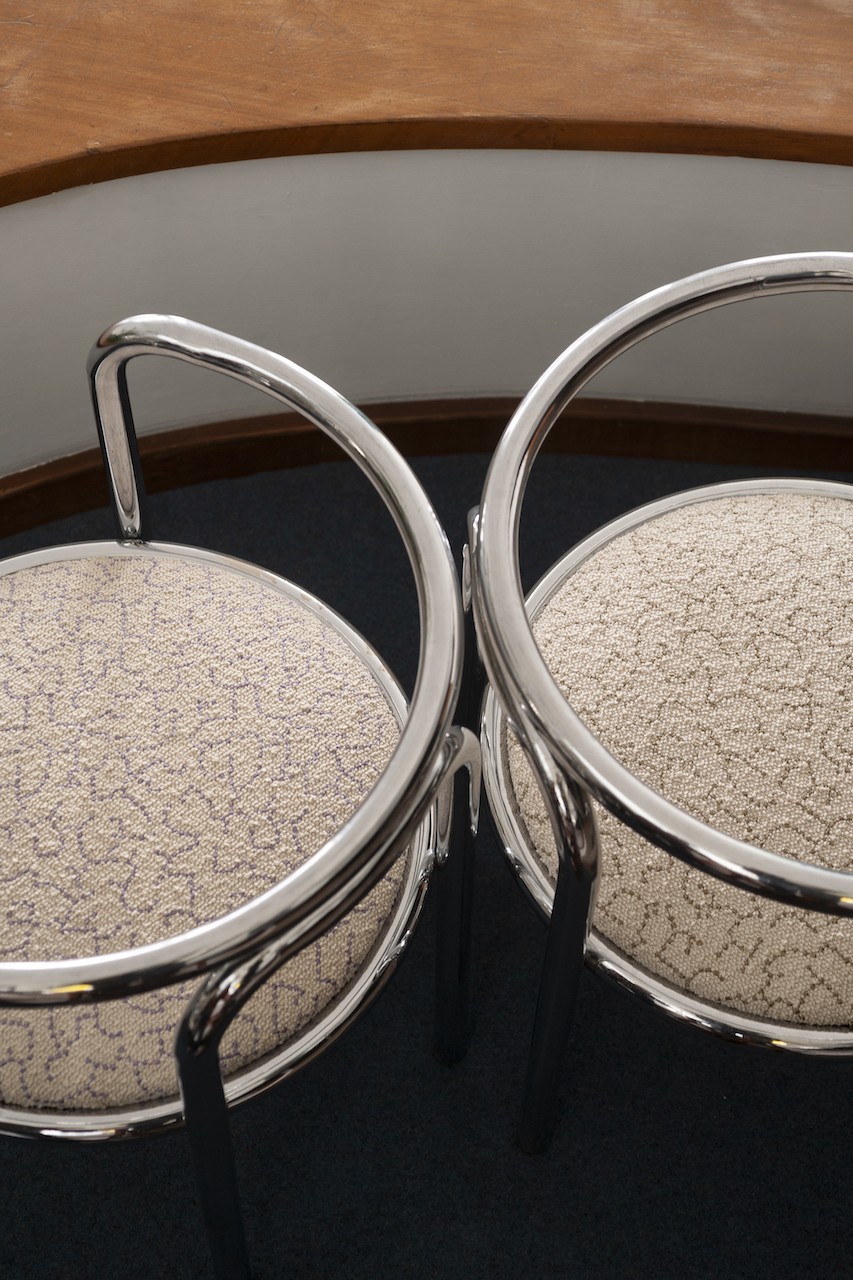
What reads like abstract art is woven into fabric designs for chairs and curtains, where furniture becomes a canvas for pure graphic signs and layered color palettes—bright hues set against muted tones. A mustard-colored velour sofa, punctuated by scattered stitches, feels simple and cozy. In contrast, chairs with triangular- and button-padded seats are upholstered in soft fabric, patterned with zigzags and maze-like shapes in red, blue, and lavender. Elsewhere, large-scale textiles and wall coverings gesture toward a balance between abstraction and figuration; on one grey textile, gathered dots form scattered, peak-like line motifs.
-

- Photography by Andrea Ferrari. Courtesy of Dedar Milano.

The codes and standards for textile-making continue to resonate across the collection, carried through legacies and generations. Grounded in this deep material knowledge, Dedar opens space to explore a more expressive language of furniture design in the years ahead.