How D.S & Durga Built a World Around Fragrance
Culture — 10.03.26
Words: Gabriella Onessimo
Photography: Jacob Cooper
In the early 2000s, long before the word “niche” became shorthand for anything outside the department store counter, David and Kavi Moltz were driving a quiet shift—whether they knew it or not. Two decades on, they continue to expand the D.S and Durga‘s eclectic world, with the latest launch of Debaser in Bloom serving as a testament to their ever-evolving fragrance philosophy.
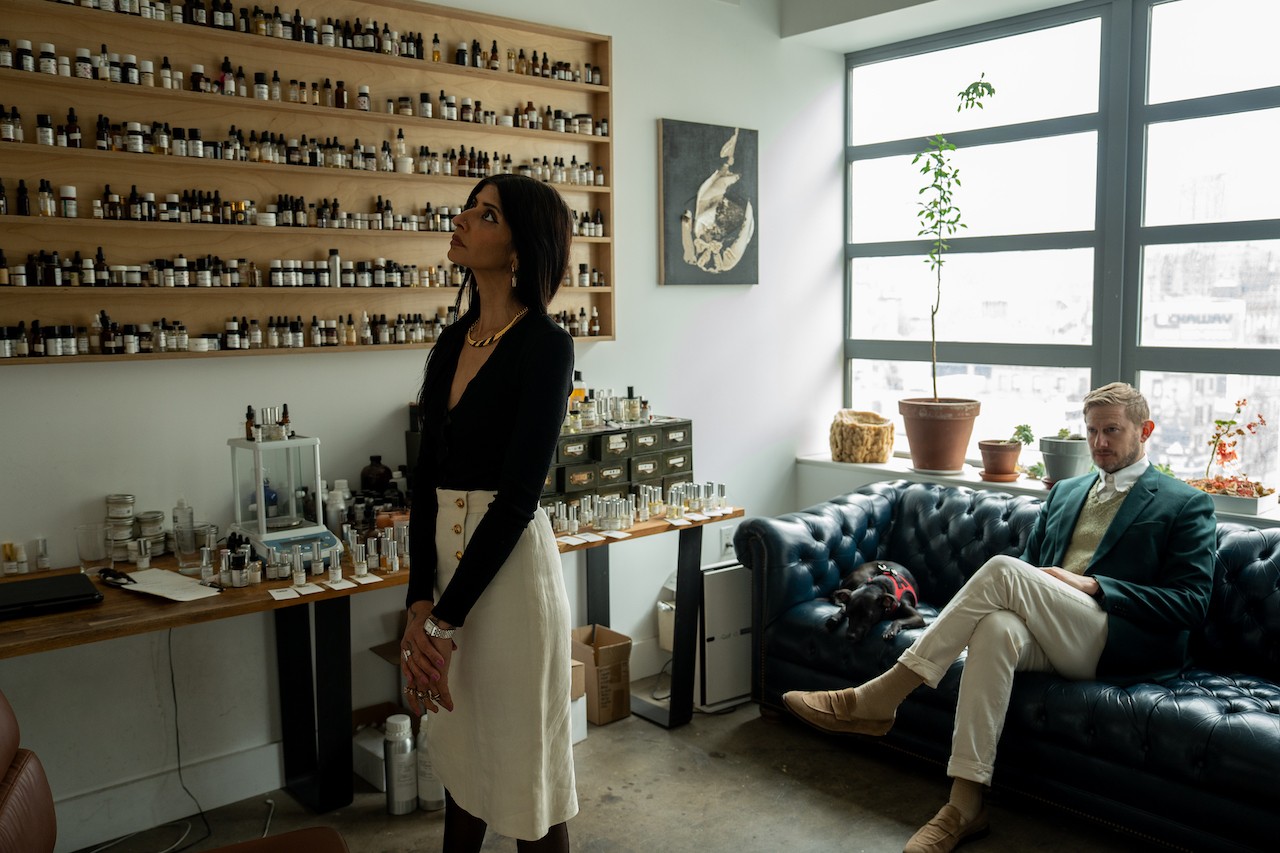
David, a self-taught perfumer, began blending scents in their Bushwick apartment while Kavi, drawing from her architectural background, translated those olfactory experiments into the visual language that would become D.S & Durga. “When we started, the idea of creating your own fragrance brand from nothing was almost unheard of. The industry was very top-down,” says David. There was no blueprint—no institutional training in Grasse, no marketing playbook for founder-led beauty brands. At the outset, the duo were guided by an instinctual curiosity, and were one of the few to operate in that way; rife with an independent spirit that has transcended a personal philosophy into roots.
“That shaped everything we do,” explains Kavi, who didn’t necessarily set out to make an indie brand—things just naturally unfolded that way. “We simply didn’t know the existing structure, so we had to invent our own.”
Since the early aughts, the fragrance landscape has completely transformed. Independent brands now launch at a dizzying pace, and the once-insider language of niche fragrance has become a category of its own. Yet D.S & Durga still has maintained a distinguishable edge, as a brand where the perfume is still composed by the person whose name is on the bottle, and where each scent arrives less as a product than as a fully realized world.

Few senses unlock memory as powerfully as scent, and D.S & Durga has built an entire practice around that idea. Some of those memories are real, and others are imagined—assembled from fragments of sound, space, and time. Each evoke a scene conjured with striking specificity. As Kavi explains, the goal is never simply to capture a feeling. “It’s a place, a moment; with perfume we build entire worlds—the colors, the plants, the time of day, the people.”
From the winding cliffs of Big Sur to the crack of a lightning storm, translating these conceptual moments into fragrance requires more than instinct alone. Rather than leaning on broad lifestyle cues or predictable abstractions—think “summer” or a generic “spring garden”—the pair approach scent like a scene, constructing notes that unfold with cinematic precision.

For David, that process begins with instinct as much as discipline. He says Kavi often jokes that he has “reverse imposter syndrome”—a belief that he belongs wherever creativity takes him, which almost serves as an antidote to the perfectionism that often halts us. “The DIY spirit is essential,” he explains, “but so is leaving space for creative energy.” The earliest idea, he finds, often carries something the more polished version can’t quite replicate.
And yet there’s a caveat to raw spontaneity. “You have to put in the 10,000 hours,” where openness to inspiration has to be grounded in a deeply refined practice. David likens the process to visiting a tattoo artist: bring a reference image, and they’ll reinterpret it through their style—one shaped by thousands of hours of work.
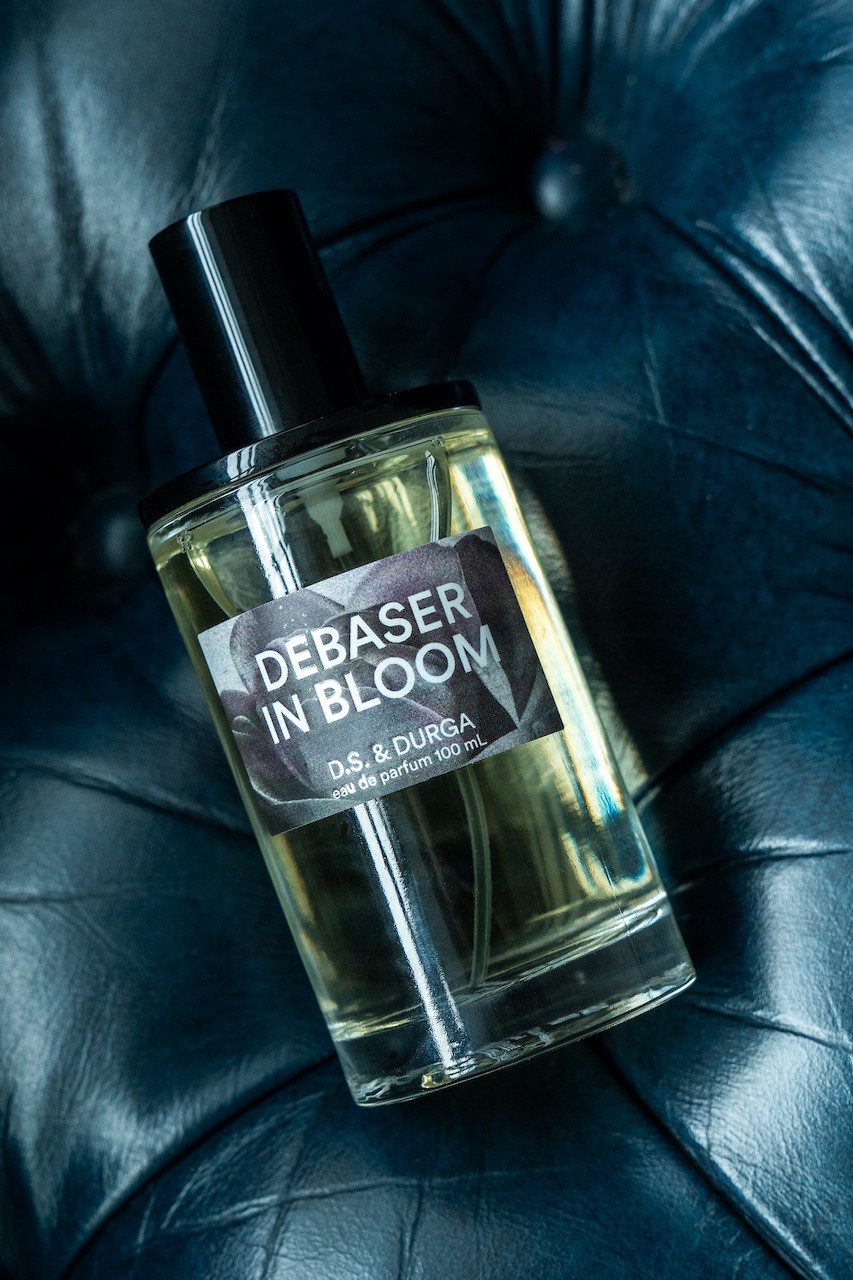
That self-guided philosophy runs through some of their most beloved fragrances, including Debaser, inspired by the Pixies song of the same name. Released in 2015, the scent recalls David’s memories of suburban adolescence in the early ’90s. “We were kids making cassette tapes and designing flyers for our bands,” he recalls, remembering a time when DIY music felt like the center of the universe. Those early impulses have now resurfaced in Debaser in Bloom, a new interpretation of the original scent.

The process begins with a simple narrative seed. For Debaser in Bloom, that setting remains unmistakably suburban. Teenagers drift through malls, dye their hair in bathroom mirrors, assemble homemade zines, and dream about the version of New York waiting somewhere beyond their town limits. “Those small details,” explains Kavi, “give it a strong point of view,” where the otherwise mundane, emotionally charged scenes anchor the perspective.
If the original scent captured the restless innocence of teenage discovery—fig leaves, warm air, the hazy anticipation of growing up—its new iteration extends that story into a darker register. David describes the two fragrances almost like characters within the same coming-of-age narrative. “The original is like a kid starting to hang out with older indie rock kids,” he says, where its reverbed expression is the goth kid in the room. Where the first leans green and sunlit, the second unfolds into creamy white florals, introducing a more dramatic, romantic sensibility. The contrast is personal as well: David jokes that he was the skater-punk kid in that suburban scene, while Kavi would have been the cool goth girl—two adjacent worlds that inevitably overlap.
As any artist knows, the creative process rarely unfolds in tidy, controlled conditions. Contrary to the romantic image of pristine studios and carefully curated mood boards, inspiration tends to appear at inconvenient moments—on the subway, late at night, or hastily typed into the Notes app on a phone. “If you can’t stomach that messy process, you probably shouldn’t start a creative business.” For the duo, there’s no perfect recipe to create; the muse strikes capriciously, and you have to be receptive to it. While the work happens at the desk, the ideas surface all throughout the ether.
The studio itself becomes less a sanctuary than a working archive. Tables fill with scent strips, test bottles, packaging mockups, and half-finished experiments. Vinyl records line the shelves, and the pair often work in tandem, letting sound shape the atmosphere of the room.

Music hums constantly through the space, acting as both muse and catalyst—an energy that feels intertwined with the evocative power of fragrance. “They’re both invisible, but they can completely change the environment you’re in,” David notes. Like a song, the fragrances create a cacophony of notes; the story is the frame, and imagination carries it beyond.
By now, the Moltzes have long since put in the hours, and the brand has grown into an international presence. Yet that expansion has also opened the door to something unorthodox in the industry—a through line that has coursed through the brand’s tenure: rather than chasing constant novelty, the pair are increasingly interested in expanding the worlds they have already created. Here, the stories told through scent are guided as much by instinctual imagination as by intention.
As the fragrance house continues to chart new frontiers, discover Debaser in Bloom online and at D.S & Durga boutiques.