Heartbreak, Renewal and a Love Letter to London: Inside Maximilian Raynor’s Fall Collection
Fashion — 27.02.26
Words: Mia Mazzocchi
Photography: Nicole Pollack
During the hectic lead-up to London Fashion Week, with less than 48 hours to go until the unveiling of his Fall/Winter 2026 collection, Post Me Your Last Kiss, Maximilian Raynor had his head buried in a mood board, finalizing the casting lineup that would soon bring his garments to life.
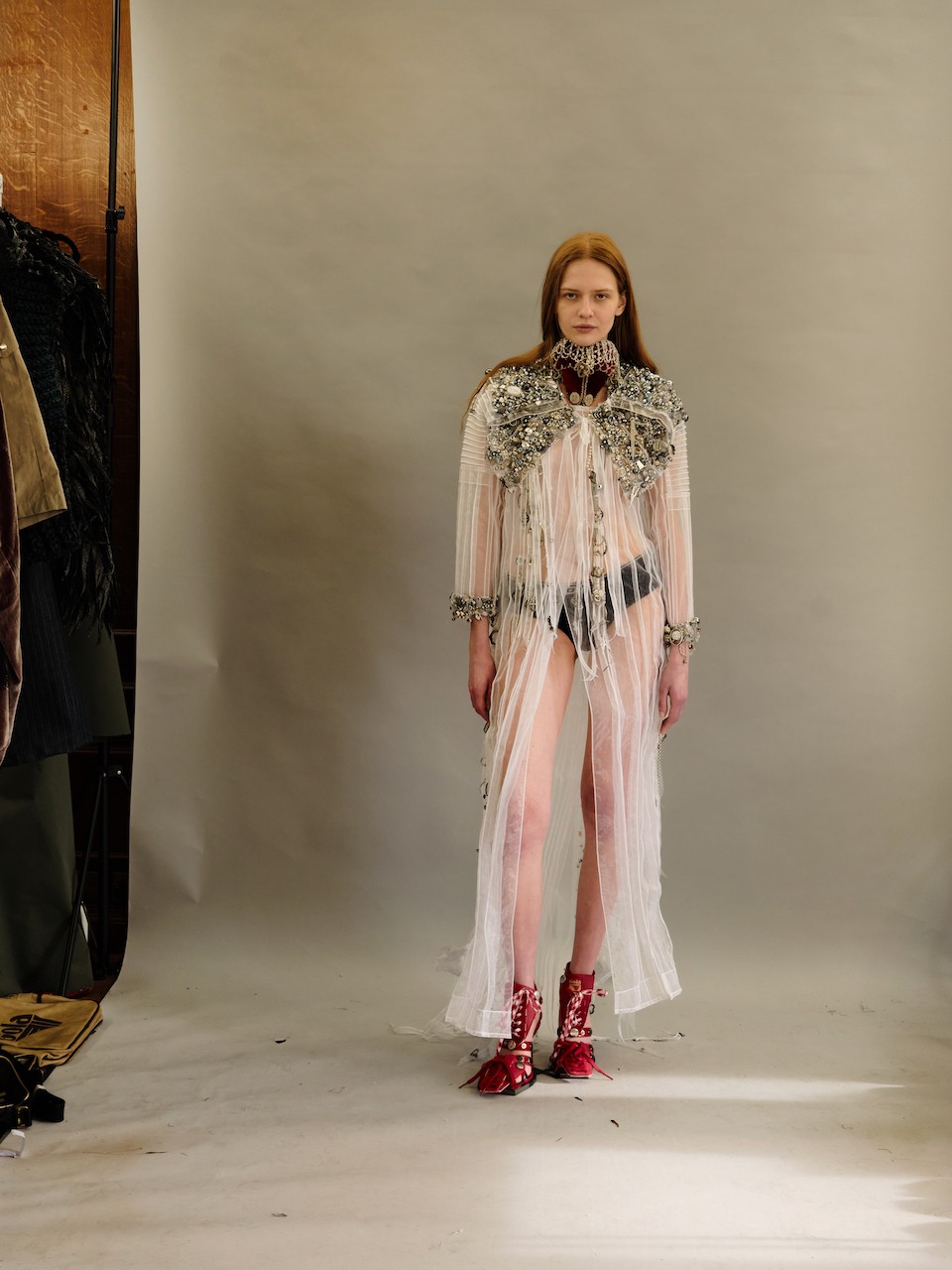
Following a recent surge in global attention—with the likes of Teyana Taylor and Lady Gaga wearing his larger-than-life pieces—all eyes were on where Raynor would take the brand next. Since graduating from Central Saint Martins, the up-and-coming designer has steadily refined his craft, with a formative stint under one of fashion’s most influential figures—working closely with Jonathan Anderson at JW Anderson—proving pivotal in shaping his distinct point of view. This season marks a new chapter for Raynor and, with the support of Gola Classics, he reimagines the heritage label through his own modern lens.
Two days before the show, TEETH joined Raynor at his vibrant studio in the heart of Woolwich, where the brand’s world came into sharp focus. Sewing machines ran on one side of the room as the design team put the finishing touches on the collection, while across the studio the casting team sifted through model headshots, pinning their final lineup to the boards.
Later, on the rooftop of One Hundred Shoreditch, London’s skyline spilled through the windows, serving as an intentional backdrop and a quiet ode to the city Raynor calls home. Countertops were adorned with handwritten letters, hanging from the ceiling and intertwined with Gola Classics sneakers. At the end of the catwalk sat a makeshift room, half-broken glasses scattered across a table, walls formed from a web of letters.
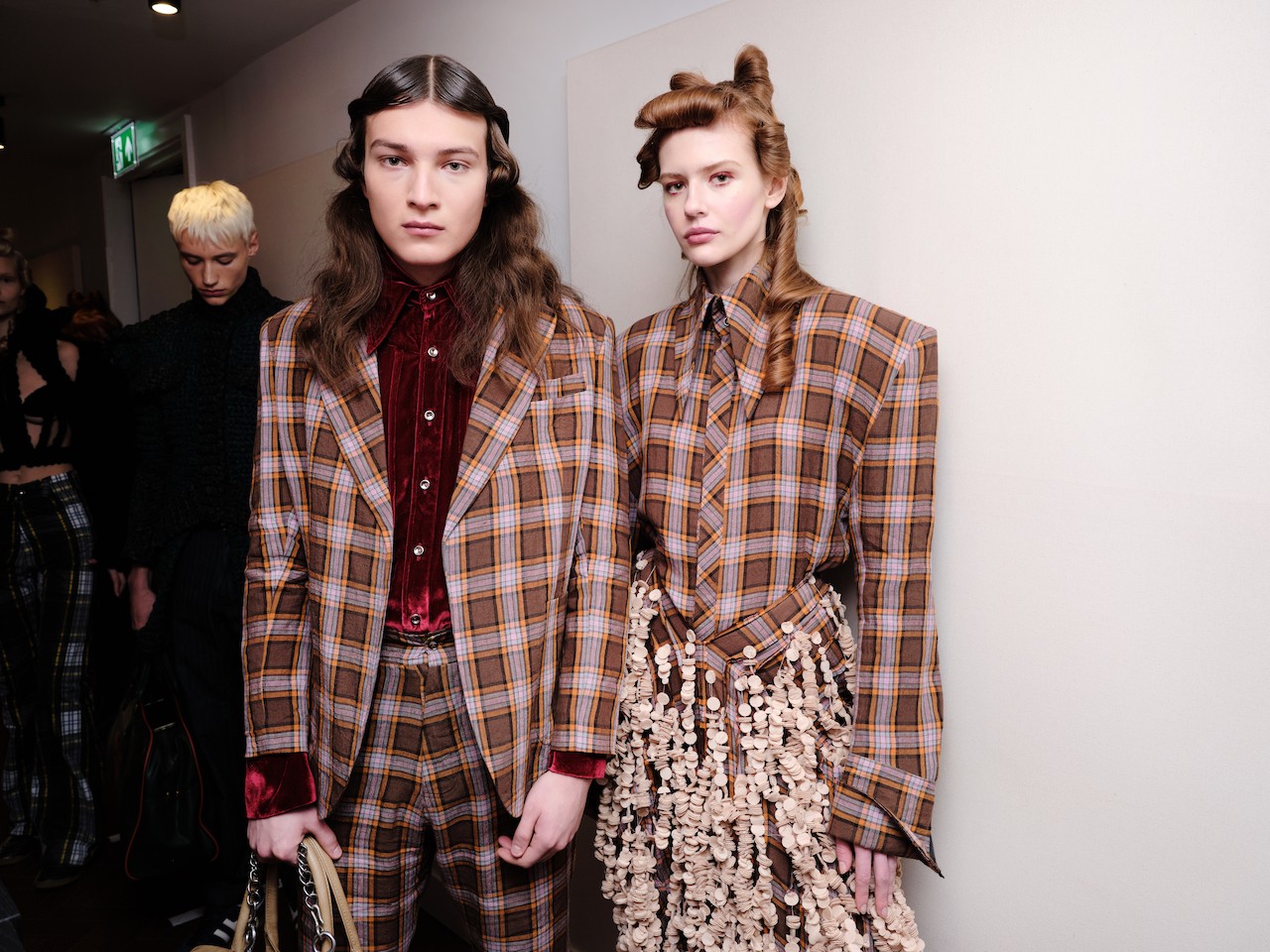
An homage to London and to love lost within it, the collection was rooted in the complex emotions that follow heartbreak. Raynor held a magnifying glass to the ways the city carried him through grief, from walking through Spitalfields Market at dawn to finding solace on the dance floors of London’s queer scene. An unexpected heartbreak prompted a rush of emotions that led Raynor to dig deeper, lay everything bare, and embrace a new vulnerability in his work.
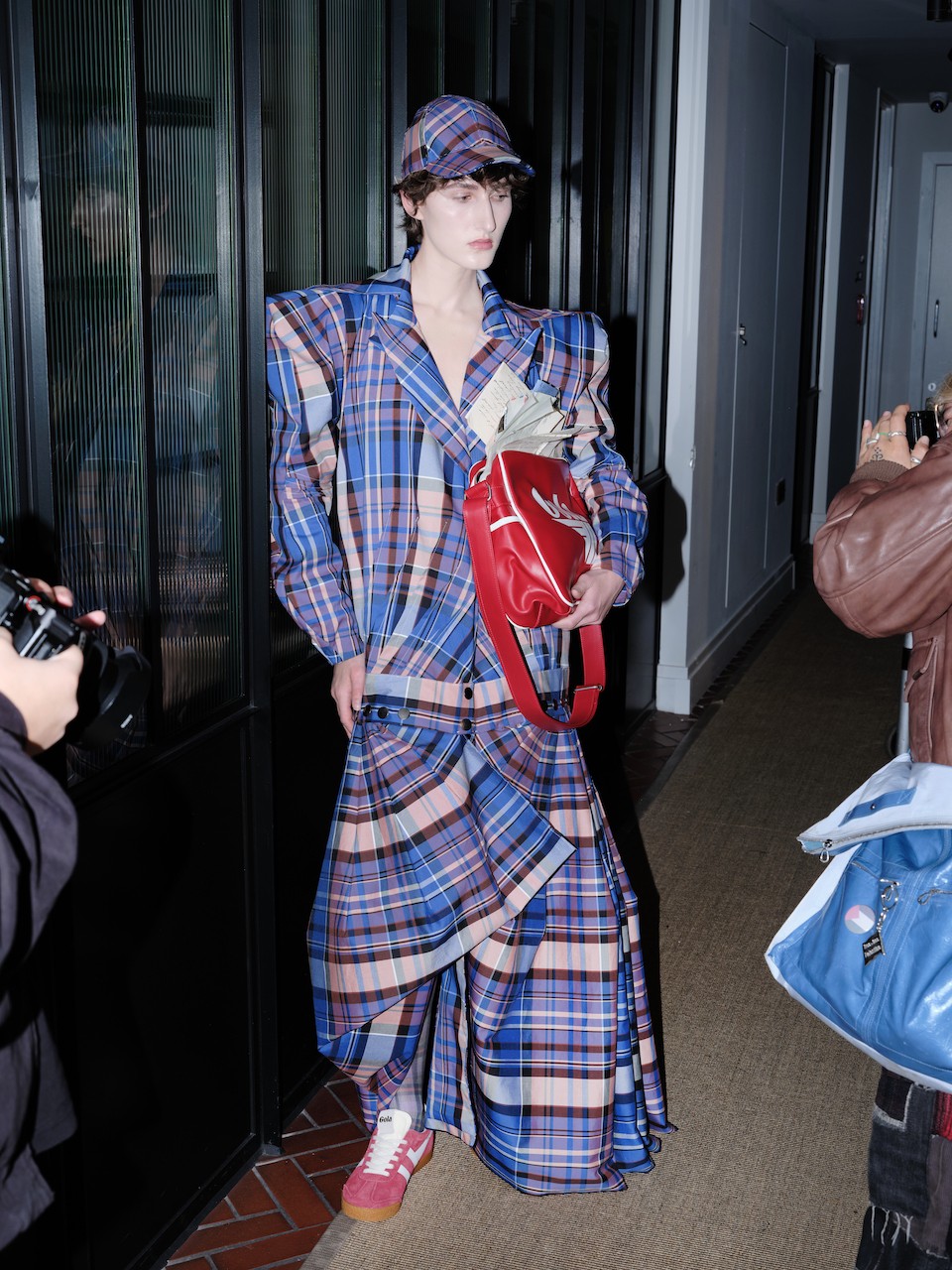
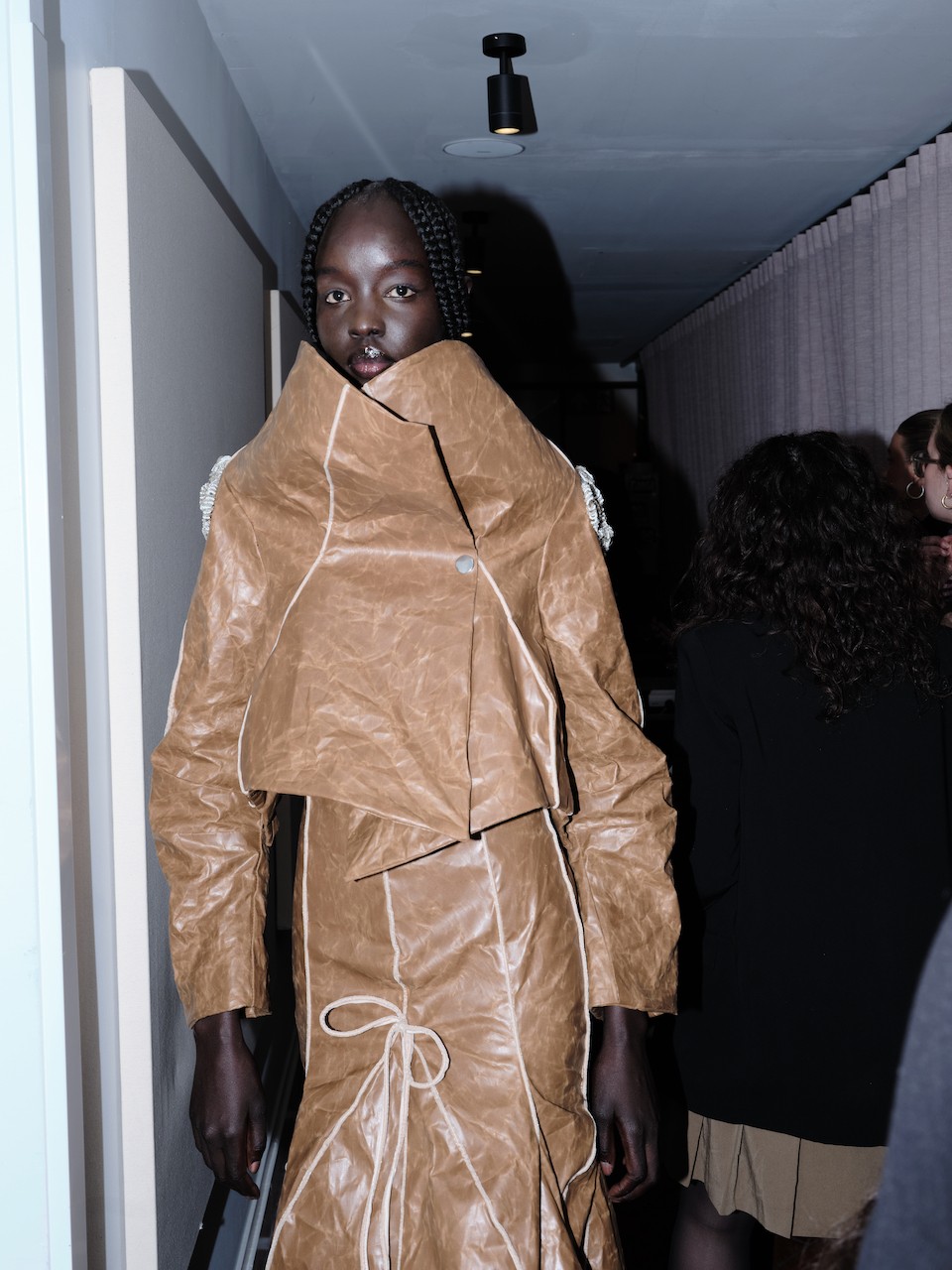
Just like the muse, various pieces of the collection embodied the act of rebuilding—deconstruction giving way to something newly formed. Customized Gola Classics were reworked into sporty heels, while other garments followed Raynor’s signature codes. “The Messenger Girl” look featured structured shoulder pads combined with Raynor’s love for tartan fabrics, while look two, ‘Brown Paper Packages Tied Up with String,’ had a crumpled effect and string-like finishes along each panel, tied into a bow at the back—lined, of course, with Raynor’s tartan peeking out from beneath.
Across 15 looks, the narrative unfolded with cinematic clarity—layered with meaning, much like the envelopes scattered throughout the room. Below, TEETH dives into Raynor’s process, his key inspirations for Fall/Winter 2026, and why this collection marks a decisive evolution for the brand.
What was the inspiration behind Post Me Your Last Kiss, and how did its themes shape the collection?
MAXIMILLIAN RAYNOR: To be quite frank, it’s all based on my recent heartbreak and the demise of a relationship that I thought would last forever and ended quite abruptly just before the show last season. It’s this idea of receiving that final farewell in the form of a love letter or a package. We introduce this “Post Girl” in a checkered look—a character imagined as “Royal Mail” meets a mid-century American messenger, tasked with delivering one final package. The two looks that follow represent the package itself, screwed up in despair.
The third look is the letter being punched into a thousand tiny pieces in anger but then we start to meet this idea of me and him at the earliest stage in our relationship, the kind of clothes that we wore on our first dates. For example, I wore this black leather jacket, which we’ve done as a crocheted bomber and I wore these blue jeans which we placed in the collection. He wore this frosted purple velvet jacket, which we’ve taken into these broken argyle weaves. Then it’s this idea of him roaming the streets of London seeking reprieve from his melancholy. As the soundtrack changes, we shift from this emotional, tragic state of despair into the party culture of London. It represents throwing yourself back into the scene, into the bars.
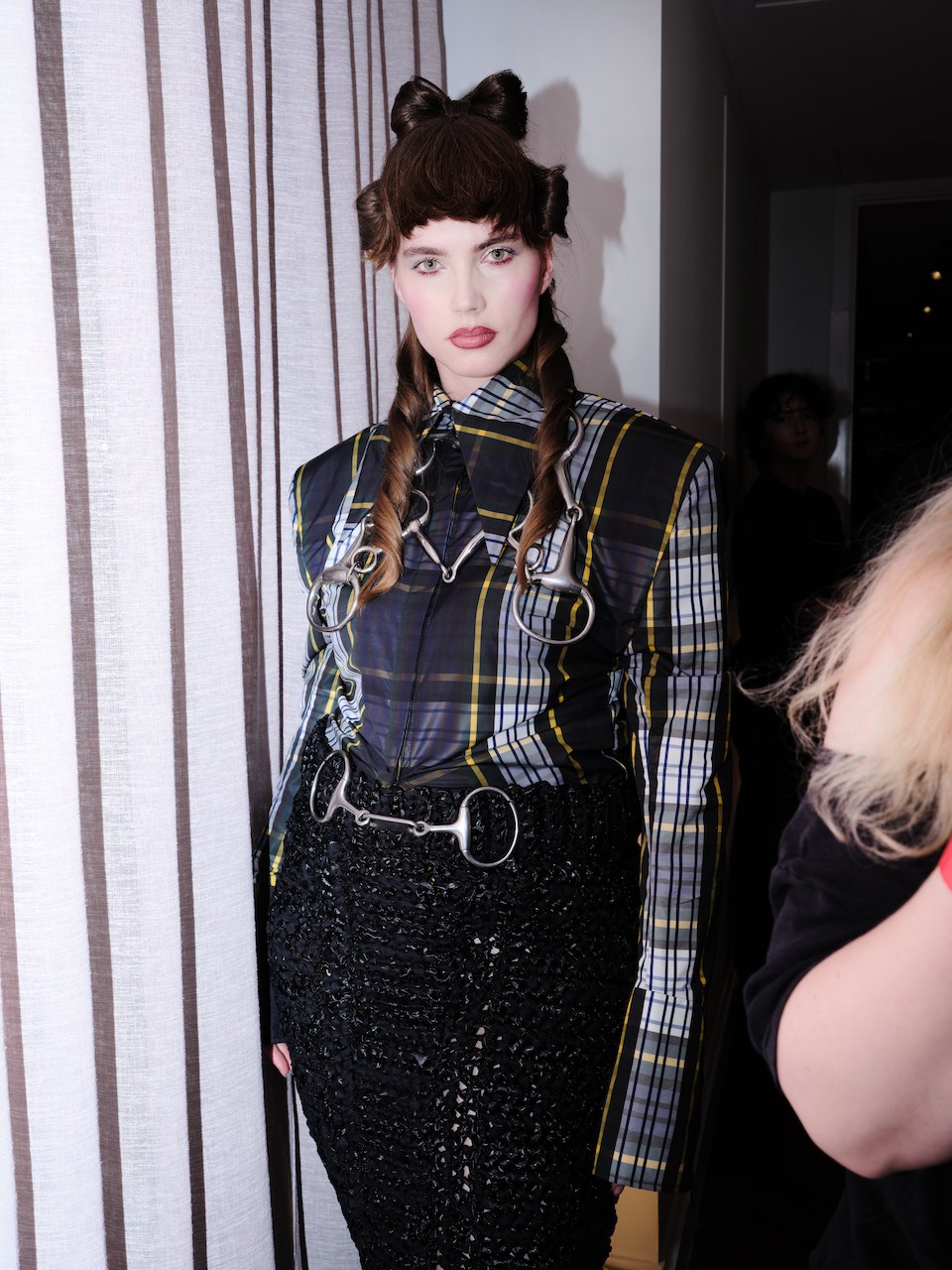
It’s a tribute to those kinds of parties that remind me who I am when I’m single—being in a beautiful hotel with a cocktail in hand, wearing a great look. Those are the moments that bring you to life again.
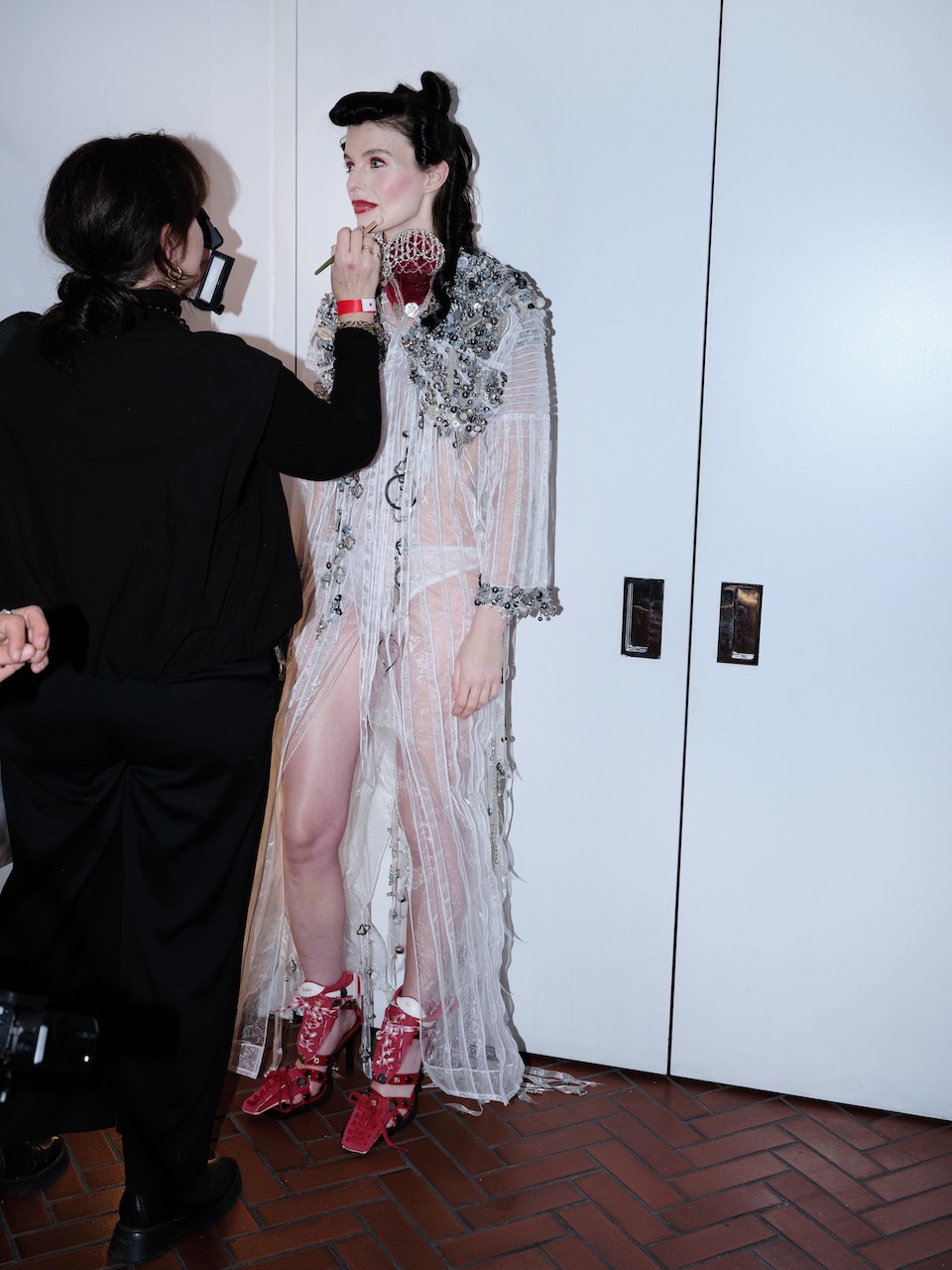
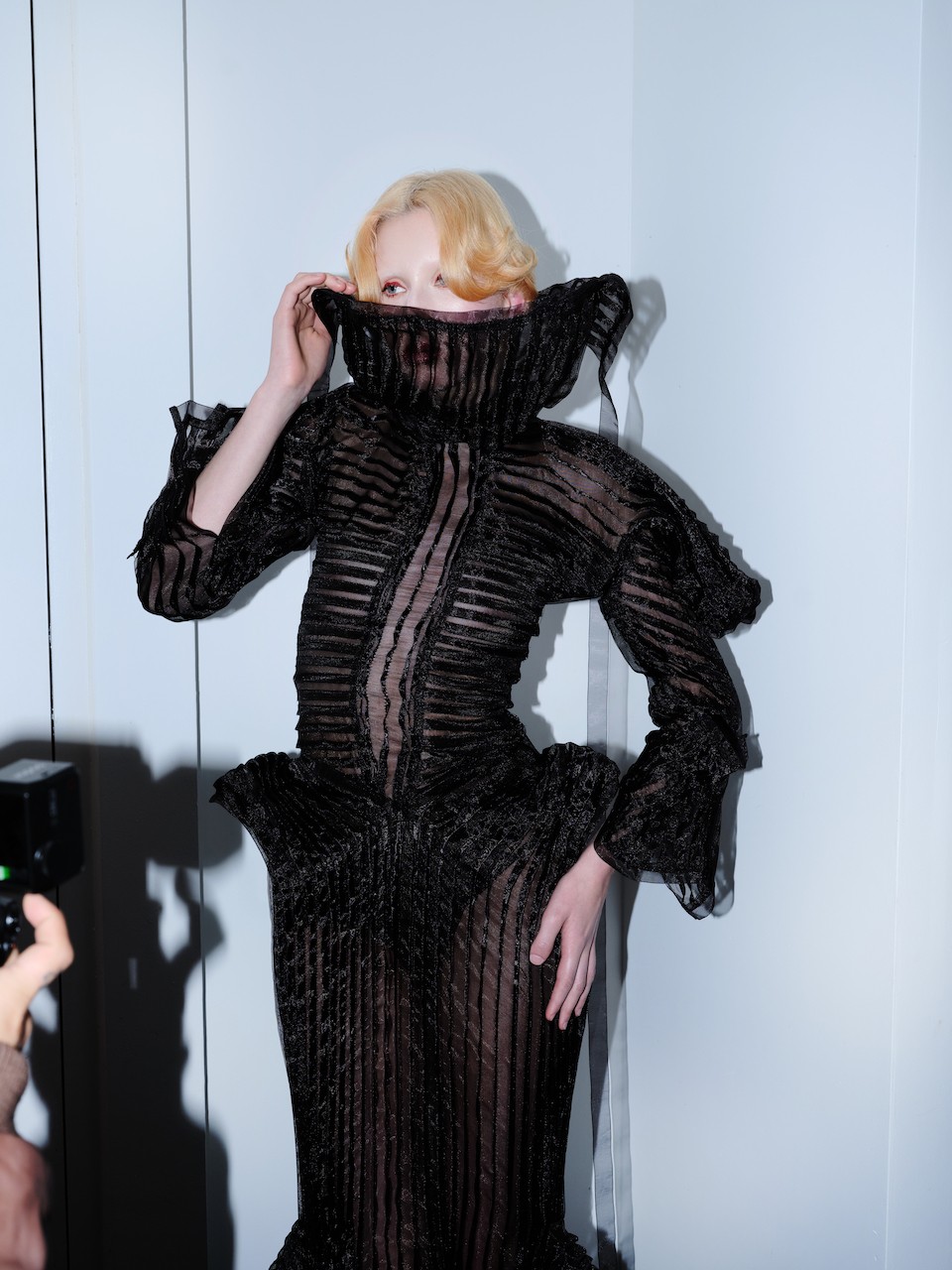
But they can also tip you into a spiral, so the soundtrack intensifies, becomes darker, more charged. The looks follow suit, shifting further into eveningwear. Then we close the collection by returning to that sense of mourning, but from a place of peace. You’re in black lace, paying tribute to what was once there. And then we end with the valentine—the red velvet, this embodiment of love.
The collection moves through many chapters, but at its core it’s a tribute to London. It’s about roaming the streets of Shoreditch and Spitalfields, magpieing through the markets at dawn because I love to do those things.
What does your process look like in the lead-up to fashion week, and where do you find inspiration beyond the sketchbook?
As time has gone on and we’ve done a lot of custom work, there’s been less and less time to sketch and really develop those academic folders that study everything. But I think a lot of that was done in my training. I’ve been this sort of encyclopedia of research for the last seven years of being a student and working at J.W. Anderson and the various things that I’ve done. We tend to work very instinctively in the studio. We don’t plan, we don’t sketch, we just make. I’ve called it in the past “Jackson Pollocking”—it’s like throwing paint on the canvas. You don’t think about where that paint will land but we just make and that’s the way we approach a lot of it. It comes from the heart and the soul. Then later, I’ll dig deeper into what the reference was. For example, we did the shredded dot tassel skirt and I didn’t quite know what that concept was and then I realized, it’s the hole-punched love letter. We build the story from the start, sometimes we find what it is afterward. It’s a very dynamic process. We don’t have the time, we just have to go for it.
Does Fall feel like a continuation of Spring/Summer ’26, or a step into new techniques and ideas?
It’s definitely a step forward into showing what I can do with the codes of a heritage brand because I’m collaborating with Gola on this collection. They are our lead sponsor and their brand identity was integral to the story. They were founded in the late Victorian period and that’s why we’ve done a lot of Victorian referencing in the casting, styling, and hair. It’s a real nod to their founding era and how we can bring that legacy brand’s earliest years into the forefront of styling.
Gola’s messenger bags and trainers have become iconic, so a lot of the cuts are also taken from the ’60s, ’70s, ’80s vibe that we associate with Gola but also the Maximilian Raynor brand. So, I hope what I’m showing here is that alongside a classic brand, I can still infuse that into a very forward-thinking, progressive London collection.
Volume, texture, bold pattern, and structure are signatures of your design language. How are you pushing them for Fall/Winter 2026, and are there any unexpected details you’re especially excited for people to notice?
I’m definitely refining the silhouettes. I think there are some [looks] that are as bold and dramatic as my BA or MA, but there are also some pieces that feel more adaptable into a wardrobe. I sowed the seeds last season with the collaboration with Kimono Eyewear and with John Smedley Knitwear to show that amongst the dramatic beauty, you can find really wearable commercial pieces that people want to own and wear. So silhouette-wise, that’s a real focus with some of our pieces. But then the real flavor is found in the textiles and I hope people notice the time that’s been poured into the crochet, into the woven textile skirt, into the way that we treat ribbons. I think that is what I’ve started but feel really refined with this collection. It’s the most mature collection to date.
You’ve dressed names like Lady Gaga, Jade, and Teyana Taylor. Who is the Maximilian Raynor wearer in your mind, and what do they embody?
It’s been amazing over the years to build this community of people that wear Maximilian Raynor and that started while I was still on my BA at Central Saint Martins but it’s really grown and become extremely global. Whether it’s Taiwanese pop star Jolin Cai or the most incredible fashion girl in the world right now, Teyana Taylor, it’s varied. It’s super diverse. It’s people that want to be brave in the way they dress but want to do it in a way that feels chic, that feels referenced. We’re not here for loud, Instagrammable fashion. I think it’s much more about taste, which is a tricky word as it’s obviously subjective, but I do hope that it feels very luxurious at the same time.
What excites you most about London Fashion Week and what’s next for the brand?
London is my place. I’d like to end up in Milan or Paris at some point but for the stage of my brand right now and the sort of British-isms that I’m constantly riffing off—ideas like the country check that we keep coming back to, the Irish linens and Scottish tweeds or tartans. It’s all an ode to the UK.
London distills all of that iconic heritage wear but in a punk and subversive way. It excites me for its celebration of queerness, its upholding of community and the way that it challenges and pushes fashion forward, even in times of extreme world conflict. Fashion isn’t the direct political remedy to those things but it’s certainly the wider artistic escape from them that gives people hope in what it is to create and what it is to tell stories. I think London does [political] fashion very well; fashion that feels urgent and with a finger on the pulse.