The Soft Revolution: How Lazy SkinScience is Redefining K-Beauty
Beauty — 02.02.26
Words: Gabriella Onessimo
Campaign Photography: Phoebe Salmon
Product Photography: Judita Kuniskyte
Campaign Creative Direction: Contact High
Despite what the reverberating voices of marketing talking heads may tell you, beauty is inherently ritualistic. A lipstick swipe is ceremonial, a spray of fragrance is an anointing, a facial cleanse to close out the day brings renewal. It’s the simplicity that adds the most value to our routines. In an industry where more is marketed as better—more steps, more ingredients, more added to the “ritual”—newly launched Lazy SkinScience underscores that less is more.

Shot by Phoebe Salmon. Courtesy of Lazy Skinscience.
Founded by Mia Park, the brand is rooted in her ethos of “intentional laziness.” Park, who made a foray into beauty after serving as co-founder of fashion streetwear label Sundae School, distills her love for K-beauty into a simplified form—not by way of shortcuts, but as a reimagining of what it could be. “I find it alarming how easily the word ‘ritual’ is being cheapened,” she says. “If someone tells you what your ritual is, that’s not sacred—that’s marketing. A ritual should be sacred and chosen by you.”

Mia Park portrait. Courtesy of Lazy Skinscience.
Her entry point into beauty wasn’t aspirational but personal. Severe acne, medical treatments, and long-term sensitivity shaped an early understanding that skin is not a trend surface but a living barrier. Korean skincare products were among the only formulas that consistently worked—but for years, they were difficult to access in the U.S. Park decided to take matters into her own hands. Her first launch, the Double Duty, combines a silky red camellia–infused serum and a hydrating squalane moisturizer in a single component, designed to be layered for a longer ritual or merged into a single step depending on the day’s pace.
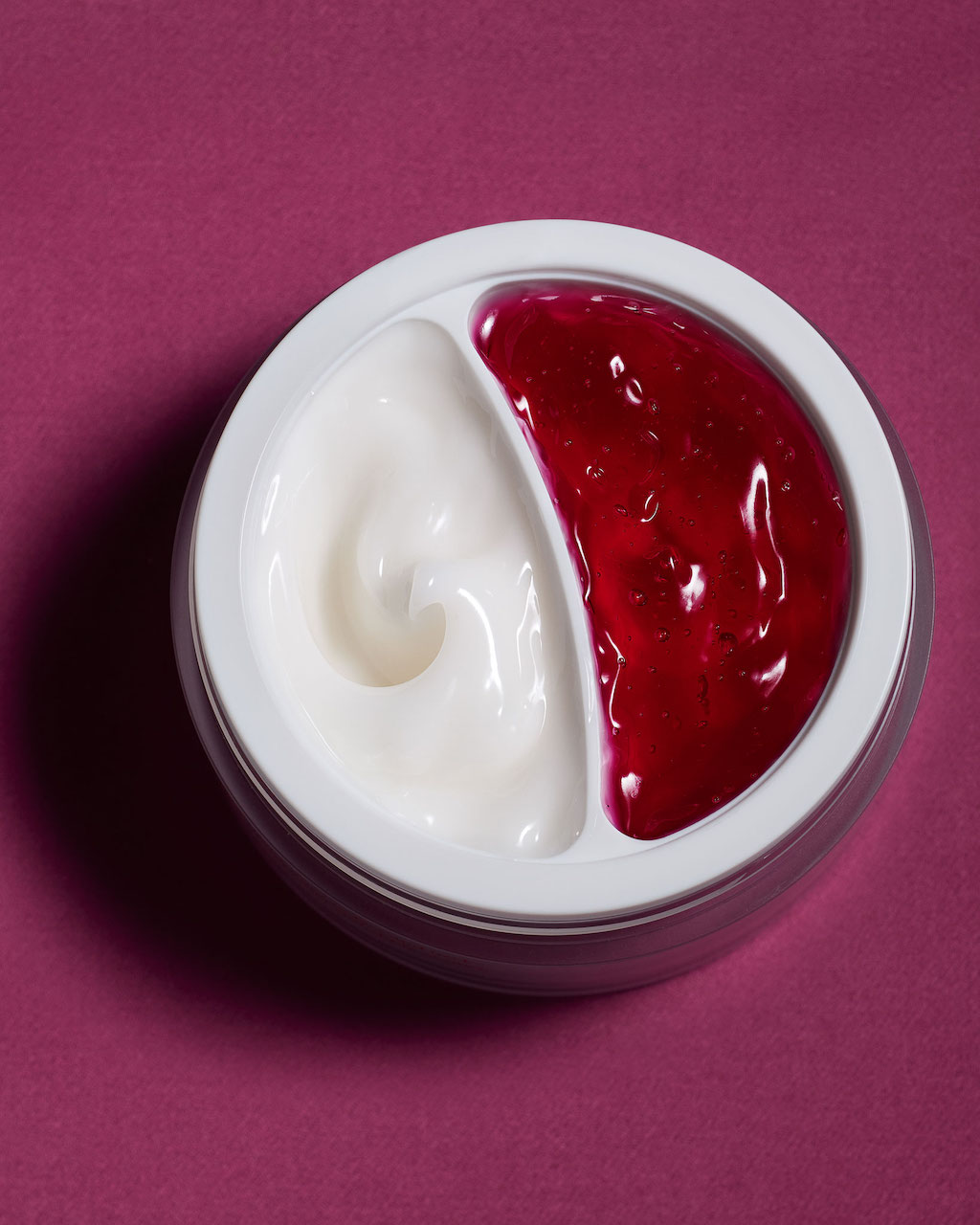
Courtesy of Lazy Skinscience
When K-beauty finally entered the mainstream, it arrived wrapped in a different problem: overload. Multi-step regimens inundated skincare enthusiasts with 14-step plans to achieve glass skin. What was once a technologically advanced industry became diluted by buzzwords and social media’s propensity for overconsumption. “People were so overwhelmed by Korean beauty—they’d ask, what are these 10-step routines? What are all these ingredients?” she says. “Brands put this burden of knowledge on consumers, disguised as science.”
What followed was a familiar modern pattern: education turning into escalation. Ten steps became twelve. New actives replaced last year’s miracle ingredients, and suddenly, you’re meant to adjust your entire routine for daily retinol or whatever the latest TikTok trend pushes through the algorithm. Beyond the label, skincare developed a visual vocabulary of its own—shelfies, aestheticized vanities, product layering as proof of discipline and devotion—becoming less about daily function and more about self-worth signaling. Somewhere in that performance, the original promise of care thinned out. “You can absolutely damage your skin barrier by doing too much,” she notes. “I truly don’t believe most people should be doing more than three steps, including cleansing.”
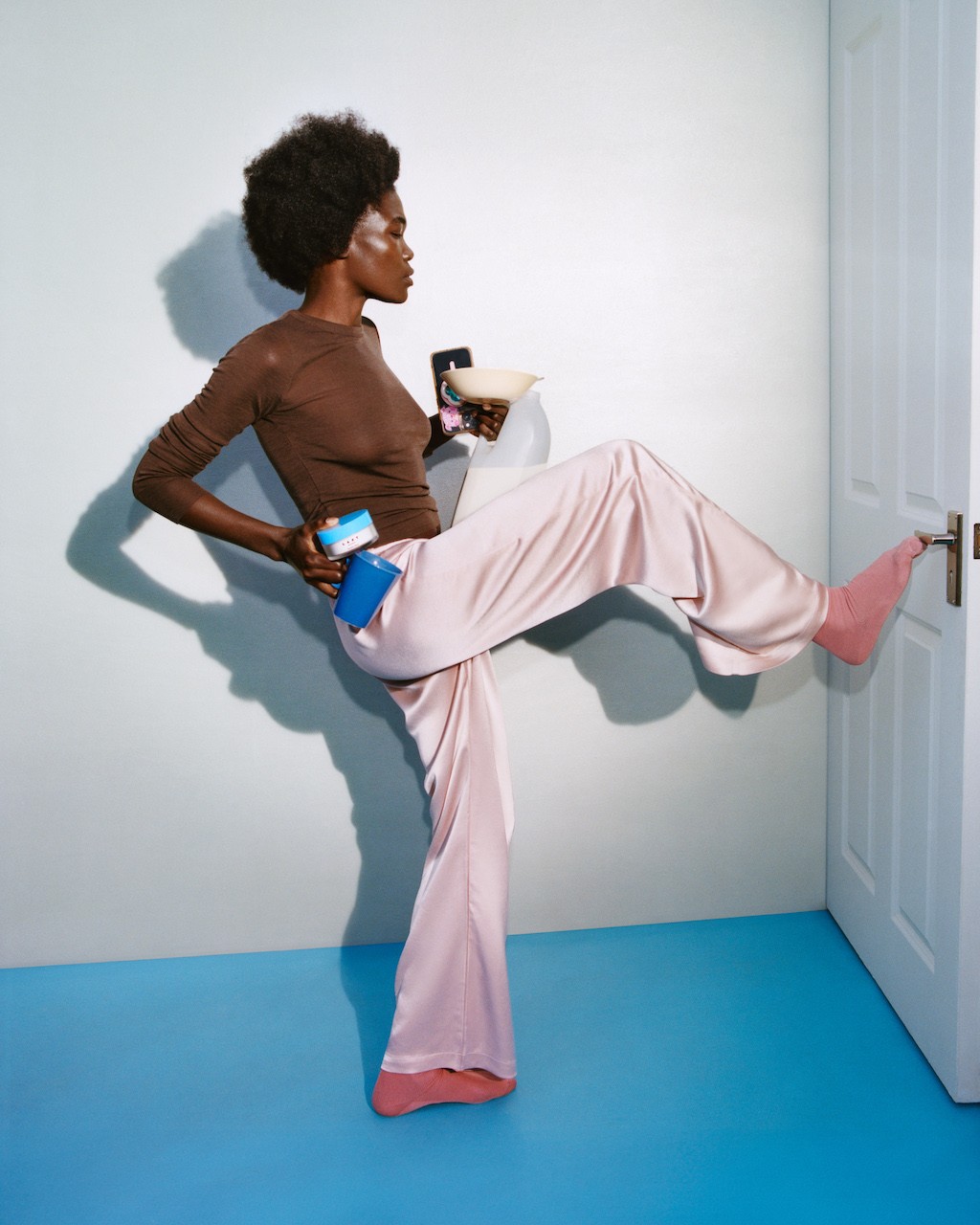
Shot by Phoebe Salmon. Courtesy of Lazy Skinscience.
To bring about a sense of effortlessness, the crux of the brand aims to cut through the noise, centering on efficacious ingredients the user doesn’t have to overthink. “I want the brand to become an oasis in the beauty mayhem; it’s about uncluttering and quieting the noise,” she says. Park’s vision of Lazy SkinScience balances pushback with intentionality, reclaiming laziness not as neglect or not showing up, but as giving time back to yourself. Whether through doomscrolling or other external pressures, we are always on, and Park posits skincare as the least of your worries. “We’re not trying to add more—we’re trying to create space on your shelf and space in your mind,” she says.

Courtesy of Lazy Skinscience
Skincare, in this framing, becomes an intrinsic act of care rather than spectacle, and routine something that should return time, not consume it. Indulging in laziness becomes a mindful approach rather than a moral failing. “It feels like a rebellion against hustle culture, against over-consumerism, and against the inundation of information.”
Lazy SkinScience builds from that constraint. “As much as people are overwhelmed, they’re also craving permission to do less,” Park notes, a mantra she keeps at the center of the brand’s growth. As she continues to develop the line, she’s guided by a peace-forward inner compass—emphasizing research and efficacy, where cutting steps is not neglect but strategy, where intentional laziness comes into practice. In philosophy, it goes further: beauty regimens should not be the focal point of your life, but the background condition—the quiet, unwinding support—that lets you live it.