On Of Earth & Wires, Dua Saleh Finds Their Sanctuary
Music — 21.05.26
Words: Gabriella Onessimo
Photography: Nori Rasmussen-Martinez
Creative Direction: Devin Duckworth
Stylist: Keyla Marquez
Hair: Ramdasha
Makeup: Anna Kato
Photo Assist: Zach, Yuqi
Stylist Assist: Matzi
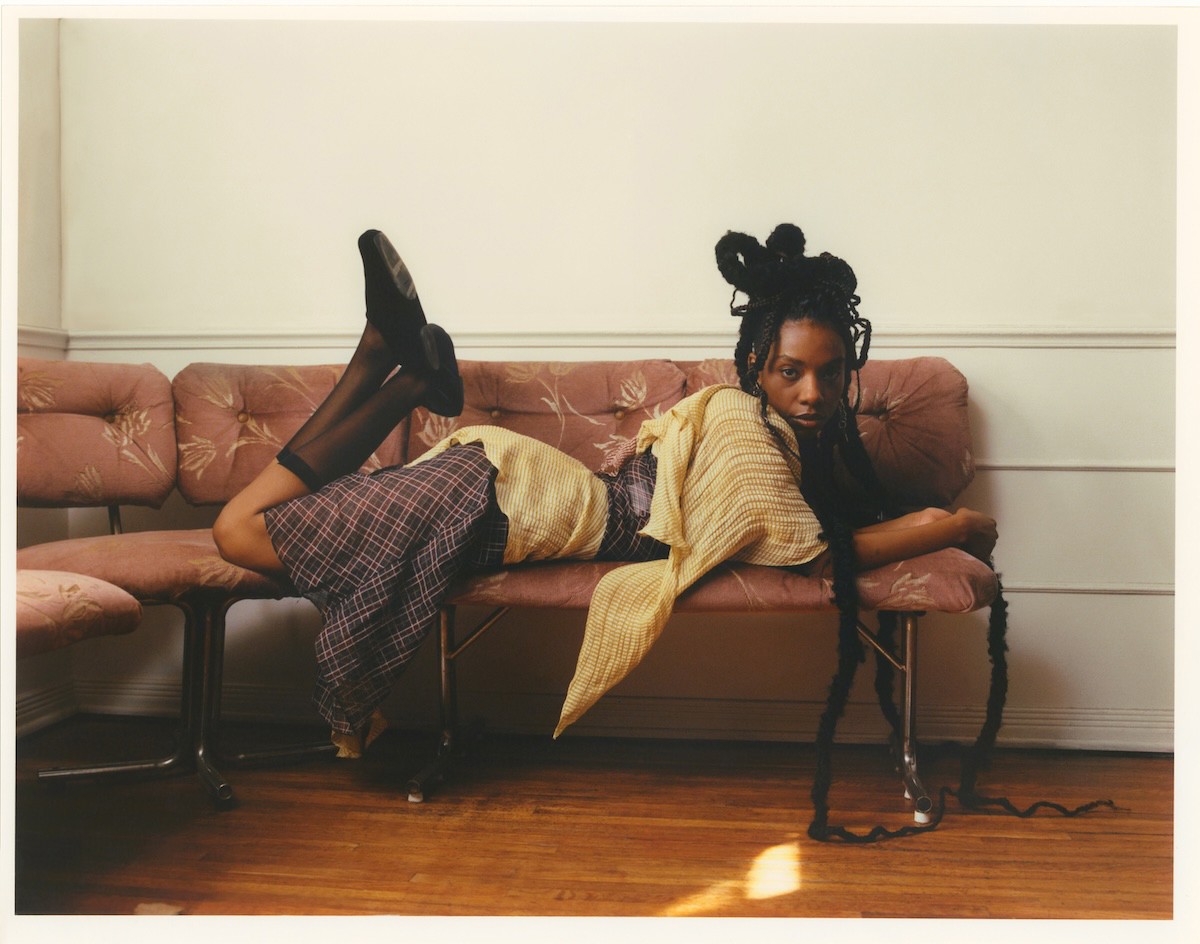
Dress Kiko Kostadinov, Shoes KHAITE, Earrings Justine Clenquet
There’s a particular kind of exhaustion that defines this cultural moment. The psychic weight of witnessing collapse in real time while still being expected to simply carry on is a normalized condition of contemporary life, met either with numbness or confrontation.
For Dua Saleh, that tension courses through Of Earth & Wires, a record that lives within the fragmented worlds of environmental grief, queer desire, political warfare, and fragile hope. The album moves like a transmission from the edge of the world: flooded landscapes, scorched earth, lovers wandering through the aftermath. But beneath its apocalyptic undertones is something unexpectedly tender: a belief that some things are still worth protecting.
Over the last several years, the Minnesota-born multi-hyphenate has carved out a singular space within music and culture at large. From their breakout experimental releases to their role on Sex Education, their work has consistently blurred the lines between performance, activism, and poetry. That charged emotionality feels especially urgent against the backdrop of the ongoing genocide and humanitarian crisis in Sudan, which Saleh discusses with devastating intimacy. As violence continues to displace and kill Sudanese civilians—including members of their own family—grief becomes embedded within the record’s DNA, a space that metamorphoses from refuge into catharsis.
Rather than turning away from crisis, Saleh both confronts and channels it. The result is music that doesn’t look away from catastrophe but finds beauty amid the wreckage.
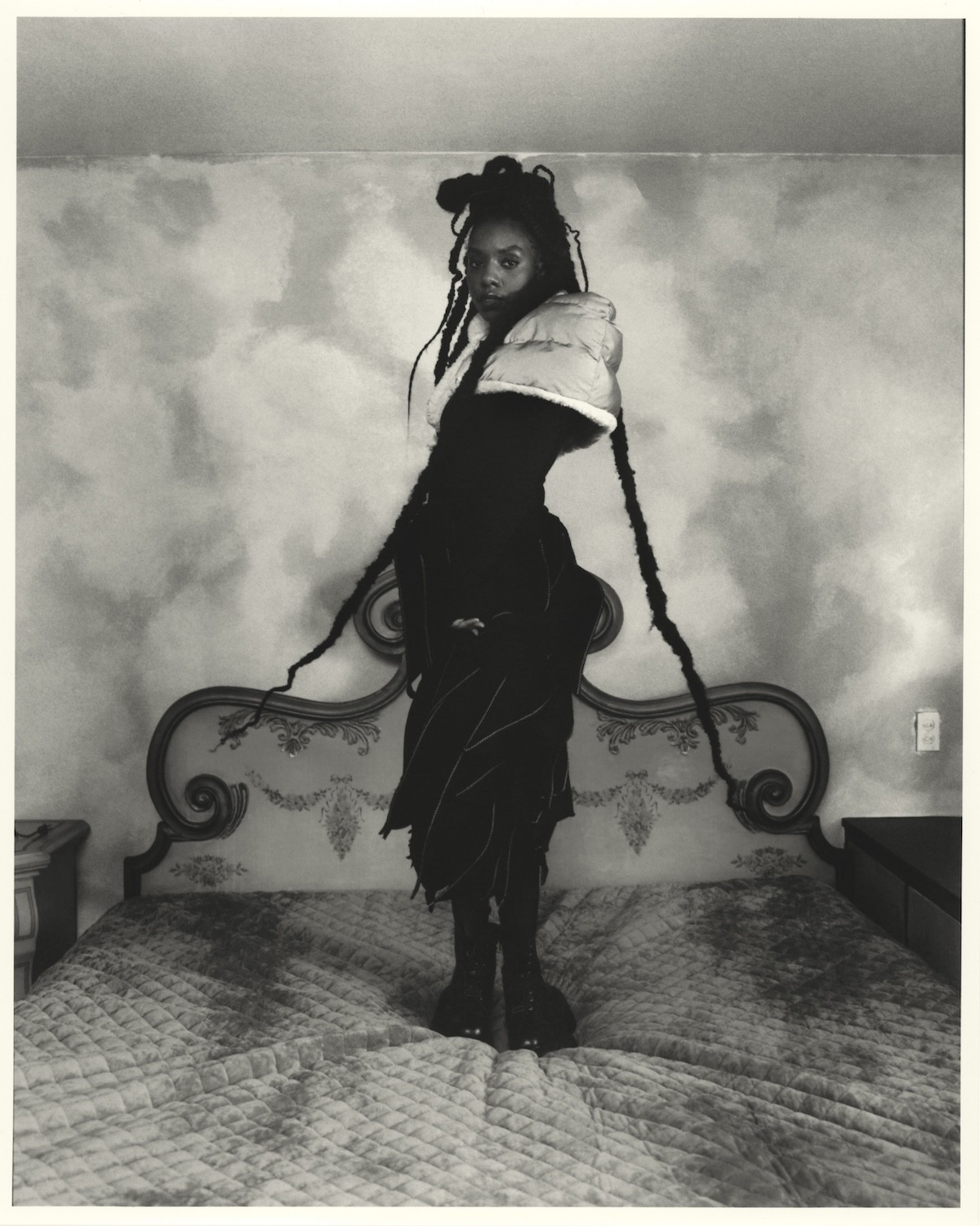
Hood Rio Sport, Dress A.W.A.K.E. MODE, Shoes New Rock
TEETH: How are you feeling now that Of Earth & Wires is almost out in the world?
Dua: It feels good to have it out. I definitely went through that thing that most artists go through, where… I can still listen to some of the songs clearly, but I feel like I rinsed the album so much that I don’t even want to hear these songs anymore.
Does it feel like something that belongs to the time that inspired you to make it, or does it have a timeless quality that you can always jump back into, say, when you’re performing songs from the album?
I think this album is so personal, and it did help me get past a lot of difficult emotions. But now that I’ve gotten past it, it’s not necessarily painful to go back and perform it. It’s more like a reminder of the story and the messaging I wanted to put out there. And I’m appreciative of the album—it’s the dream of my inner child being like, ‘Wow, you’re actually doing environmental justice work, racial justice, you have queer messaging.’ I would be proud of myself. It feels less tumultuous and more like something I feel pride in.
I think that’s what the function of art is supposed to be for the creative person—a therapeutic process, a way to go through. When you first started shaping this record, what was the emotional starting point?
At first, it was numbness, which is really terrifying. I was going through it—my family members were going through it in Sudan. I was terrified they were going to pass. A couple of them ended up passing or being shot by soldiers post-coup. I just wasn’t dealing with my emotions. I couldn’t even fathom it. I was grateful to have Justin [Vernon] there, to have been in Minneapolis at the time to work on the album, but also just to have his energy. He was having a blast, just getting all of his musical energy out, and it really helped me sit with what I actually had to write about in order to grieve properly.
Songs like “Flood” were a reflection of that. “Glow” was more about me partying post-grief, being like, ‘Oh my gosh, why did they take my grandma?’ She needed medical attention and care, but she didn’t want to leave [Sudan]. She had such a high regard for her heritage and her culture, and she was scared to be in a different nation-state. So, she stayed, and it’s heartbreaking. And then “Keep Away” was me trying to navigate not wanting to deal with any romantic endeavors at the time, because I was depressed.
I was also getting a lot of harassment because I feel like people are confused about my existence. Even in LA—being a lesbian, people view me as an alien. And post-Trump, people are suppressing their own queerness and then taking it out on people they perceive as trans women. I was doing drag makeup, inspired by Chappell Roan, and getting a lot of harassment as a result. So “Keep Away” was also like—I don’t even want to deal with anyone right now. Can everyone just calm down for a second?
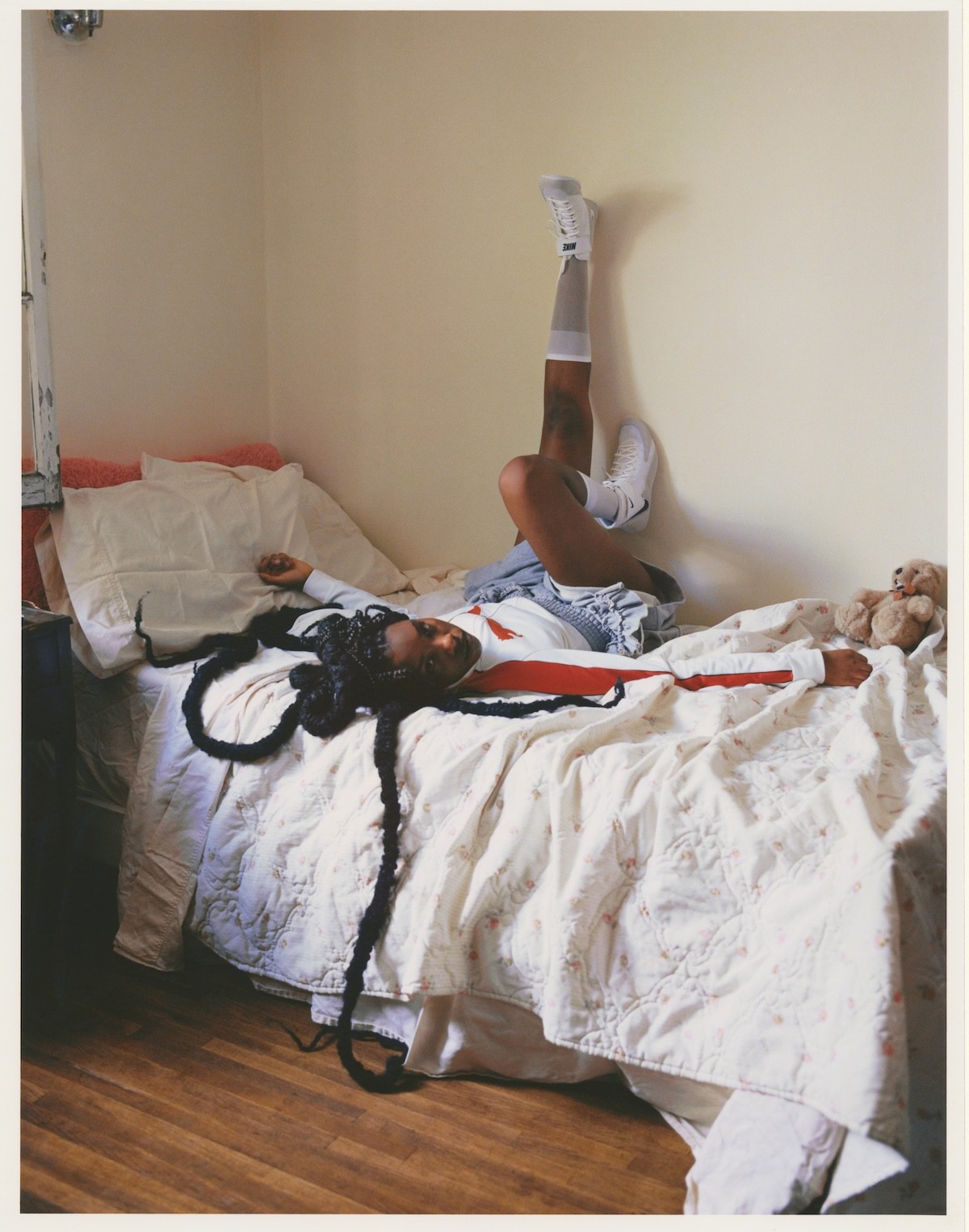
Top Puma, Bottoms Dries Van Noten, Shoes Nike
In the face of that kind of horror, a lot of people retreat into numbness. But for you, it became the album.
I mean, technically I’m safe. I live in the United States. I’m publicly queer, and I’m not going to be killed for it. But my family is from Darfur. My uncle was murdered at his doorstep. Hearing something like that completely changes you.
I didn’t know how to function after that. The only thing I could really do was expand people’s understanding of Sudan through organizing, poetry, music, and performance. I’ve always been politically engaged. During the Sudanese protests in 2020, I helped younger organizers figure things out because they were asking me for guidance. I can’t separate politics from who I am. Even if my family hadn’t experienced genocide and displacement firsthand, I’d still be talking about Sudan, Palestine, AI, imperialism, all of it.
There’s so much discourse right now around whether artists have an obligation to speak up. What’s your relationship to that?
I’m not trying to be political for the sake of it. It’s just genuinely on my mind. I wanted to make a project about home and love, but I’m also watching [people consume] AI art while simultaneously being used in systems that facilitate violence and surveillance. I can’t ignore that reality.
At the same time, I didn’t want the album to be completely dark. I still wanted imagination and queer joy inside it. So, I built this Afrofuturistic framework around two lovers surviving an apocalypse. The first album explored the collapse itself; this one is about living in the aftermath, wandering through the ruins and trying to build intimacy anyway.
I don’t think artists *have* to be vocal. But I also think a lot of us can’t help it.
Even with all these heavy themes, the album still feels deeply romantic and spiritual. How do you stay grounded?
Honestly, kindness. I get so much unexpected kindness from people online and in real life. Even silly things—tarot readers on TikTok telling me I’m doing amazing. It softens me a little. I’m less afraid. I also do affirmations. Animals are weirdly drawn to me, which I find healing. And I’ve learned to laugh at life because everything feels absurd right now. If I don’t laugh, I’ll lose my mind.
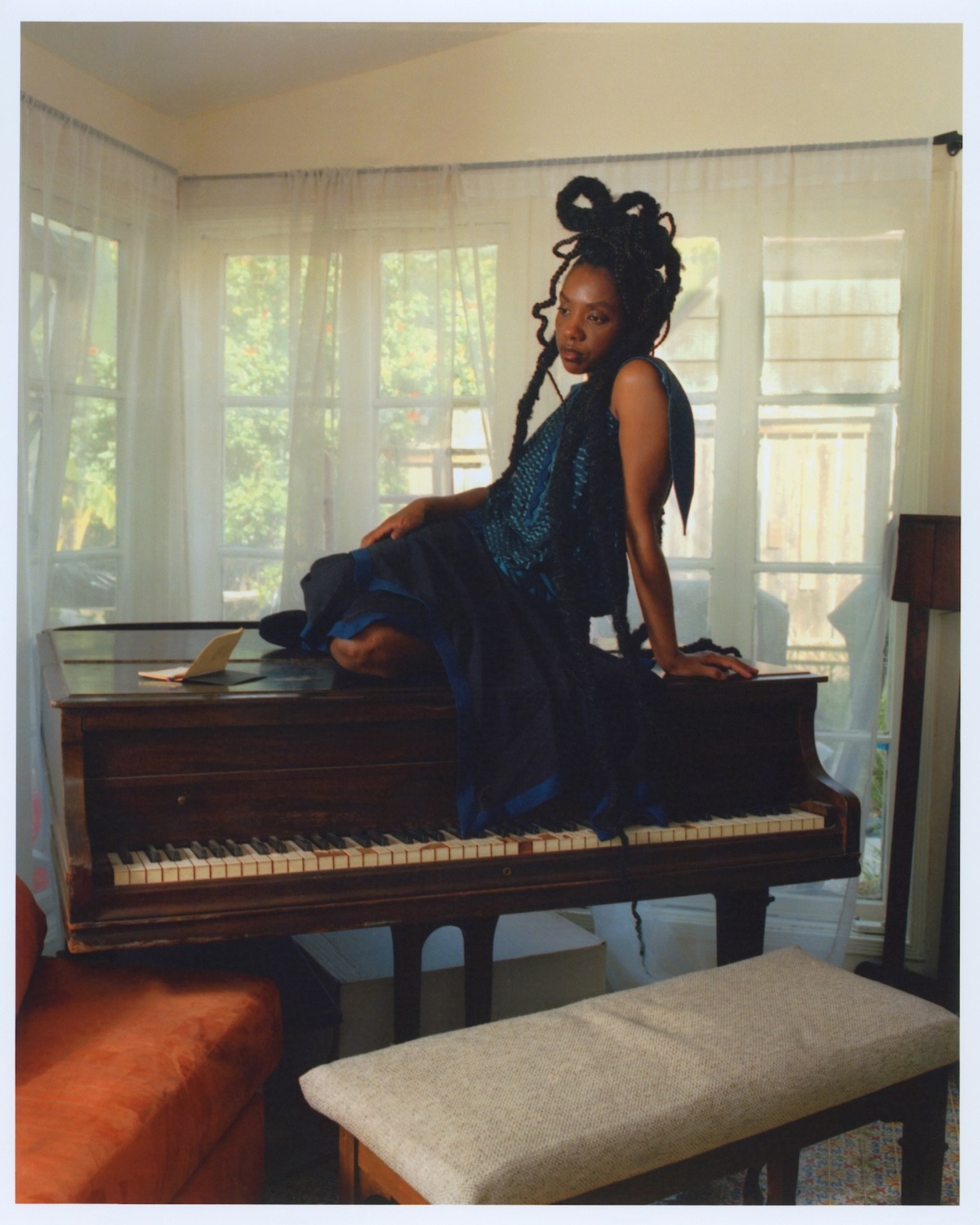
Dress Kiko Kostadinov
There’s a real spiritual undertone running through the music. Has that always been present for you?
I think spirituality shows up for me through absurdity more than anything. At this point, I’m like, maybe Mother Gaia is playing pranks on me for talking about her so much.
The album constantly returns to this idea of home. What does home mean to you now?
I built the album out of all the places that shaped me. We incorporated Sudanese influences into the music and brought in Gaidaa, whose voice grounded the project emotionally and sonically. Sudanese people are deeply musical, so having that presence felt healing.
Then there’s Bon Iver and all these Midwest textures that remind me of Minnesota—folk, indie, that cold, expansive sound. Justin Vernon is all over the record, and bringing in artists from Minneapolis helped root the project in my hometown too.
And then at the very end, Aja Monet closes the album with this hopeful meditation on love. That was important to me because I needed relief. I needed queer joy. I needed someone to remind me that not everything has to end in devastation.
As someone living across multiple identities and geographies, does diaspora shape the way you think about home?
Completely. The environmental themes on the album come directly from places I’ve lived through. “Firestorm” came from living through the LA fires, terrified for my life. “Flood” came from witnessing repeated floods while filming in the UK. And growing up in Minnesota made me hyperaware of environmental destruction because of [oil] pipeline protests and the conversations happening around indigenous land.
A lot of queer spaces are also deeply connected to environmental consciousness and indigenous thought because there’s an understanding that you have to respect the land and the people connected to it.
So, the album became about witnessing Mother Earth grieve. Flooding, burning, depletion. But instead of centering pure devastation, I wanted the record to follow this wandering figure trying to piece life back together after collapse.
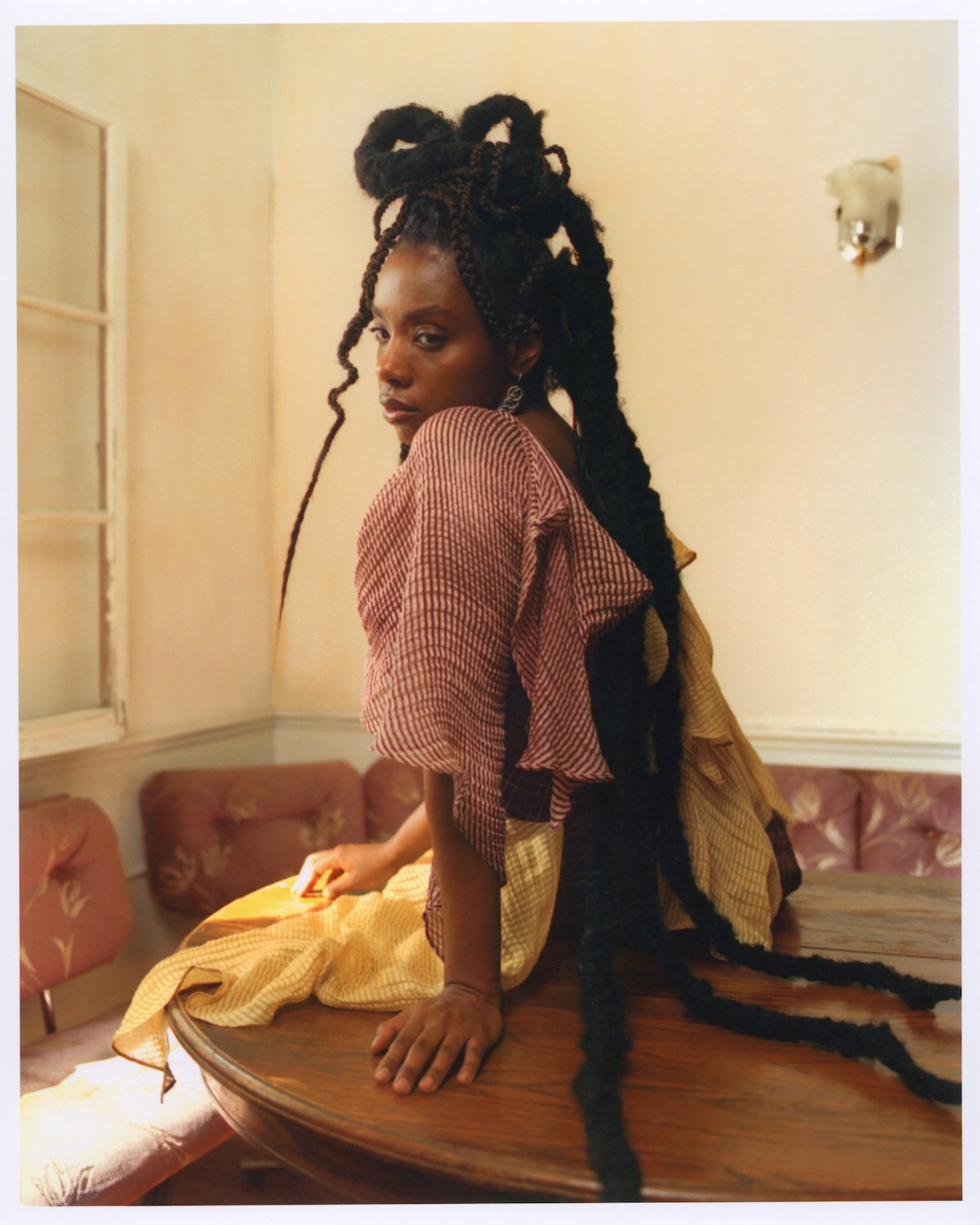
Dress Kiko Kostadinov, Earrings Justine Clenquet
Even with those darker undertones, the project still ends in love and tenderness. Why was that important?
Because I needed it myself. A lot of my writing naturally leans toward rage and grief. Bringing in Aja was almost like receiving a spiritual correction. She’s someone who actively organizes while also making incredibly beautiful work, and having her close the album with this message of joy and love reminded me that we have to climb our way out of despair too.
What did these collaborations teach you about yourself creatively?
That I need to be around artists constantly. I grew up in Minnesota surrounded by music, theater, jazz, hip hop—creativity was everywhere. I was also such an insufferable music snob as a teenager. I thought listening to old jazz records made me intellectually superior to everyone else.
Tumblr-brain disease.
Exactly. But I think every smart queer kid goes through that phase where they become a little pretentious before calming down.
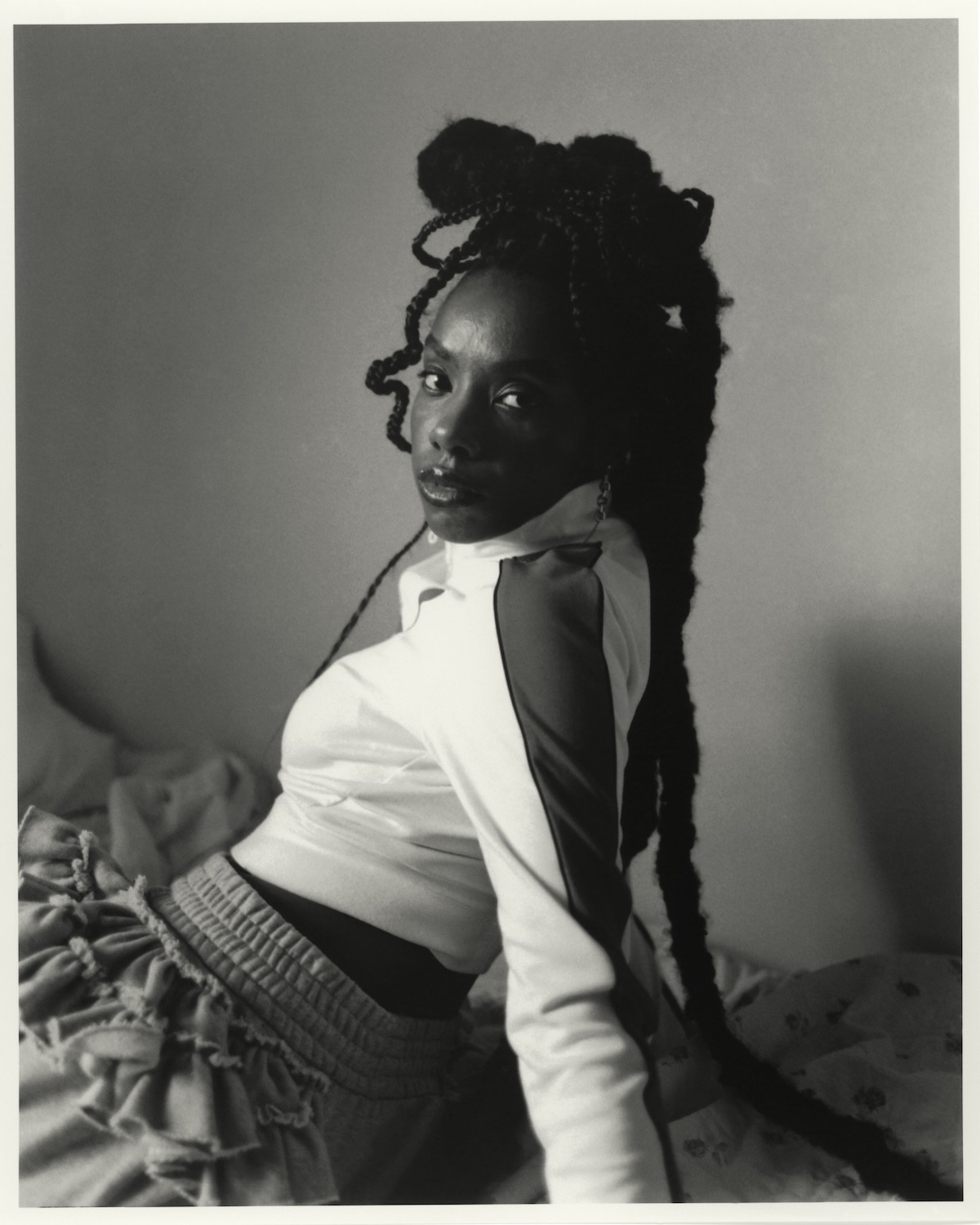
Top Puma, Bottoms Dries Van Noten
Looking back at the whole project now, what do you think it was trying to teach you?
Transparency. I don’t necessarily want to publicly discuss losing family members, but clearly, I needed to process it somehow. And I think a lot of people are grieving right now in different ways—through war, displacement, political violence, all of it.
Music has become one of the only places where I can still feel emotionally cracked open. I’ve been listening to deeply soulful records because it’s hard to witness the state of the world and remain emotionally intact.
I think people need reminders that community and empathy still exist. That there are still people trying to care for one another through all of this. Before we wrap, what’s on rotation right now?
A lot of Willow lately. Also, vintage Sudanese funk records, which honestly feel like research for future music. And weirdly, a lot of Michael Jackson because everyone’s suddenly revisiting those albums again.
There’s something beautiful about allowing all those references and contradictions to coexist inside you instead of forcing yourself into one fixed identity.
Exactly. I hope people let themselves stay playful while still caring deeply about the world. You can be whimsical and politically conscious at the same time.
You can stream Of Earth & Wires in its entirety below. Stay up-to-date with Dua via Instagram and their website for upcoming tour dates near you.