The Grisette Lives On in Women's History Museum's Exhibition at Amant
Art — 01.02.26
Words: Gabriella Onessimo
Photography: Mico Corvino
Amidst the flapper, the courtesan, and the suffragette, the grisette stands as one of history’s most overlooked working women. A garment worker of 18th- and 19th-century France, she existed as an invisible force within the fashion labor class—empowered by work, disenfranchised by anonymity. At Amant, a Brooklyn gallery and arts organization, her inner and outer workings are explored in Grisette à l’enfer, as New York label Women’s History Museum constructs a world around her marked by both decay and regeneration.
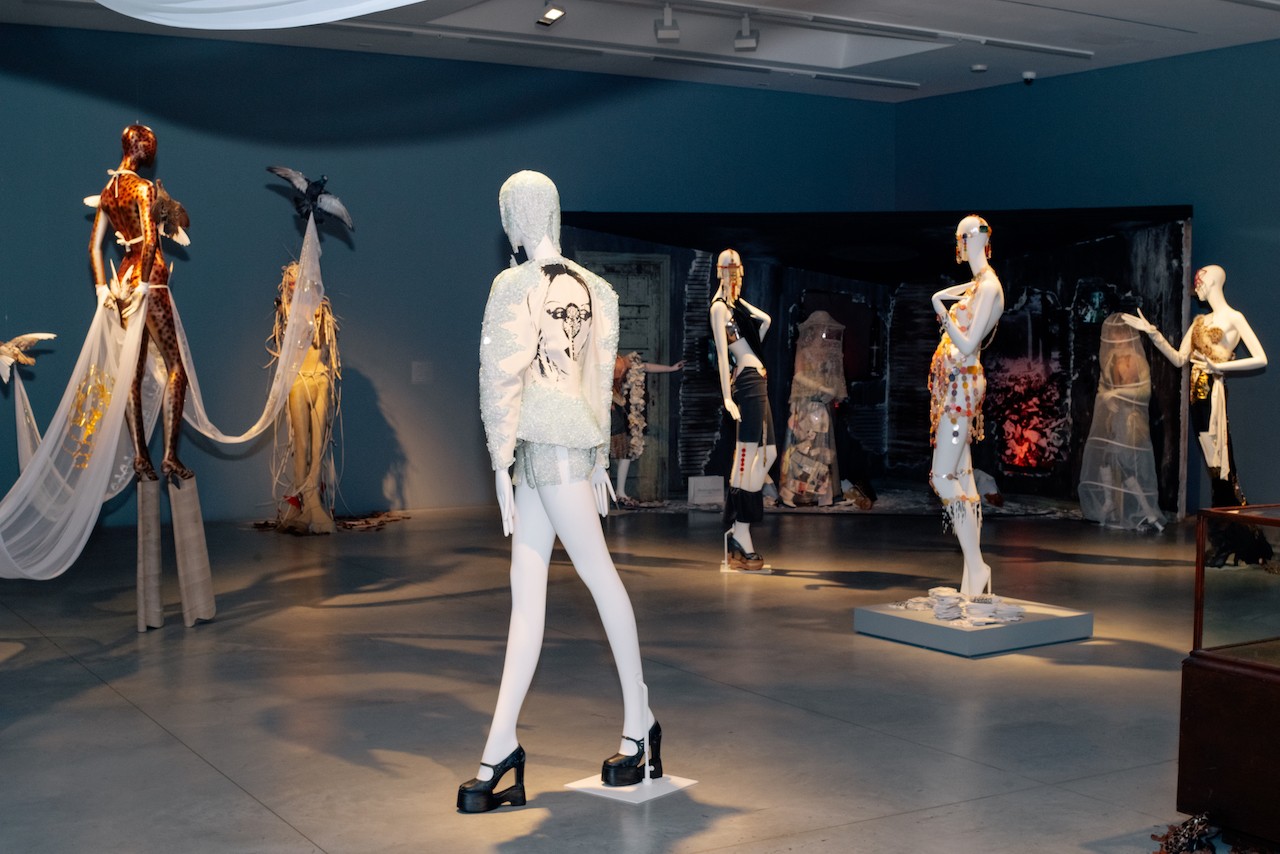
The first American institutional exhibition by Women’s History Museum, Grisette à l’enfer—or “Grisette in Hell”—unfolds as a ruinous commercial landscape. Working across garments, sculpture, video, print, and performance, art and fashion collaborators Mattie Barringer and Amanda McGowan interrogate fashion as both cultural market and economic wreckage, exploring a post-apocalyptic realm where femininity and value entangle. Their work reconstructs the obscured female laborer, tracing how women’s creativity has been aestheticized, exploited, and repeatedly misread.
The grisette—once used to describe a class of seamstresses, milliners, and the like—was celebrated in literature and painting for her precocious charm and perceived sexual freedom, yet rendered disposable in material reality. As the designers note, “There’s a particularly morbid focus on their youth, brevity of their beauty and sexual availability, and then often disturbingly their proximity to death, as the bourgeois male author then finds a more permanent mate of his own social class.” Romanticized and flattened through representation, her labor was undermined while her image circulated freely.
Within the gallery, mannequins loaned from The Costume Institute at The Metropolitan Museum of Art are interspersed throughout the space, anchored by draped fabrics that cast a chapel-like haze. A post-apocalyptic evocation of the Triangle Shirtwaist Factory disaster forms a central tableau, merging memorial with display. Through this environment, WHM insists on the relevance of the grisette—not as a relic of fashion past, but as a lens onto the enduring conditions of gendered labor, aesthetic production, and conditional social value tied to outward perception. The figures throughout evoke varied forms of womanhood and the timelessness of evolved—yet recurring—struggles: revered and discarded in equal measure, neither muse nor menace, both visible and overlooked.
That tension between visibility and disposability resonates with the designers’ own position. “Our work is always somewhat autobiographical. In this show we’re definitely ruminating on our own precarity as participants within the fashion industry, albeit in our own unorthodox way,” they explain, pointing to the strain of self-producing shows, running a brick-and-mortar shop, and building work for institutional contexts at once. The identification is direct: “We definitely feel resonance and connection to all the anonymous female workers within fashion throughout time whose creativity and skill was often devalued, or stolen.”
Patricia Margarita Hernández, Associate Curator of Amant, set out to interpret Barringer and McGowan’s vision in a stage where atmosphere serves as the throughway of language. “In the exhibition, the grisette becomes a contemporary diagnostic figure: a way to register how precarity is sentimentalized and how women’s labor—especially sex work—is aestheticized, overlooked, and exploited,” she says.
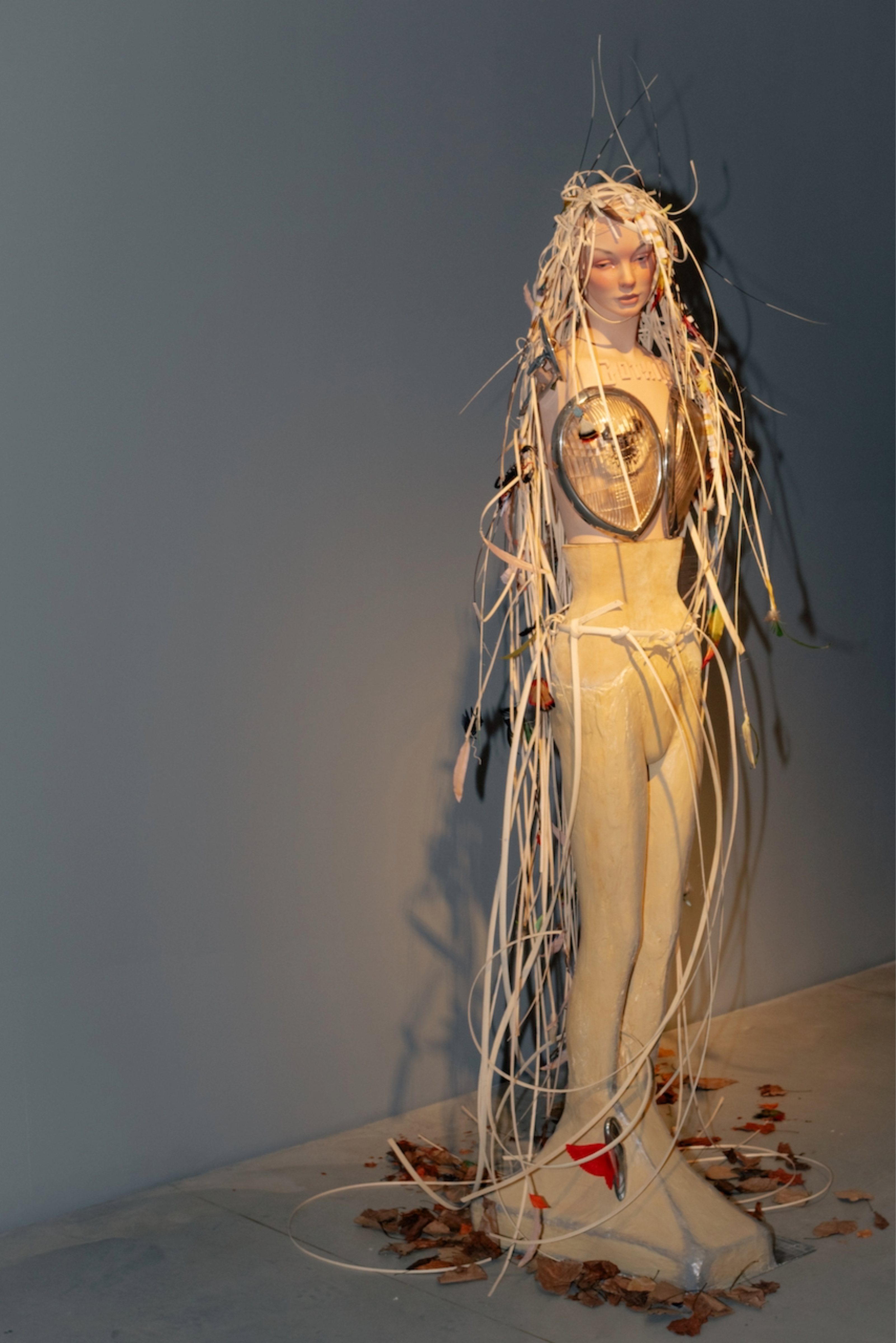
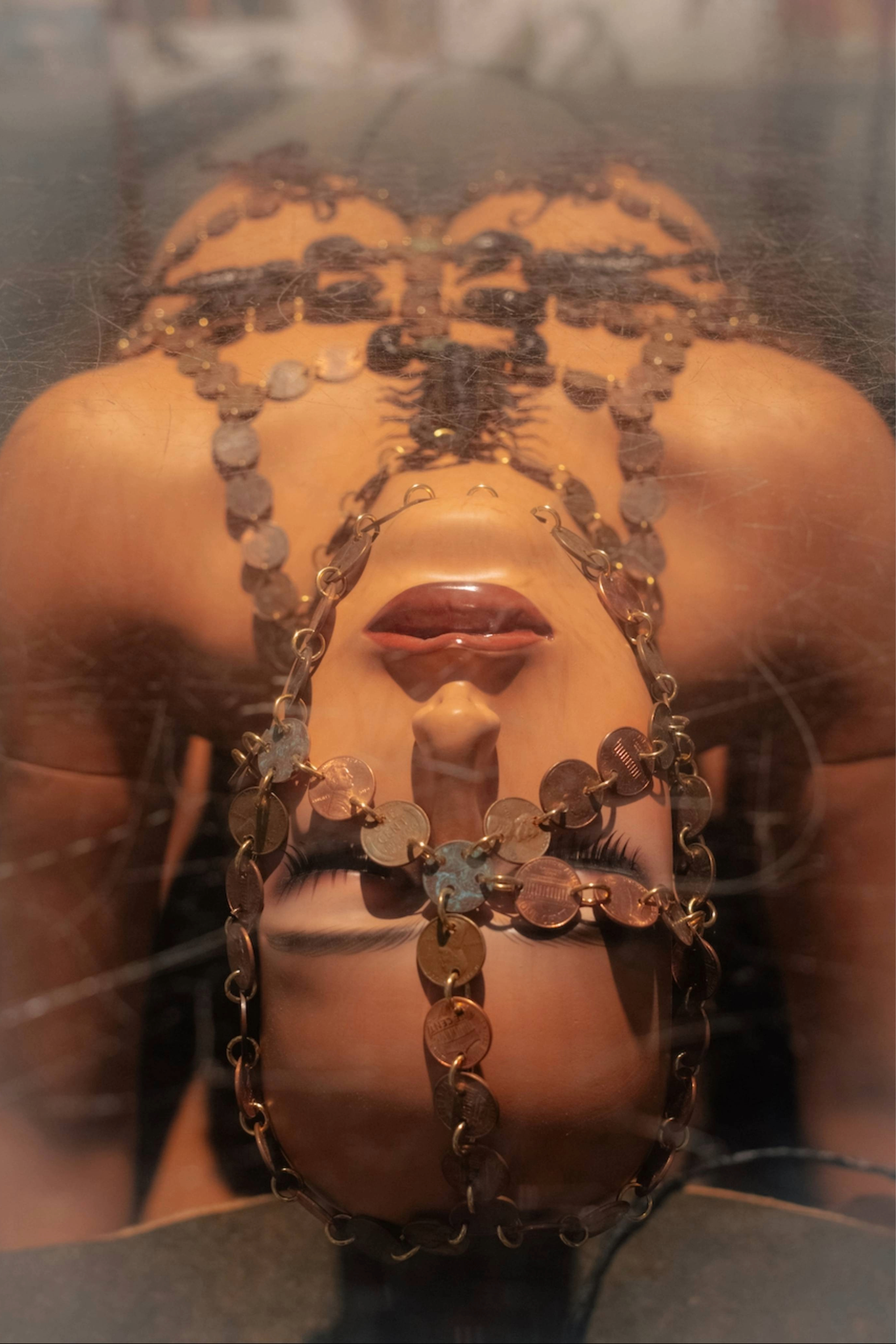
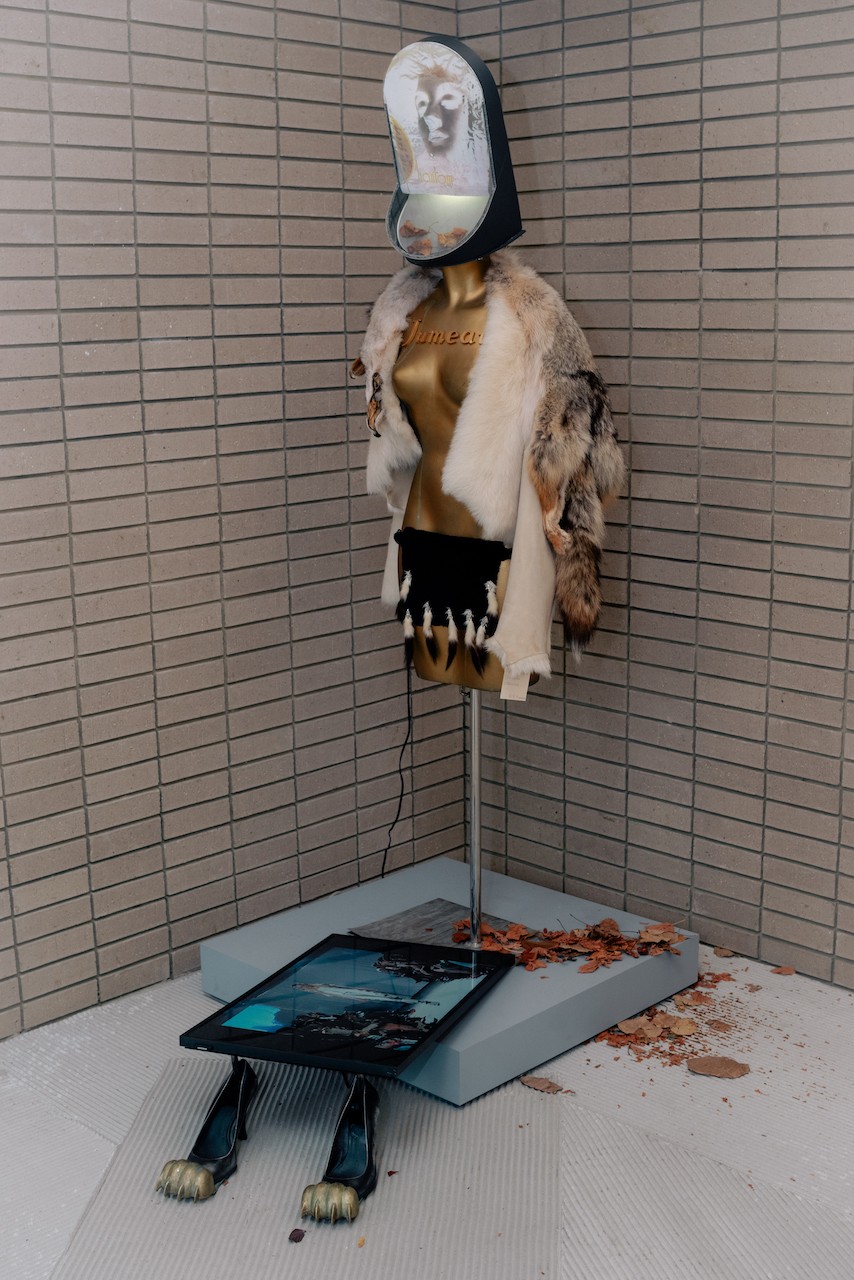
Described as “objects of institutional authority,” the mannequins are fitted in works by Women’s History Museum, transforming into altered hybrids of past, present, and future with missing heads, welded arm extensions, and elements of organic waste from found scorpion to animal fur. “Together with other mixed-media sculptures that drew on older, ‘vintage’ techniques, these artworks produced a language of retail afterlife,” explains Hernández. The viewer is left to confront a convergence of grit and glamour, reflecting the faulty facade of a consumer culture, that, while transfixed with beauty, rots at the seams.
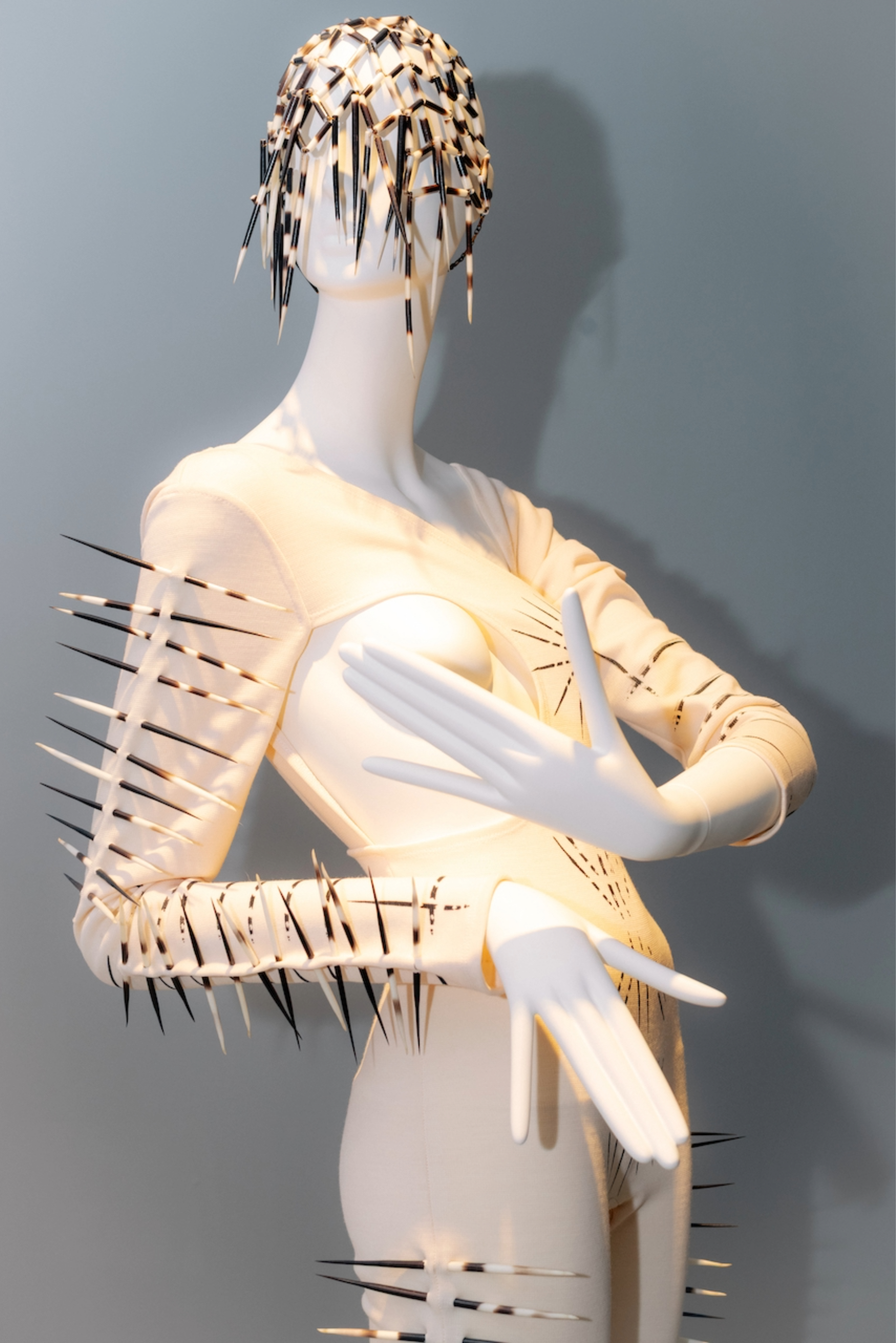
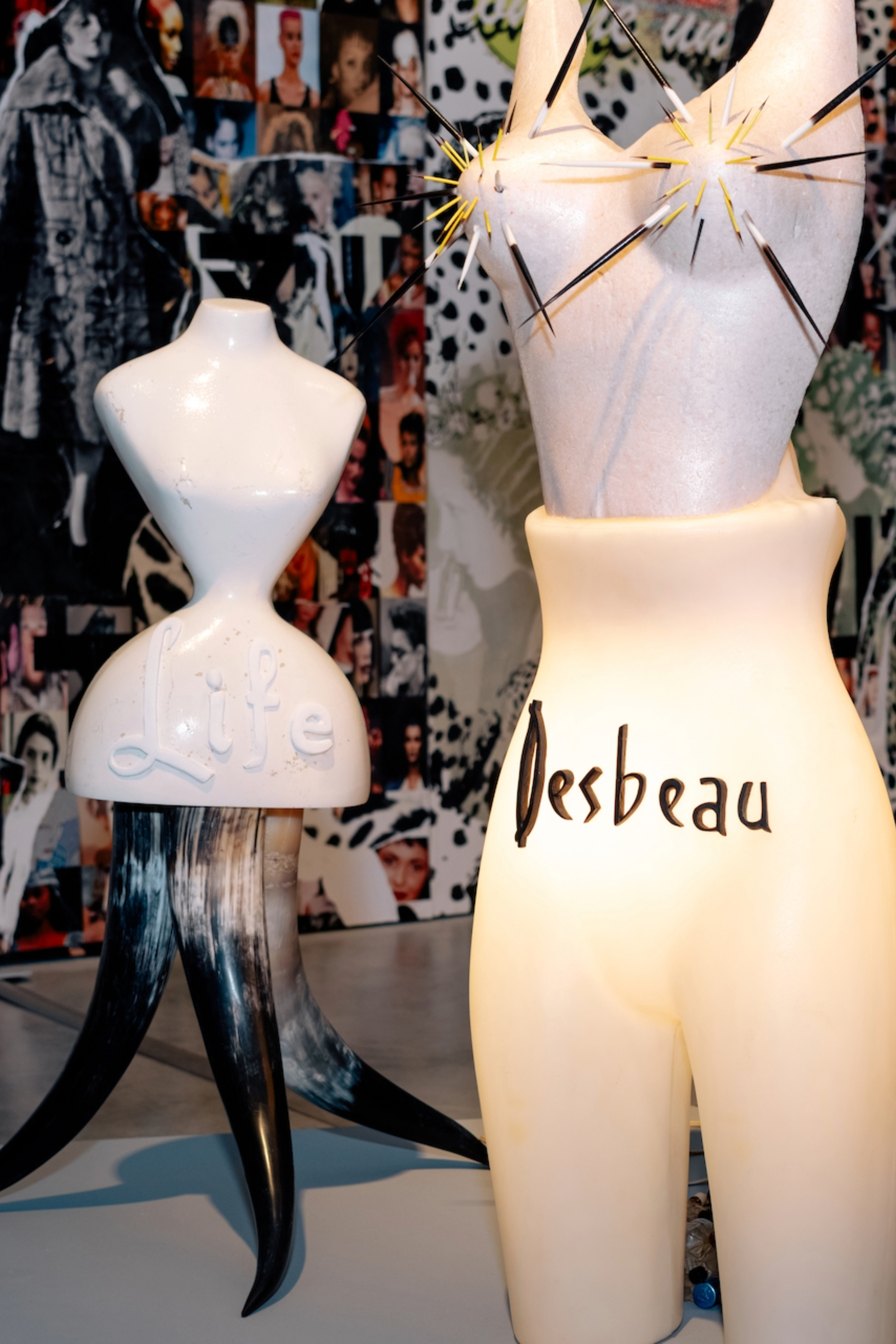
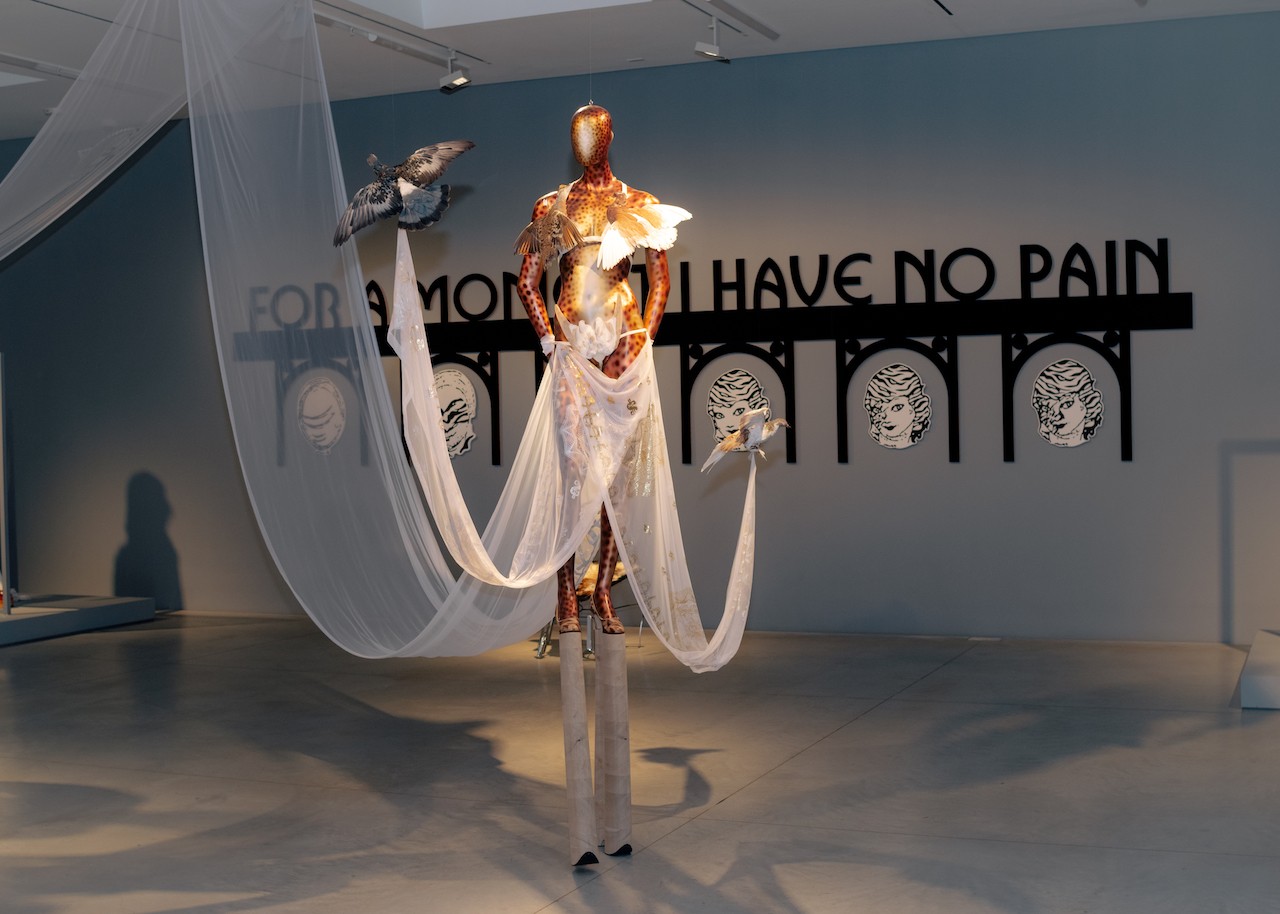
Materially, the exhibition binds the organic and the synthetic. The designers emphasize their pull toward historically resonant elements: “We are drawn to a lot of natural materials which feels resonant to the 19th century Grisette who often worked in millinery—an art where taxidermy, feathers, beetles, and fur were used to create worn still lives in a sculptural harnessing of nature.” Bobcat fur, scorpions, ermine tails, and taxidermy pigeons appear throughout; gray pigeons serve as stand-ins for the grisette herself, a nod to her “gris” dress. They pair these with artifacts of exchange and vice—antique calico, casino chips, tokens, currency—because, as they explain, “In working with historic materials and animal parts, there’s already a weight and significance to them. It’s something that has lived before and it animates the work and gives it depth and texture inherently.”
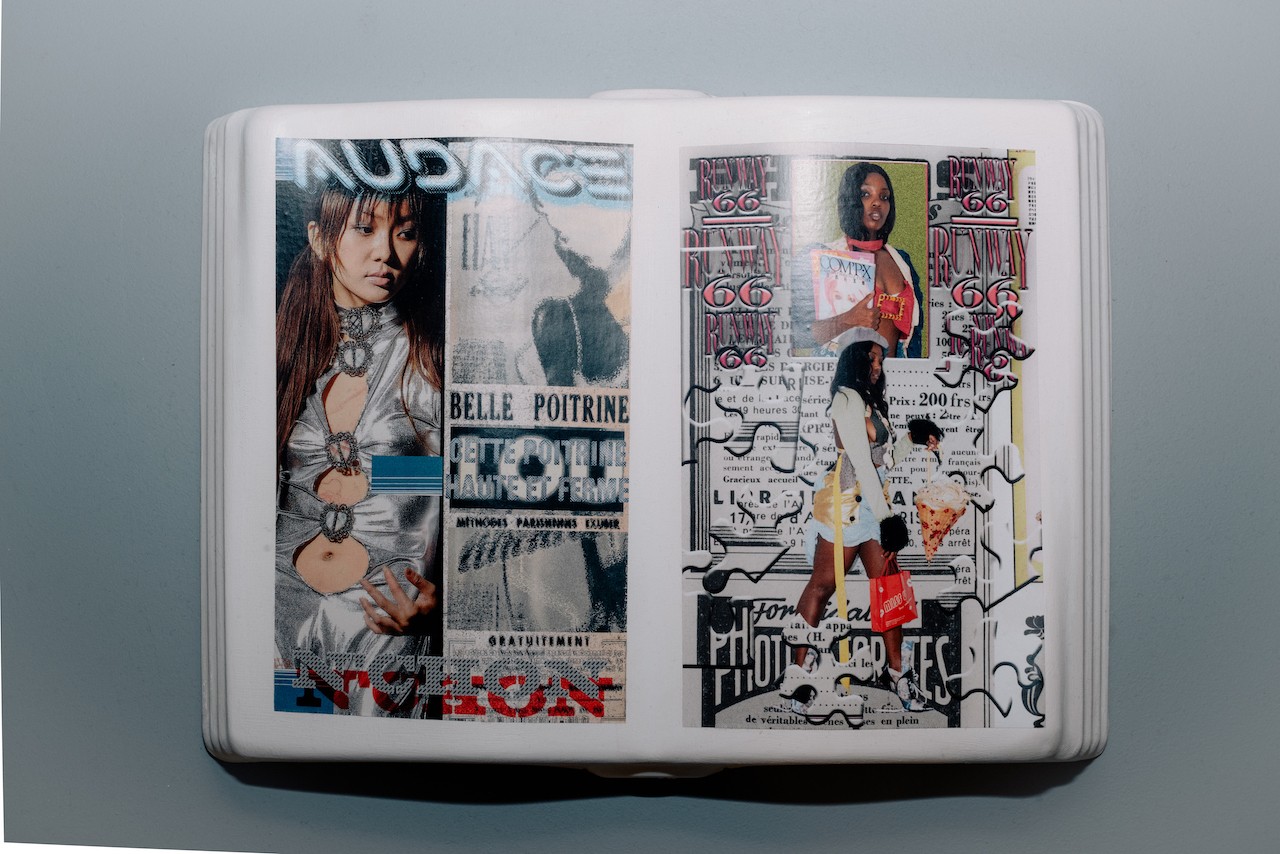
Their recent focus on obsolete money forms extends this logic. “We have been thinking of the currency of the female body throughout time, value, and the historical semiotics of wealth and intoxication thereof,” they say, noting that even their most delicate garments incorporate sharp elements—from shards of glass to protruding porcupine quills—to invoke a defensive quality. The emotional register remains close to lived conditions: “The stress of poverty, the sadness and pain of an exploited existence, and the extreme creativity that could be born from such conditions—the fruit born, whether ripe or rotted,” with hands “creating beauty as a means of survival.”
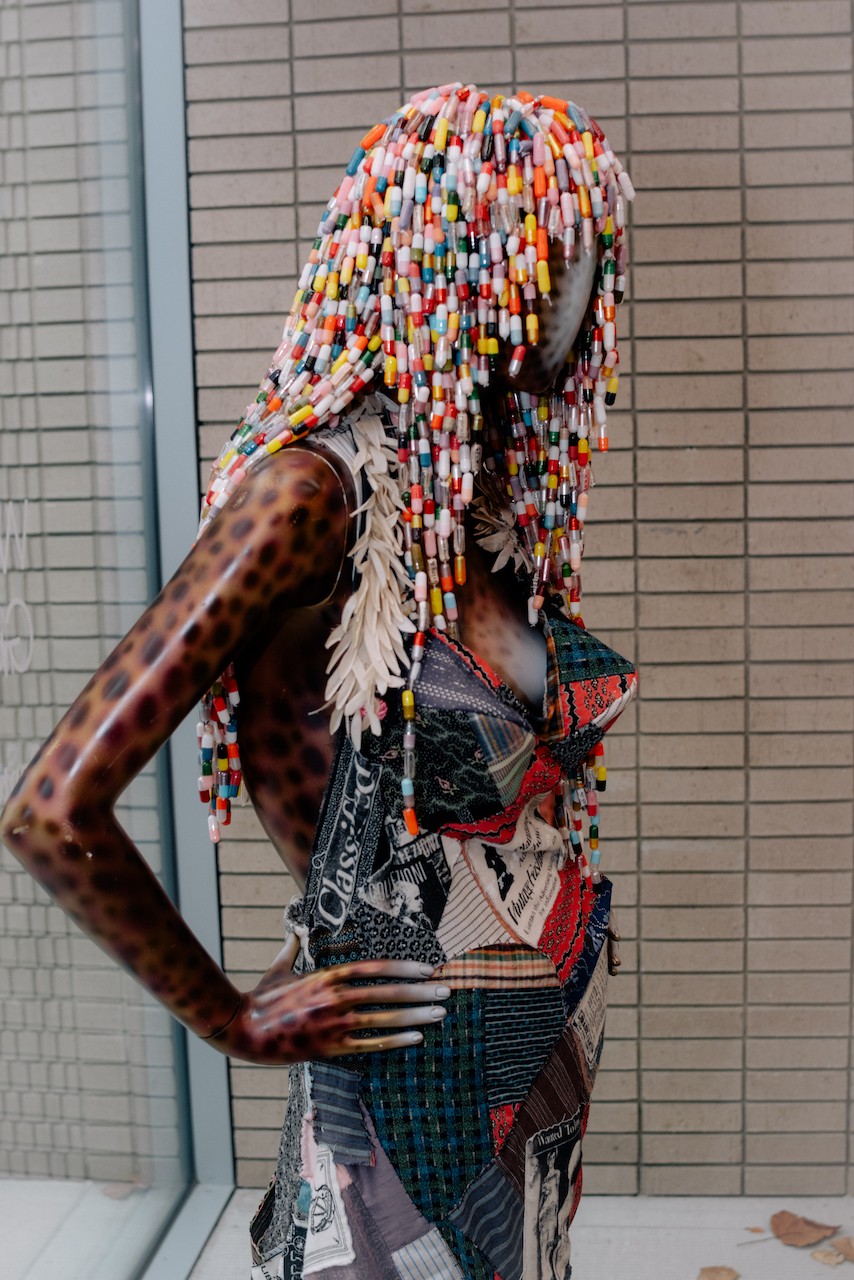
Still, the project leaves room for desire and gathering. “In our current time there are so few outlets for people to come together and experience something beautiful. We need fantasy sometimes.” In Grisette à l’enfer, that fantasy arrives layered with debris and devotion—an environment where invisible authorship, gendered labor, and aesthetic value finally share the same stage.
Grisette a l’enfer is on view until February 15 at Amant, located at 315 Maujer Street in Brooklyn, New York. Learn more on amant.org.