Five L.A. Frieze Exhibitions That Cut Through the Noise
Art — 27.02.26
Words: Laura Zhang
Basking under the palm trees at Santa Monica Airport, Frieze Los Angeles returns for its seventh year (February 26 – March 1), transforming the airfield once again into a temporary hub for the global art world.
More than 90 galleries will set up booths, but L.A. Art Week has always extended beyond the fair’s sprawling tent. Here’s our edit of the off-site exhibitions across the city that are capturing the zeitgeist of 2026 and proving that some of the most compelling and unforgettable work speaks directly to the times.
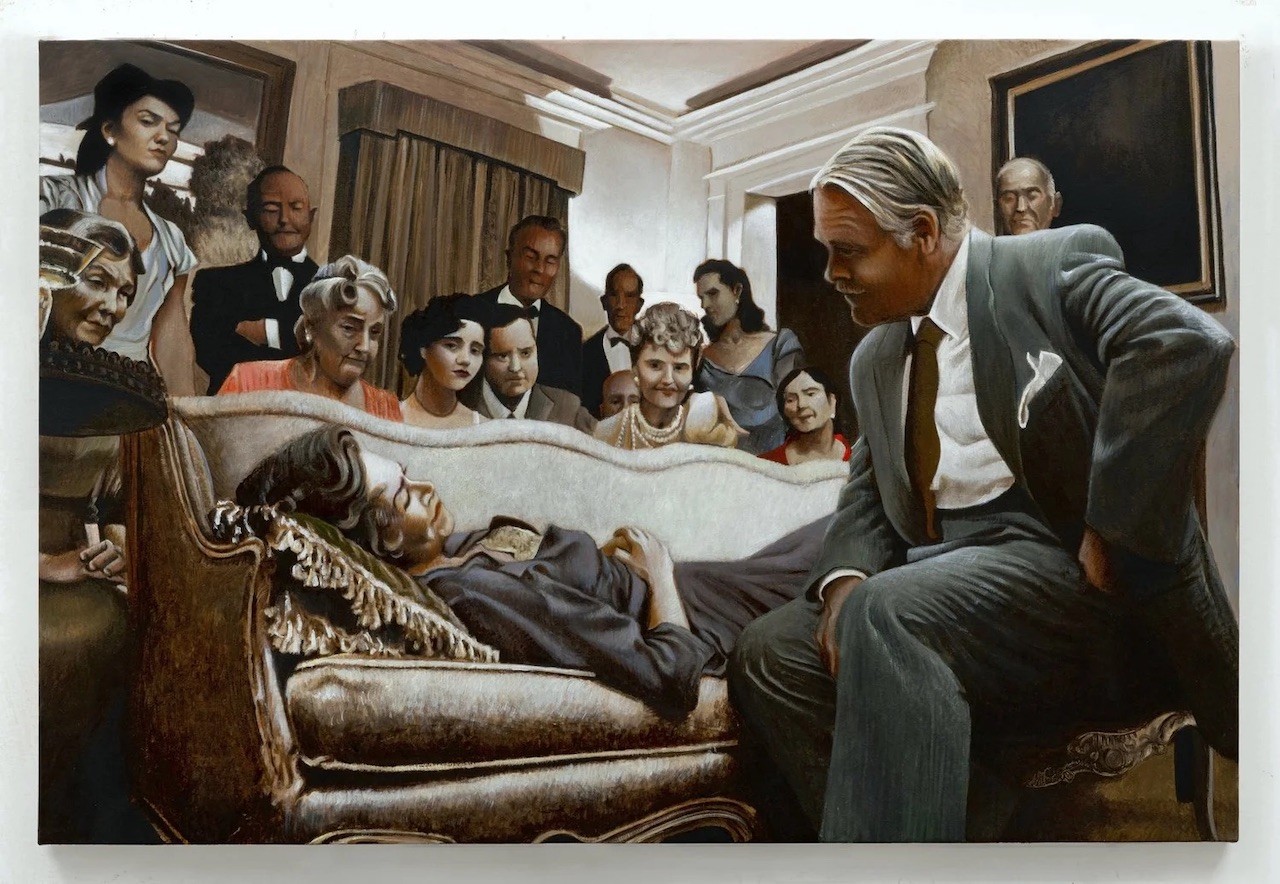
Resting Babyface by Leonard Baby at Villa Carlotta (with Half Gallery)
February 25, 2026 – March 10, 2026
Courtesy of Half Gallery
In a collection that both solicits a grimace and a chuckle, New York-based Leonard Baby draws from his own experiences and memories and creates a portrayal of vulnerability and intergenerational trauma. Installed inside a historic villa rather than a traditional art gallery, Resting Babyface unfolds like a private photo album that wasn’t meant to be publicized. Works such as Group Therapy stage the suffocating proximity of a family’s watchful, boundary-crossing gaze as a woman speaks with her therapist, while What a Familiar Feeling captures the quieter, nihilistic desire to stay in bed and disappear beneath the covers forever. Although the collection is deeply personal, Baby’s work introduces wounds many viewers may be all too familiar with.
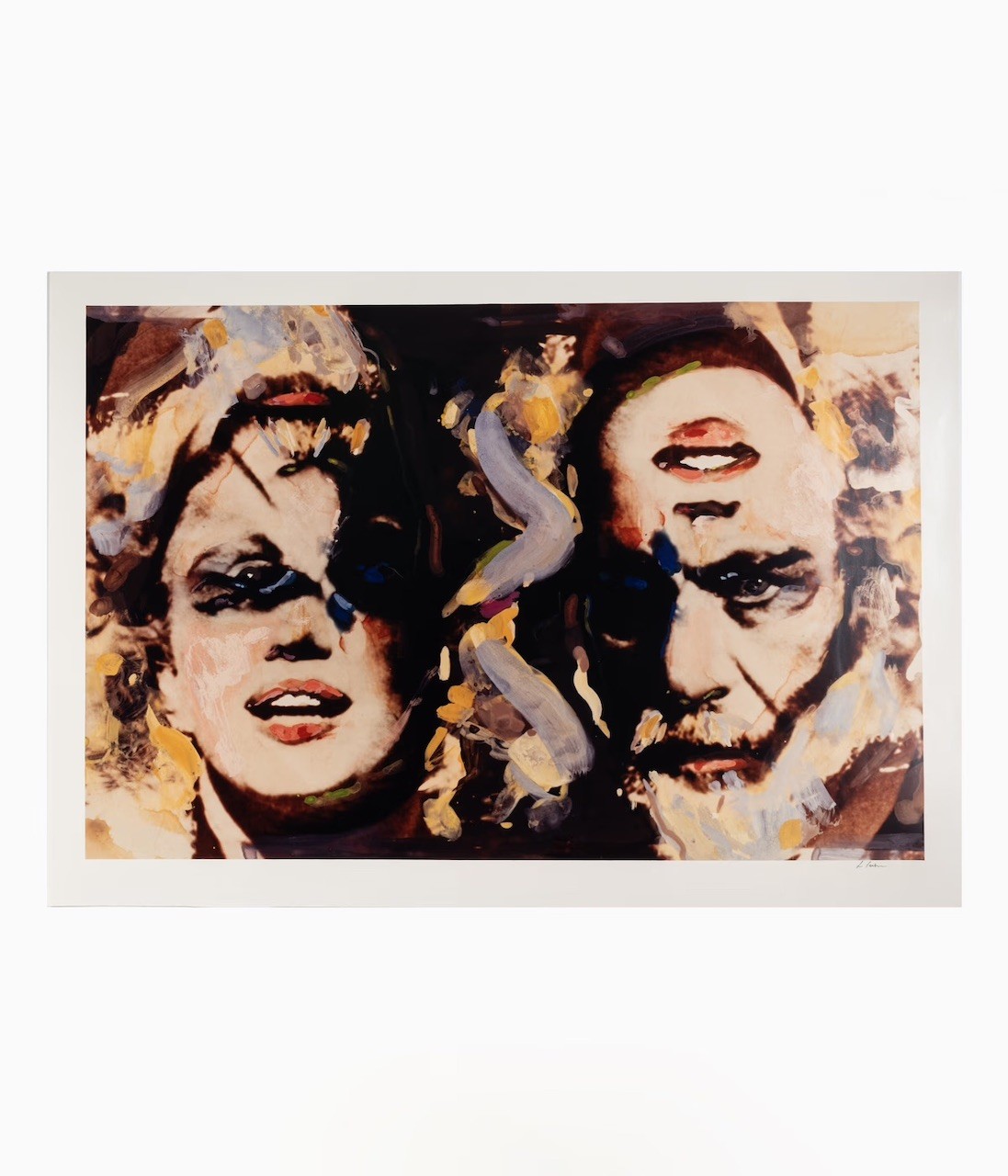
Deep Fake by Lynn Hershman Leeson at Hoffman Donahue
January 29, 2026 – March 14, 2026
Courtesy of Hoffman Donahue
Let’s face it: we’re living in the age of the deepfake, where faces, bodies, and voices can be engineered with ease. It’s unsettling, but what could feel more current and self-aware than an exhibition that openly manipulates an image and lets you in on the trick? In Deep Fake, Lynn Hershman Leeson raids the archive of celebrities and morphs them into hybrids: Marilyn Monroe dissolves into Sigmund Freud, and Dolly Parton and John Wayne’s eyes and smiles entwine. For decades, Hershman Leeson has focused on identity, surveillance, and technology in her art. Her landmark project in the 1970s, Roberta Breitmore, saw her inhabit a fully realized alter ego—complete with driver’s license, bank account, and therapy sessions.
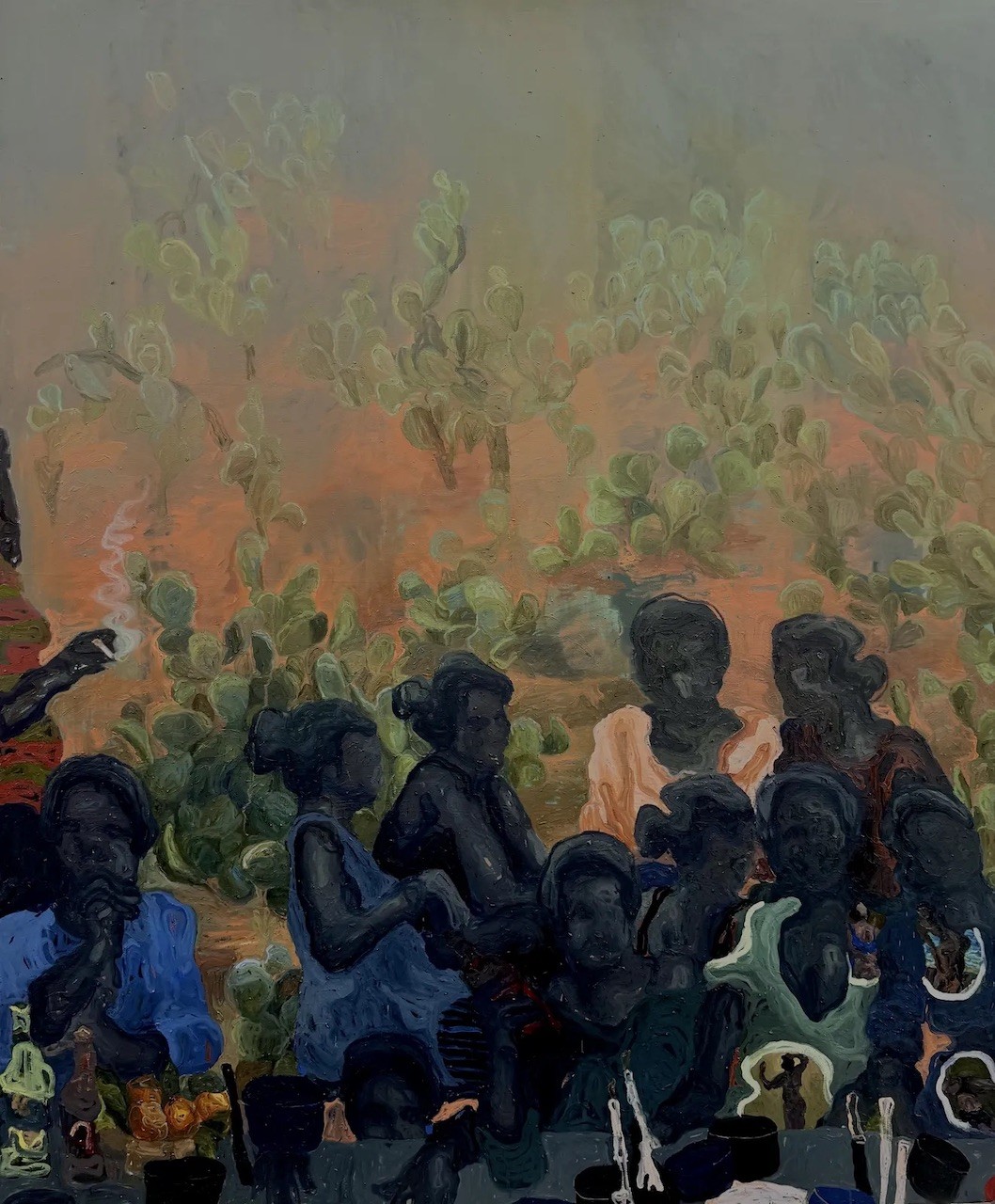
Saints of Good Evening Street by Tonia Nneji at Rele
February 21, 2026 – March 21, 2026
Courtesy of Rele
In Saints of Good Evening Street, Nigerian artist Tonia Nneji fixes the viewer’s gaze on a single subject: women. But there’s a sharp dichotomy in her work. On a single street, some women engage in public discourse during the day, while others turn to sex work at night, not as a spectacle but as survival. Working with swirling brushstrokes and a distinct color palette, Nneji rejects society’s claim that women are either virtuous or deviant. At a time when ownership over women’s bodies remains politically and culturally debated, her work argues against the impulse to possess, contain, or label at all.
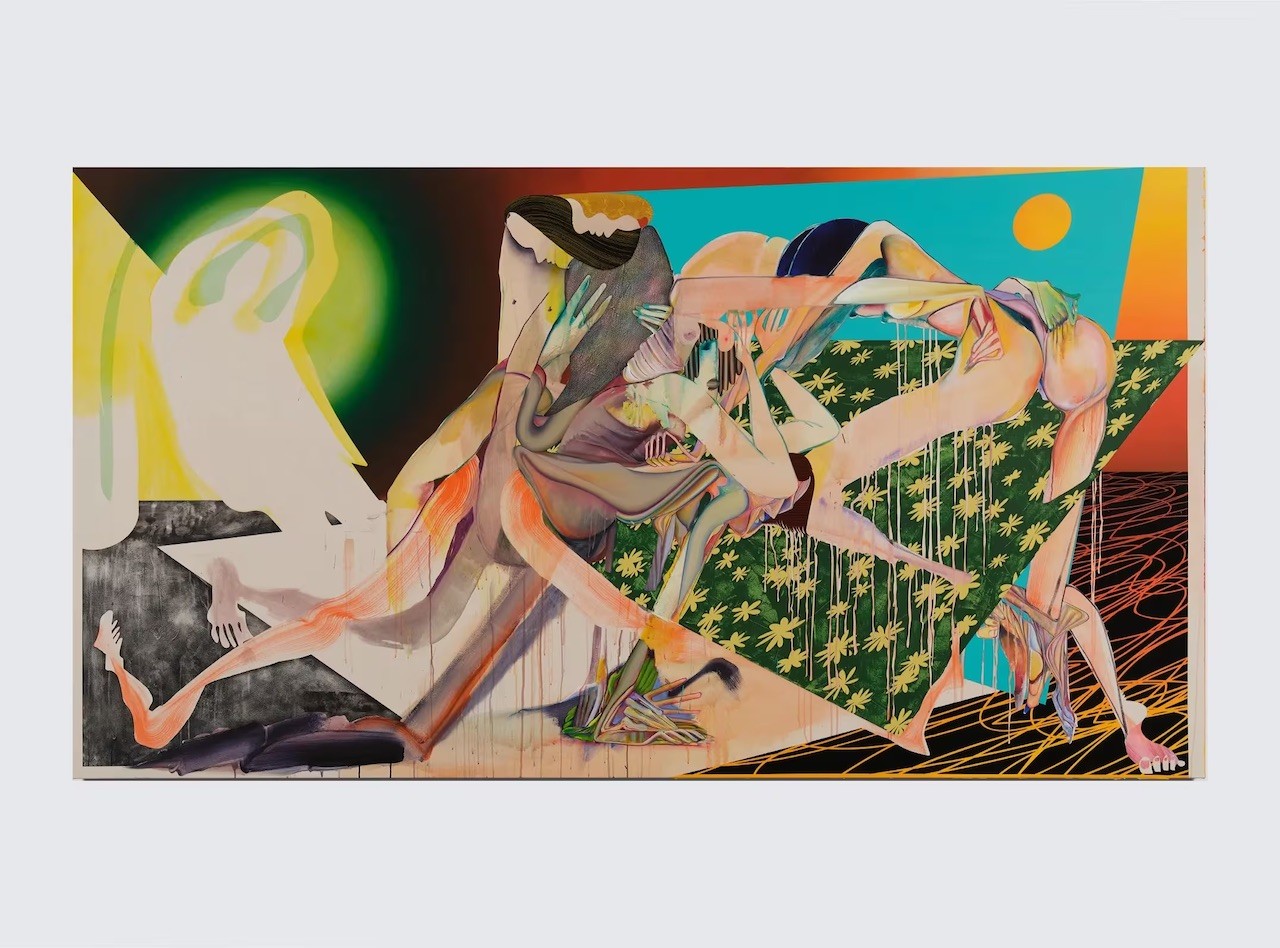
The Ground Glows Black by Christina Quarles at Hauser & Wirth
February 24, 2026 – May 3, 2026
© Fredrik Nilsen
Angeleno native Christina Quarles’ latest work isn’t letting anyone forget that L.A. Frieze is, in fact, in Los Angeles. She paints from the immediate, hulking aftermath of last year’s wildfires, which claimed her Altadena home and damaged works in her studio. Titled The Ground Glows Black, her new abstractions render her grief, loss, and vulnerability in charged color, shapes, and patterns. The visual language is recognizably hers, but the approach feels intensified as Quarles layers acrylic paint, stenciling, and for the first time, five charcoals on paper—suggesting she is still working through something deeply raw.
Monuments, curated by Bennett Simpson, Hamza Walker, and Kara Walker at The Brick and the Museum of Contemporary Art (MOCA)
October 23, 2025 – May 3, 2026
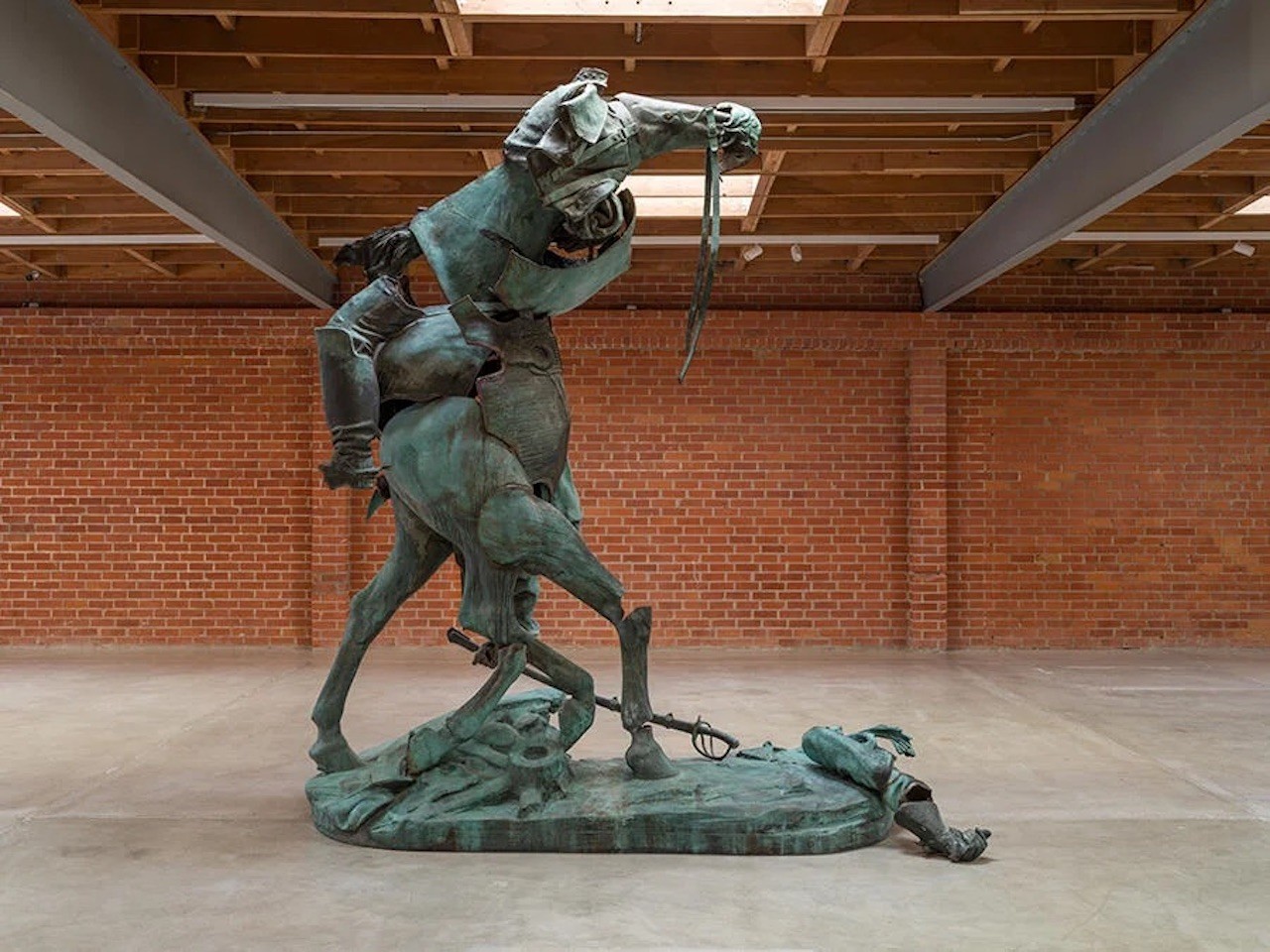
© Ruben Diaz
Conceived in the wake of the horrific 2015 murders of nine Black parishioners in Charleston, South Carolina—and the subsequent removal of nearly 200 Confederate statues—Monuments literally and symbolically severs, smashes, and reconfigures these once immovable figures. Today, some are still streaked with graffiti and paint, bearing the residue of public outrage. Displayed alongside them are works by around 20 Black contemporary artists. Many of these artists have reclaimed the monument form, such as co-curator Kara Walker, who reconstructed parts of the Stonewall Jackson monument into a warped, uncanny figure with limbs jutting outwards, and Karon Davis, who cast her son into a sculpture.