The New Language of Dark Wave: An Interview with Provoker
Music — 18.01.26
Words: Nick Bianco
Photographer: Lucas Chemotti
Creative Direction: Devin Duckworth
Stylist: Rachel Thorson
Photo Assistant: Zachary Agustin
Stylist Assistant: Jayline Ruiz
Special thanks to Orienteer
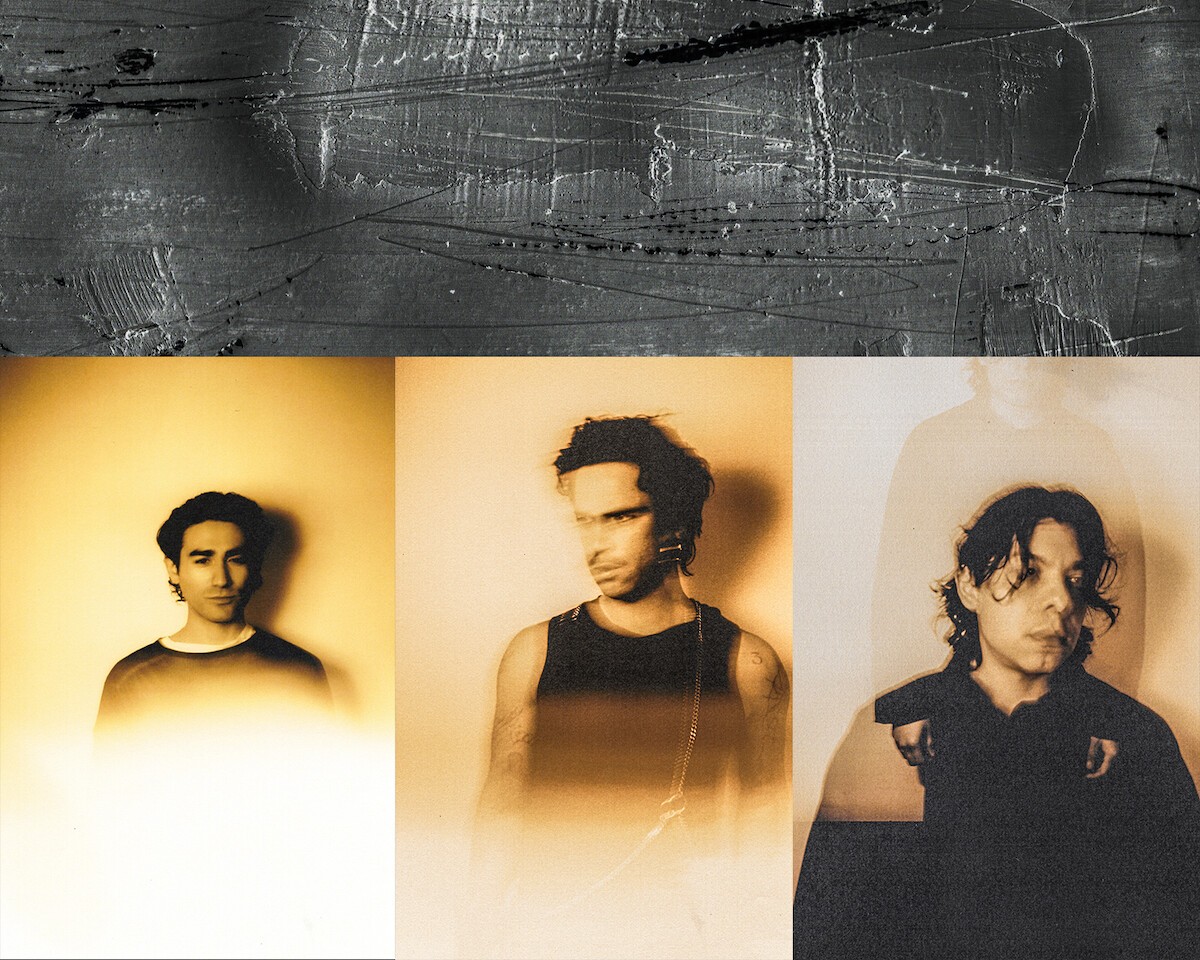
(l–r) Jonathon wears a t-shirt from the stylist’s archive layered under a Helmut Lang mesh shirt.
Christian wears a Helmut Lang tank with his own earring and a Dsquared² chain.
Wil wears an Entire Studios top.
Provoker is not your typical darkwave band. Fronted by the elastic, emotionally charged vocals of Christian Crow Petty, anchored by Wil Palacio’s driving bass lines, and textured with lush synths and wiry guitar melodies from Jonathon Lopez, the trio conjures a world steeped in shadow and retrospection. Their sound feels less like a collection of songs and more like the score to a film that doesn’t exist—but absolutely should. Over the years, Provoker has cultivated a sense of mysticism that resists easy definition, living somewhere between atmosphere and instinct.
Hailing from the Bay Area, the members of Provoker cut their teeth playing punk and hardcore shows with a PlayStation 2 handling backing tracks (a detail that still feels surreal). Over time, they sharpened their vision, drawing heavily from video games and film—two influences that have become deeply embedded in their creative process. In this conversation, we talk through the band’s evolution so far, collaborating with Nick Steinhardt, their music video inspirations, and what continues to shape the worlds they create.
TEETH met up with the Los Angeles-based band in the lobby of the famed Hollywood Roosevelt Hotel—one that carries a spectral past that emanates throughout Provoker’s transcendental sounds. We sat in the lobby finishing drinks and discussing weekend plans, when Christian pulls a large skeleton key from his carabiner keychain and places it in his flat, open-faced palm over the table. “I got this skeleton key at an estate sale,” he says, explaining how it’s an indicator of spirits, and if the key moves at all while he’s holding it, then it means there’s a supernatural entity in that area. Everyone becomes silent as our eyes are fixed on this key, waiting for the slightest bit of movement to confirm the infamous haunting of Roosevelt. In the blink of an eye, the key begins to rotate. Chalk it up to timing, location, or maybe just the company.
Equal parts iconic and eerie, the Roosevelt served as the perfect backdrop to discuss the cinematic worlds Provoker builds in sound.

(l–r) Jonathon wears a Saturday Night Special jacket with Yuremane trousers and his own boots.
Christian wears a Gaultier jacket, his own earring, t-shirt, and trousers with a Loha Vete necklace.
Wil wears a Balenciaga coat with a t-shirt from the stylist’s archive and his own trousers and boots.
TEETH: How has your writing process changed from the Dark Angel EP to Mausoleum?
Christian: I think it’s generally the same. What’s changed is that it’s more collaborative now—more collaborators.
TEETH: Did it start pretty lo-fi or low-budget? Just you guys in a room?
Jonathon: Yeah. We would record stuff on our own and send it to each other. I’d send things to Christian, and then he’d sing on them. That was Dark Angel, pretty much. That was it. After that, we lived together in Lincoln Heights. We moved in together, and it was more of the same. I’d write in my room, he’d write in his room, and then we’d come together in the living room. Sometimes not even all the time.
Christian: Even when we lived together, we were still making it from a distance—airdropping it to me from the other room. Sometimes I wouldn’t even open the door.
Jonathon: With Mausoleum, we worked with a lot of other producers, mostly friends we made in L.A.
TEETH: That’s one of the beauties of L.A. You’re out anywhere, you meet people, and you find people tuned into the same creative frequencies. It makes collaboration easier. You’ve been working with Nick Steinhardt—a killer graphic designer, an amazing guitarist for Touché Amoré, and overall legend. How did that come to be? How has the process been?
Jonathon: He’s great. He’s very good at what he does. We come in with an idea, and he helps us figure out how to get there. He’s very logical about the design approach.
Christian: He’s very quick, too. If you have an idea, he’ll stop everything and do it really fast so you can see how it would look. It was easy.
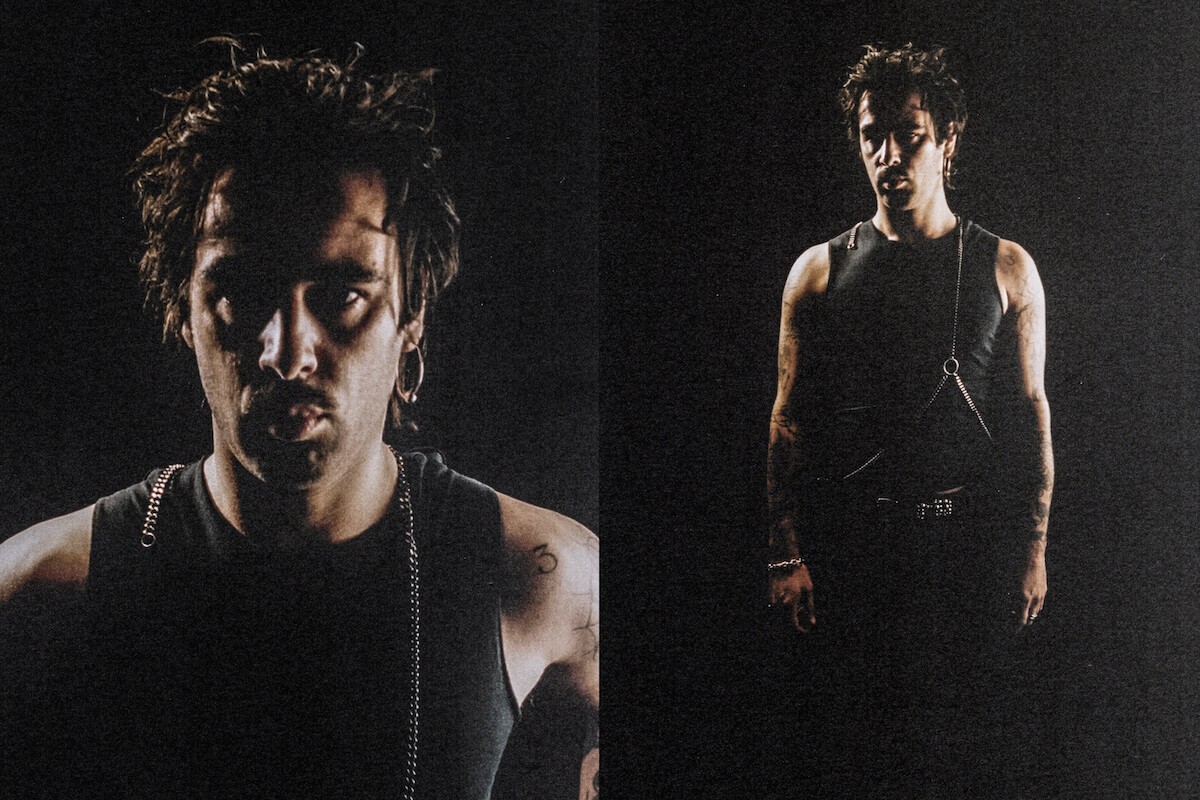
Christian wears a Helmut Lang tank with his own earring and trousers, a Dsquared² chain and a Yuremane belt.
TEETH: Was there any connection between you playing Sound and Fury in 2024 and Touché Amoré being the surprise set?
Christian: I didn’t even know Touché had played Sound and Fury. Where did they play?
TEETH: It was a surprise set. They came out and played four songs. I remember seeing you guys, going to the photo booth, then hearing the opening chords of a Touché song and everything went off.
Jonathon: That was my first time at Sound and Fury. I used to go to hardcore shows all the time, but I just never went to the fest.
TEETH: I know it died for a while, then Brain Dead brought it back if I recall. It’s been hitting this huge resurgence.
Jonathon: Have you ever been to Sound and Fury?
Wil: I used to go when they were in Santa Barbara or Oxnard.
TEETH: The early days, back when Title Fight would play.
Wil: There was always something—someone fighting, the show getting shut down before the last band. All that drama and tension would build, and then the final set of the night would go crazy.
TEETH: Were you there for that trash talk U-Haul set?
Wil: Oh yeah, that was really good. It was like some shit with a security guard, and then they were shutting down the show. They just hear the band playing outside. That was a good year, actually. They had all these Boston bands and DFJ bands. It was very sick. I think that was the best one.
TEETH: They’re definitely tapped in. I feel like Sound and Fury has always been tapped in.
Jonathon: That was my first time at Sound and Fury. I went to hardcore shows all the time, just never the fest.
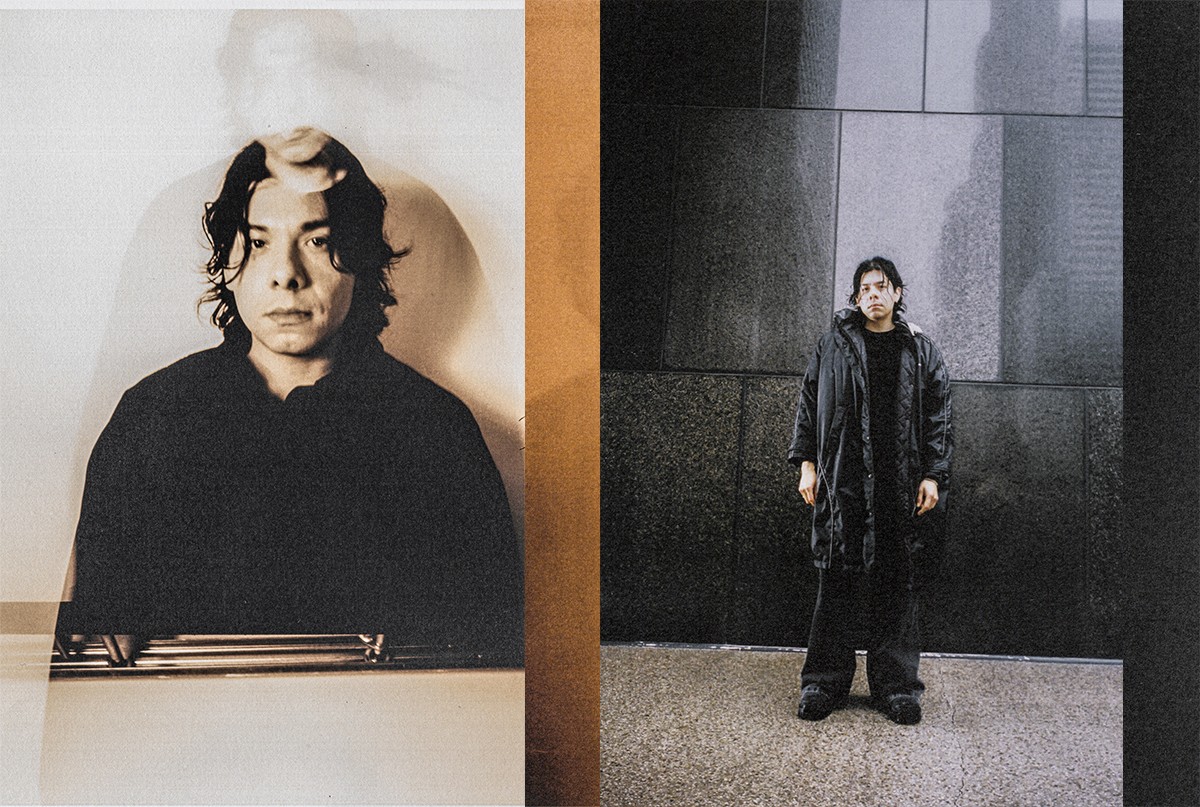
Wil wears an Entire Studios shirt (left) and a Balenciaga coat with a t-shirt from the stylist’s archive and his own trousers and boots (right).
TEETH: Diverting a bit—since your earliest releases, there’s been a cinematic quality in the music and videos. What are some of your biggest film influences? I’ve noticed some Dario Argento qualities, as well as some Cronenberg.
Christian: For “It’s In My Head,” Olle, the director, brought up The Fly. That was the inspiration.
Jonathon: “Rose In a Glass” has a Chinatown vibe.
Christian: “Freezing Alive” has a lot of The Shining references.
Jonathon: Especially the ending, when he’s frozen.
Christian: The “Dark Angel” video is in a haunted house.
Jonathon: That’s not from a specific movie, but…
Wil: “Body Jumper” was shot in a sewage area in Pacifica.
Jonathon: Yeah, that one was when the budget ran out.
Christian: That was a fun one. It’s one of my favorites.
TEETH: That’s the one on the beach?
Christian: Yeah, my hometown. There’s a hidden waterfall—it’s a sewage pipe, but it looks beautiful. We love making music videos or mini movies. The lyrics often play out cinematically. Sometimes they’re inspired directly by films.
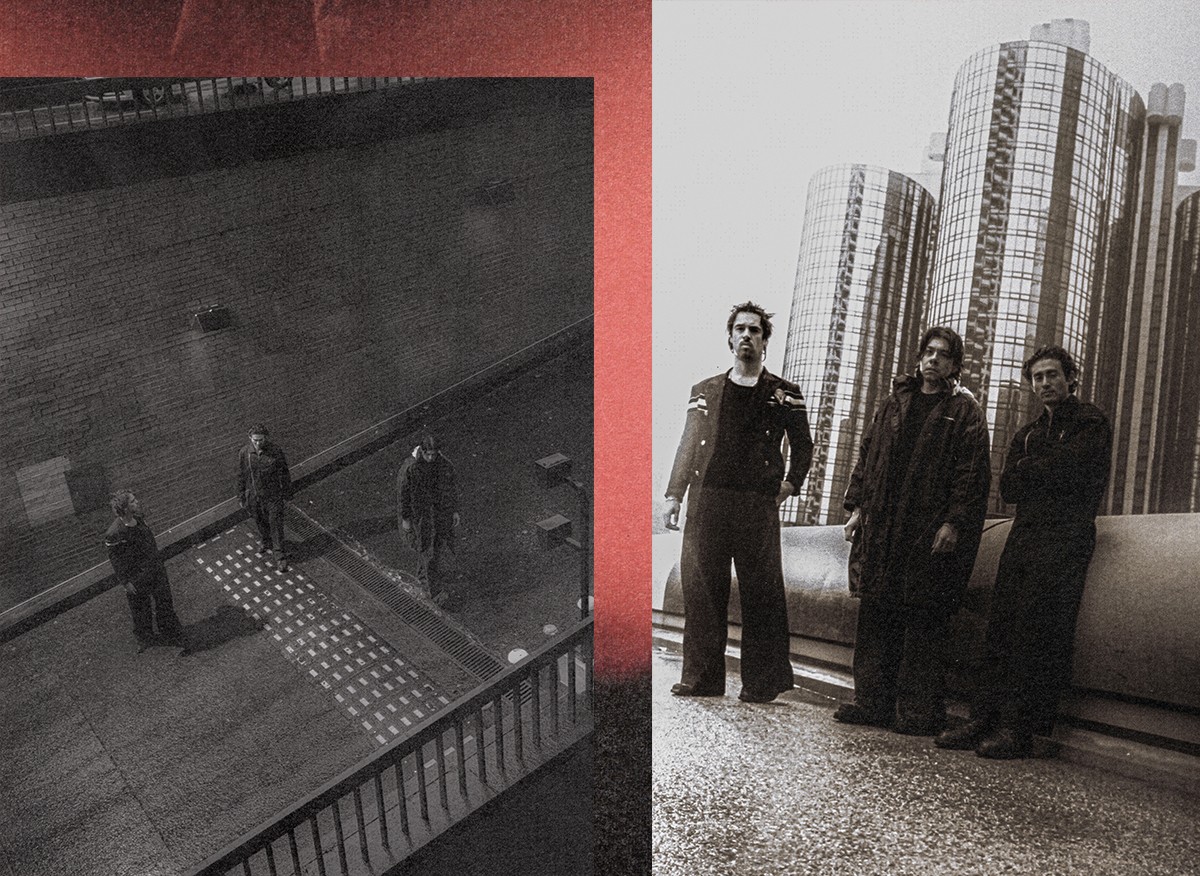
(l–r) Christian wears a Gaultier jacket, his own earring, t-shirt, and trousers with a Loha Vete necklace.
Jonathon wears a Saturday Night Special jacket with Yuremane trousers and his own boots.
Wil wears a Balenciaga coat with a t-shirt from the stylist’s archive and his own trousers and boots.
TEETH: There’s a serialized story happening. Do you guys approach albums with a concept or any thematic elements beforehand, or is it something that sort of comes to fruition in the recording process?
Christian: It comes after. Pretty much every album comes together that way—we write a bunch of songs, put them all together, and then try to puzzle it out. We step back and ask, “What do these mean?” and “What’s the theme here?”
TEETH: Was that the same deal with everyone in the band?
Jonathan: Yeah. We were just making the music, and Christian would come in with the lyrics. As more songs came together, we’d step back and ask, “What does it all mean?” and “Is there an overall theme?”
TEETH: There’s a clear connection between video games and your music—“Spawn Kill,” “NPC.” Has that always been intentional, and if so, where do those influences come from? Is it something you find yourselves forcing into the music, or does it come naturally?
Christian: It comes naturally. With “Body Jumper”, I don’t know why all of the songs are so geared towards video games. Probably because I was playing a lot of video games at the time, and that’s just what was inspiring me.
TEETH: “Dark Angel” reminds me of Doom. “Tears in the Club” felt like GTA: Vice City—like when you go into the nightclub.
Christian: “Mystery Key” came from watching Jonathon play Dark Souls.
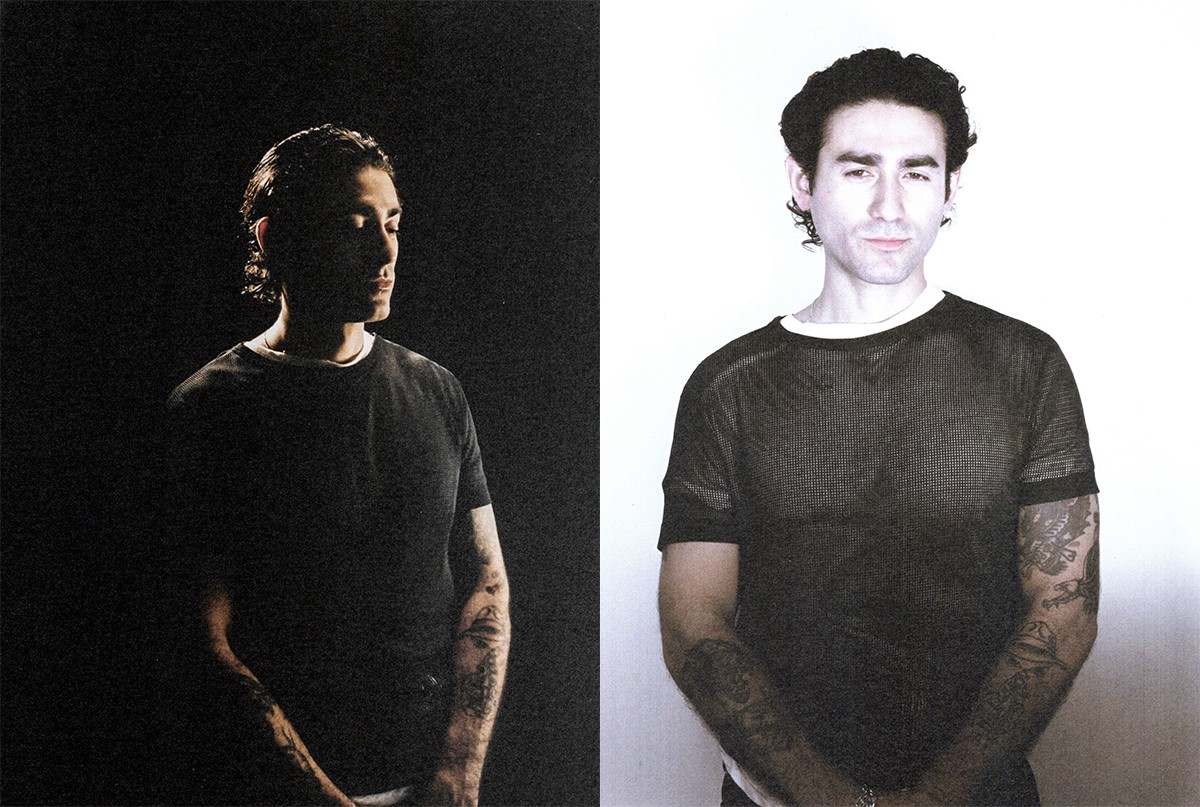
Jonathon wears a t-shirt from the stylist’s archive layered under a Helmut Lang mesh shirt.
TEETH: Can you talk about the process behind making the Demon Compass video game on Steam?
Jonathon: We wanted to do a choose-your-own-adventure kind of story. We only had a few days because we had to submit the LP packaging, so we frantically wrote it with the help of our friend Justin Louie. That became the story for the LP booklet. From there, we had the idea to make a video game version of it. We were like, “What do we have to do?” and reached out to a few people to help develop it and see how much it would cost. We found someone in Paris, Xena-Spectrale, who helped. I also did some graphic design with WPI Canning, who helped with other elements—he does shirts and stuff for us.
Christian: It was really fun doing all the sound effects and sound design. Jonathon was doing a lot of the score, and I was compiling all the sounds we needed—different textures for the ground, what the monsters would sound like. That part was really fun. We also worked on the art, coming up with what the characters would look like through rough drawings and sending those to Xena-Spectrale.
Jonathon: I’d love to do it again.
TEETH: Do you see more game design in the future?
Christian: We have Spawn Kill Studios, so yeah.
Jonathon: I’ve been dabbling in Unity.
TEETH: Skipping ahead—opening for Touché Amoré and Ceremony. How’s entering the hardcore orbit been?
Jonathon: I think we’ve always been part of the hardcore scene. Wil and I have been going to shows since high school, and a lot of our friends are involved in it—we’ve played with those bands. It’s just people we know, so we never felt out of place. Sonically, something like Sound and Fury is different, but we still didn’t feel out of place. A lot of our friends are there.
Wil: We played whatever shows we could.
Jonathon: Early on, it was a drum machine or a PS2.
Wil: That failed badly.
Jonathon: It was really funny, but yeah—it was always really noisy. I think when Christian joined, it became what it is now with a more pop-y sound. But in the early days, it was definitely more dark wave.
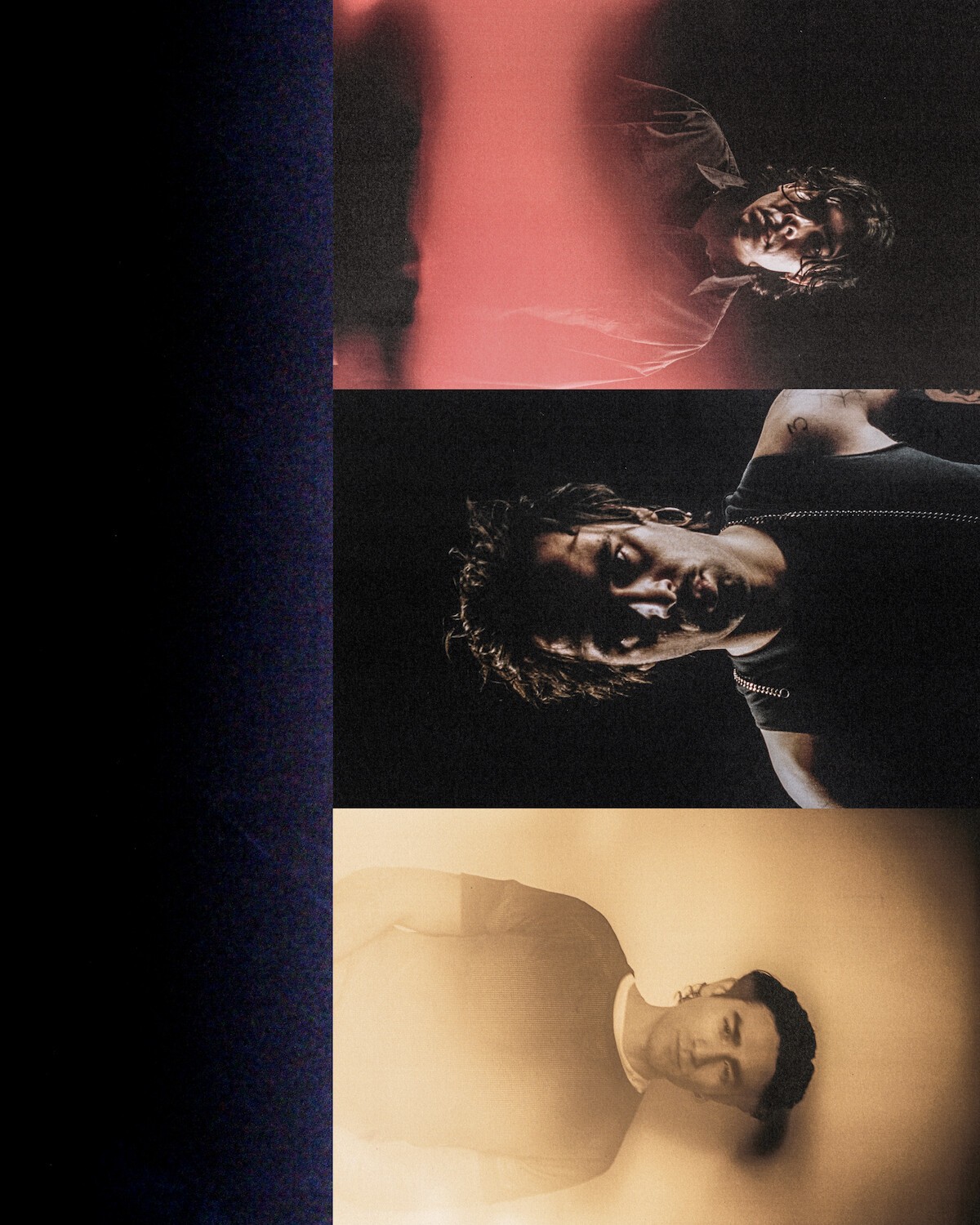
(t-b) Will wears an Entire Studios shirt.
Christian wears a Helmut Lang tank with a Dsquared² chain and his own earring.
Jonathon wears his own t-shirt layered under a Helmut Lang mesh shirt.
TEETH: Do you believe in ghosts? Being here at the Roosevelt Hotel, I guess it’s sort of fitting.
Christian: Are there ghost stories here?
TEETH: I think the ghost of Marilyn Monroe is here.
Jonathon: We stayed at a pretty haunted hotel in Texas. What was that called?
Wil: Big Spring. Big Spring, Texas. It was like the weirdest place ever.
Jonathon: There’s nothing there. I think we were driving to… I don’t know, somewhere in the middle of Texas, and we just had to stop somewhere. It was weird because this town is completely flat, except for this one giant hotel in the middle of the town.
Wil: Notoriously haunted.
Jonathon: That night, I had, like, a really violent night terror, and I saw someone in the room, and then woke everyone up. I was screaming.
Wil: My dreams were bizarre.
Jonathon: So maybe it was haunted.
TEETH: I was reading an interview you guys did this past year, where Christian talked about some kind of possession involving a parent, followed by a ghost writing situation where you would ask it questions. Is that still happening to you? Was it just a one-time thing?
Christian: It was sort of a long period of my childhood. For a year or something, all of my family members were communicating with this one spirit. They were trying to teach me how to do automatic writing—you ask the spirit a question, then you let it guide your hand.
TEETH: So, a homemade Ouija board?
Christian: I don’t know, it’s weird. It’s interesting, though. I’m definitely interested in spiritual stuff.
Check out Mausoleum below, and catch them at the Kilby Block Party music festival in Salt Lake City, Utah, in May.
Follow Provoker on Instagram for any and all updates.