Crop Over Barbados: Sun, Soca, and the Sweetest Monday of the Year
Culture — 16.01.26
Words & Photography: Viviana Amor Harris
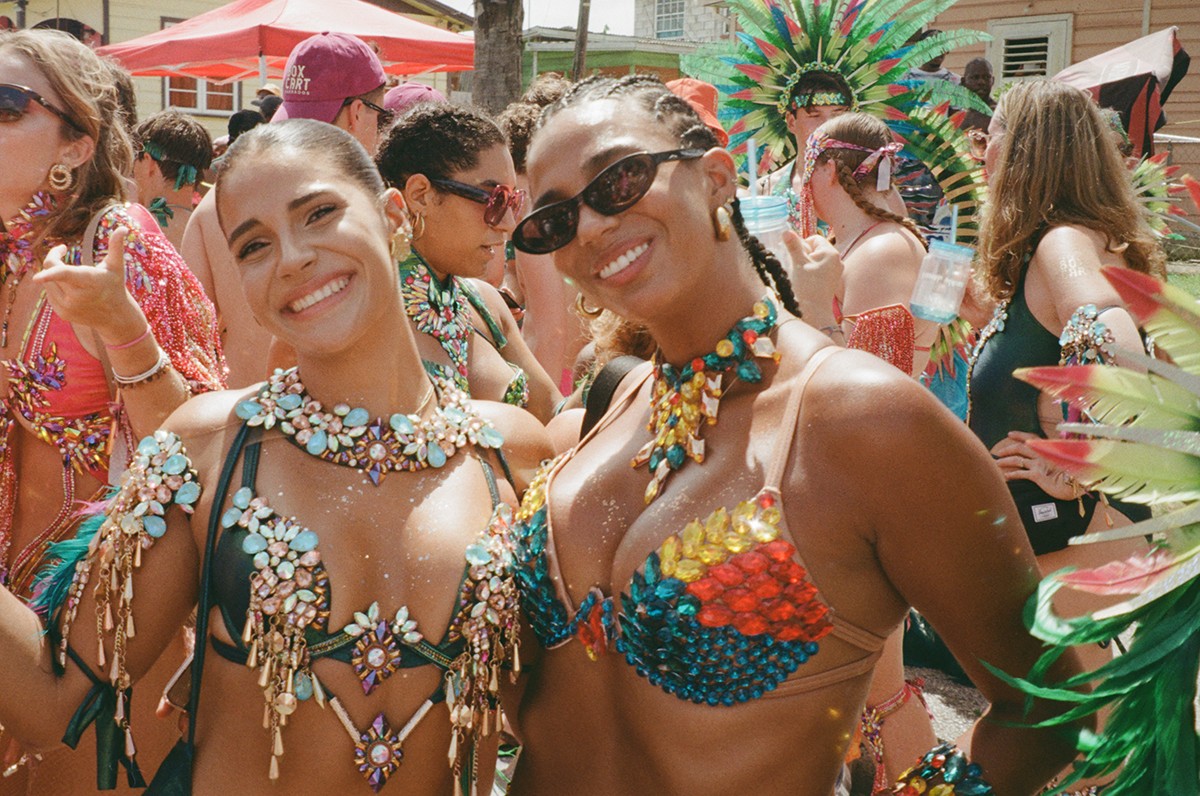
On the first Monday of August, droves of people (myself included) descended to the streets, sweltering under the relentless Caribbean sun, while we walked, danced, and sweated our way across the surface area of Barbados, clocking at minimum 15,000+ steps a piece.
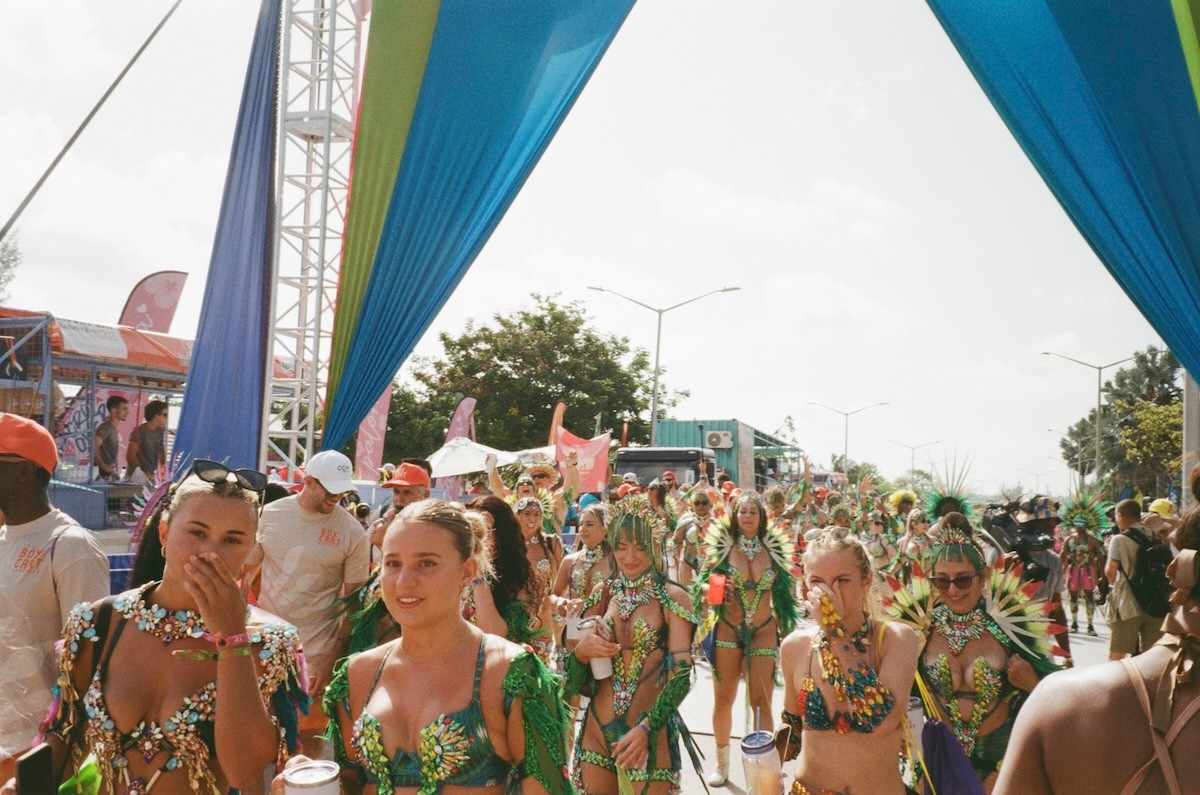
For hours, we trailed behind a fleet of mega trucks kitted out with sophisticated speaker systems that propelled sound waves between houses, bodies, and feathers. The masses, led blindly by melodic soca rhythms, strategically navigated their way through the twists and turns of narrow Bajan streets, on what is—for most—the sweetest day of the year.
Onlookers, young and old, littered the sidewalk, joining in for the occasional whine as they belted, off-beat and off-tune, the lyrics to popular songs from the comfort of their porches, or while precariously balanced on top of fences, light poles, and bus stands.
On the road, the costumes are tantalizing, the sun paralyzing, and the music hypnotizing; this isn’t your regular Monday, this is Grand Kadooment day.
In Barbados, Kadooment means ‘large party,’ and Grand Kadooment Day is exactly that—pushing the definition of the word ‘large’ to the fullest extent, when it comes to size and scale. What started as a festival marking the end of the sugar crop season has grown into a multi-layered celebration of Barbadian pride and culture, known lovingly by Bajans and friends of the island alike as Crop Over. With early beginnings on the sugar cane plantations during slavery, the practice of Crop Over naturally dwindled as slavery was dismantled and sugar production declined.
After a 30-year hiatus, the festival was revived, evolving to offer the modern Bajan population a homegrown experience to celebrate annually. Now, between June and August, Barbados comes alive with a slew of parties (otherwise known as fêtes), street parades, and cultural exhibitions, which culminate with a big bang on the first Monday of the calendar year’s eighth month.
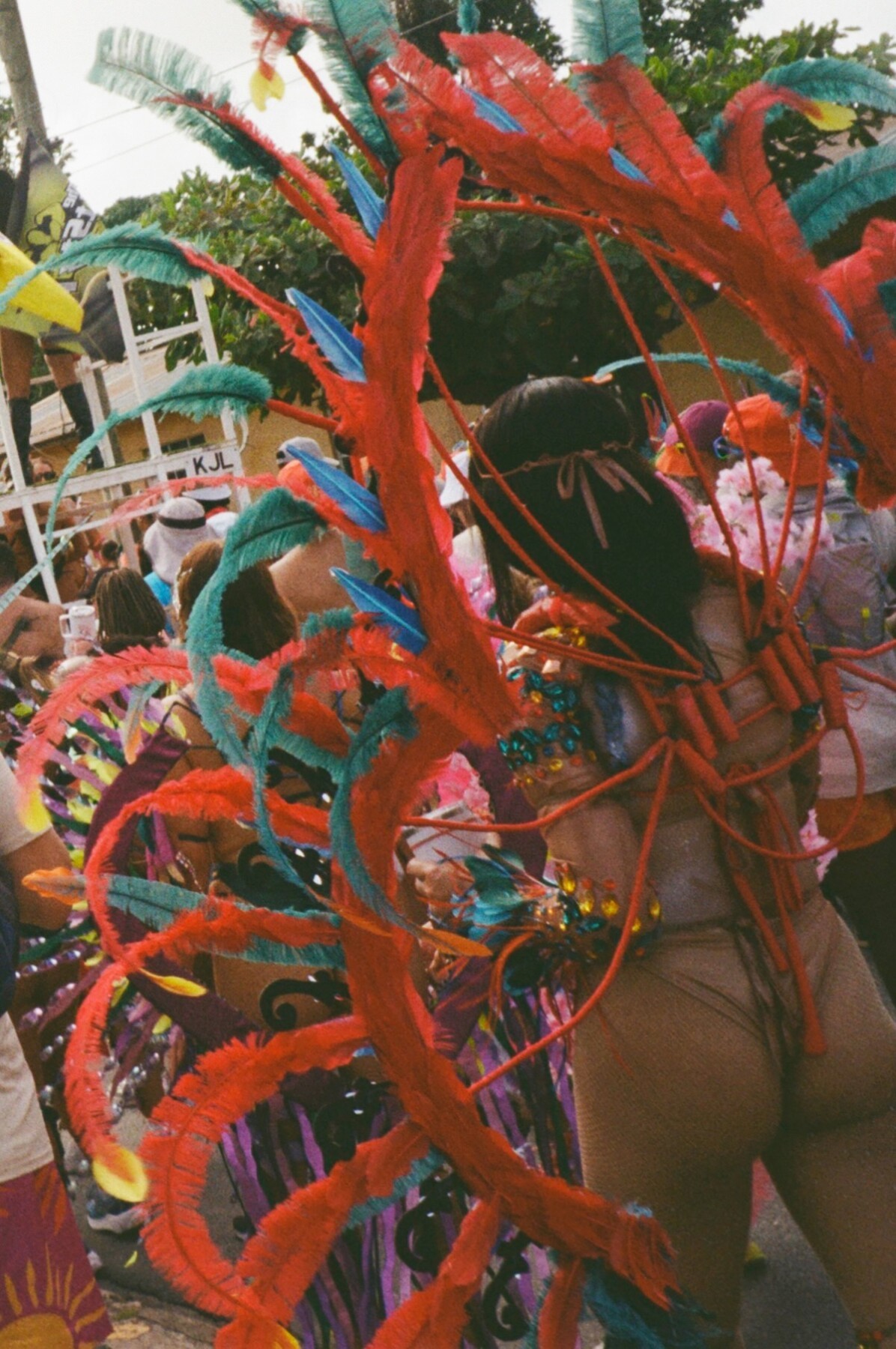
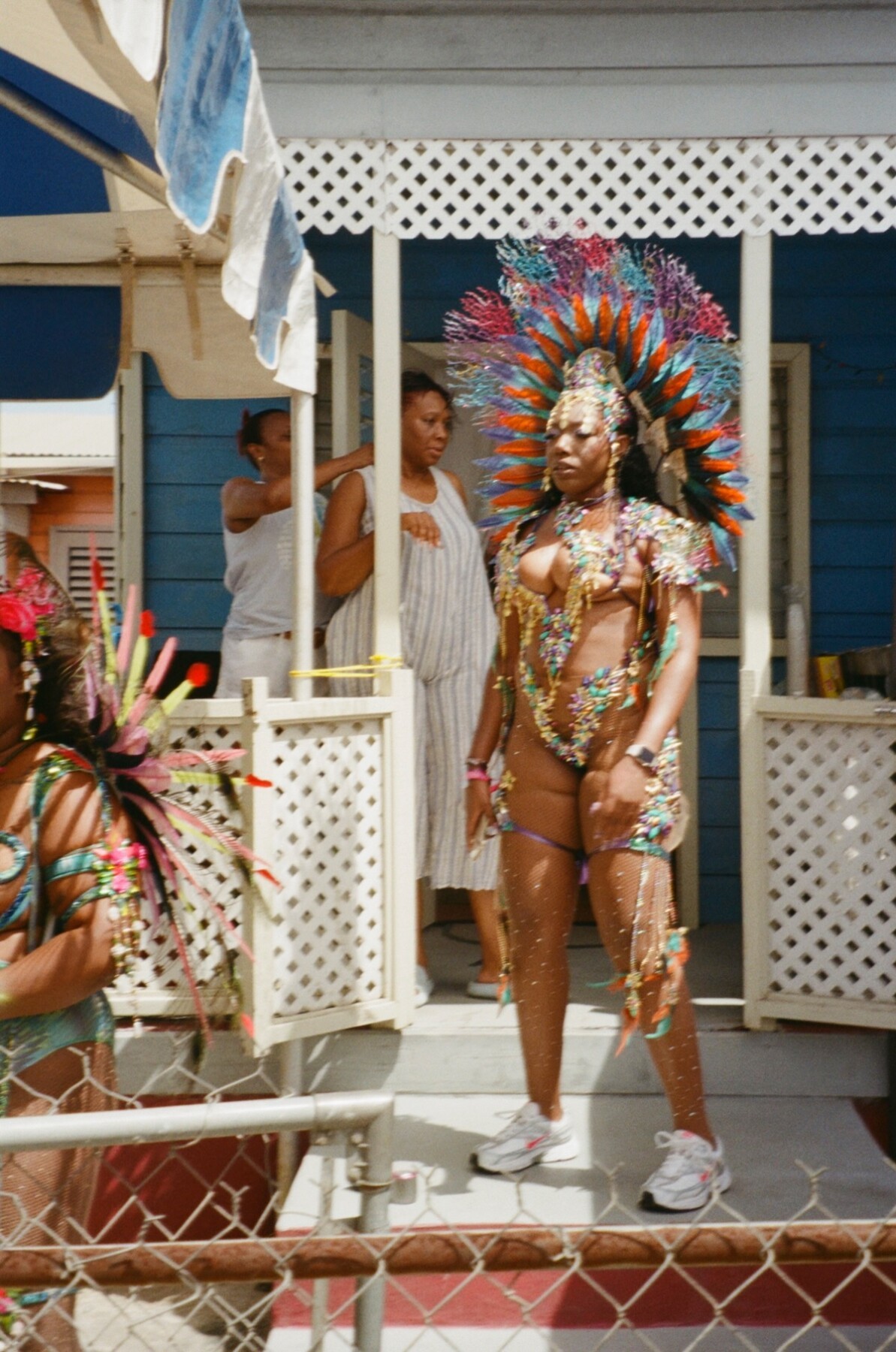
Kicking off bright and early, the day started in the island’s capital, Bridgetown. Within seconds, I was double-fisting a Vodka Soda and watery black coffee; a breakfast of champions, some might say. The dress code is the opposite of KISS (“keep it simple, stupid”), with everyone glittered out to the max, from bedazzled headpieces to dangling body chains, and specks of sparkles contouring chests and cheeks in between. Here, niceties are traded like it’s the stock exchange.
The costumes, a mosaic of coordinated, complementary colors, are works of art, designed with care and then crafted by hand, each gem secured delicately by a hot glue gun. Every costume correlates to a section, and the combination of these sections makes up a “Band,” and it is these “Bands” that masqueraders like myself jump with.
Ushered into our respective sections, we hit the road with our band, pushing forward through the entrance stage, where judges looked closely and notated scores based on the designs. Once that was over, the fun officially began—timing each step, jut, and wuk up to the beats aggressively pumping out of the speakers. Soca, the dominant genre of the West Indian region, originated from the twin-island nation, Trinidad and Tobago, but Bashment Soca, which dominates the streets during Crop Over, is 100 percent Bajan.
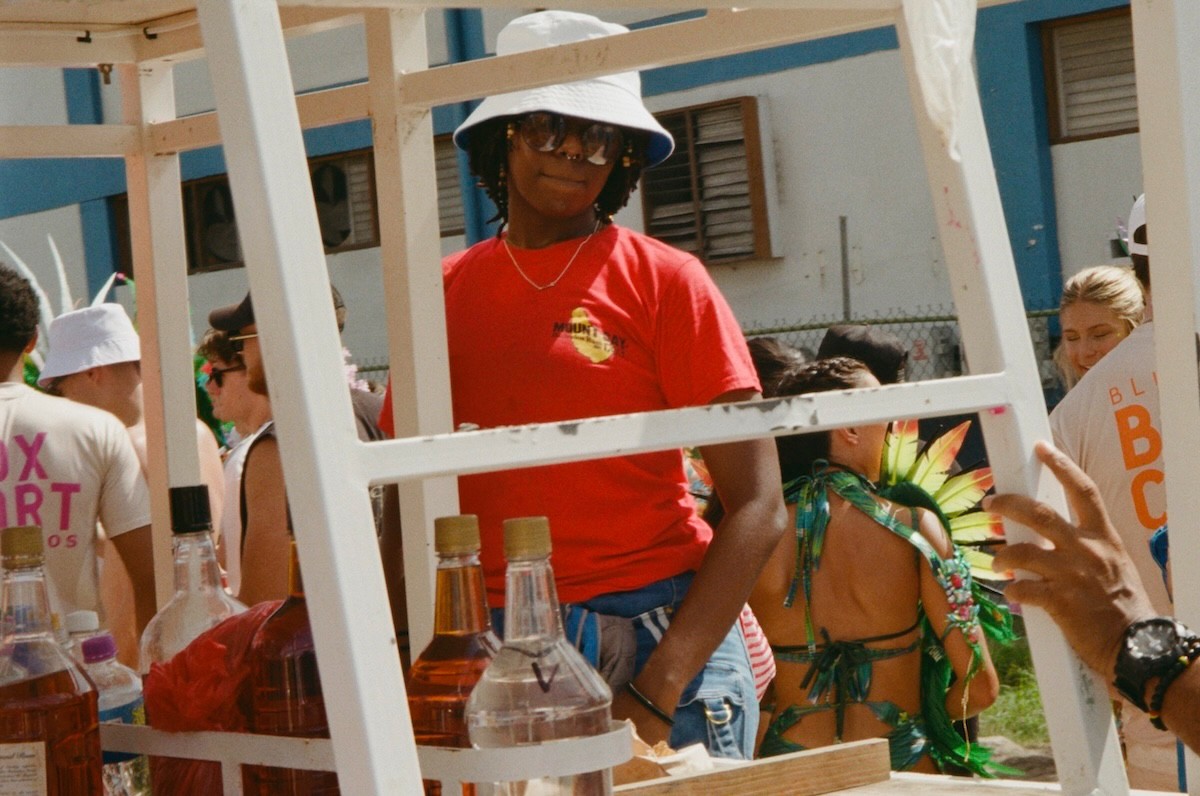
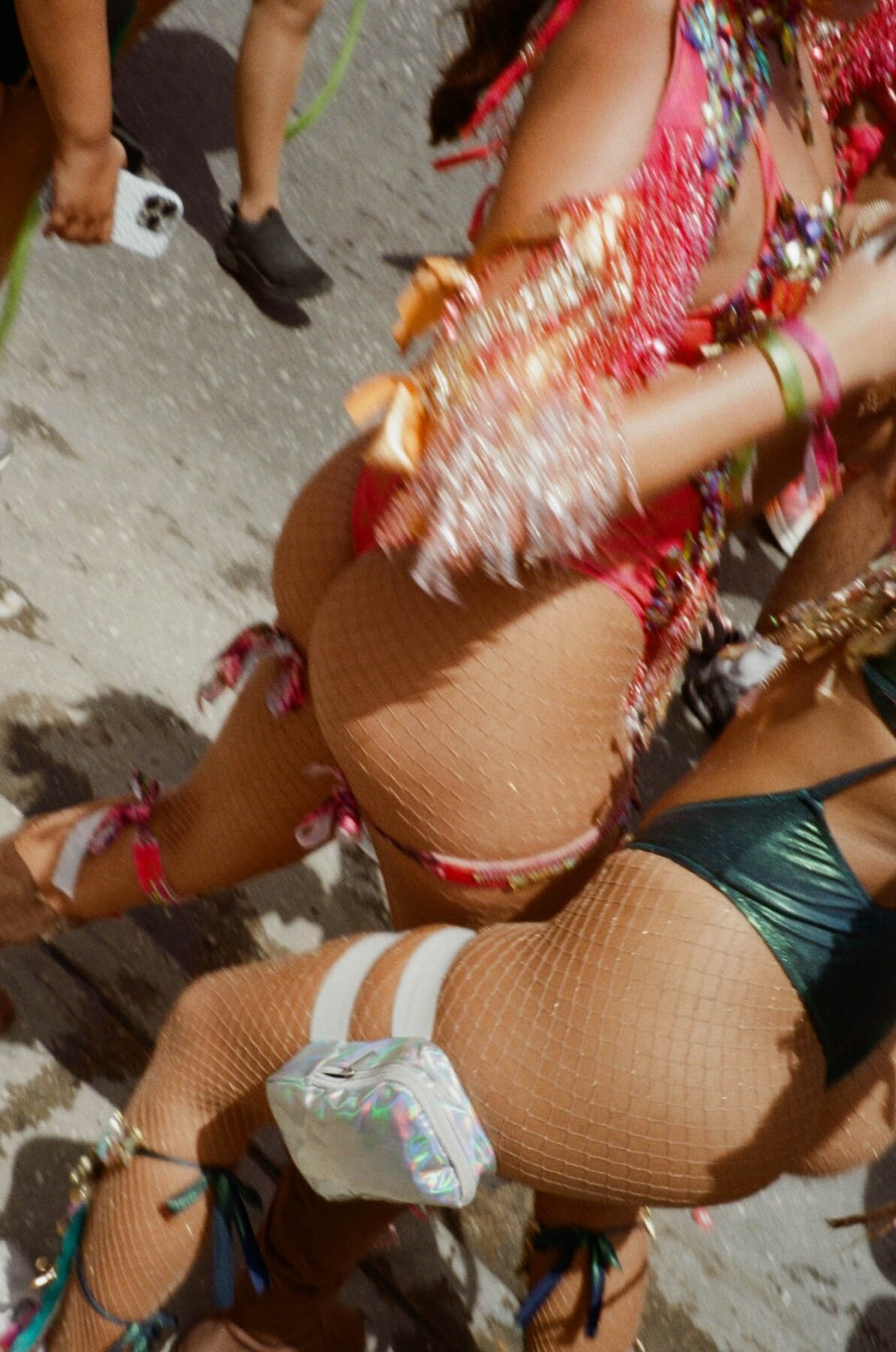
Mobile bars bookmarked the moving block party, requiring skillful and careful cooperation to replenish beverages. Like clockwork, partygoers passed up their empty metal cups in exchange for an unglamorous ice-cold beverage, such as rum and Coke or vodka Sprite. The real bartending skill proved to be balancing drink-making with whining (specifically, the waist-swaying motion), and the ability to squeeze a little whine in between each pour.
Sidewalks became bleachers; the road, a stage, as onlookers loitered in front of rum shops, snacking on Bajan delicacies like fish cakes and cutters, a.k.a sandwiches. But the biggest fans of the day are the kids who look on in awe, their faces beaming with excitement as they catch the remnants of bejeweled costumes discarded by revelers, whose tolerance for feathered wings dissipated as the day progressed.
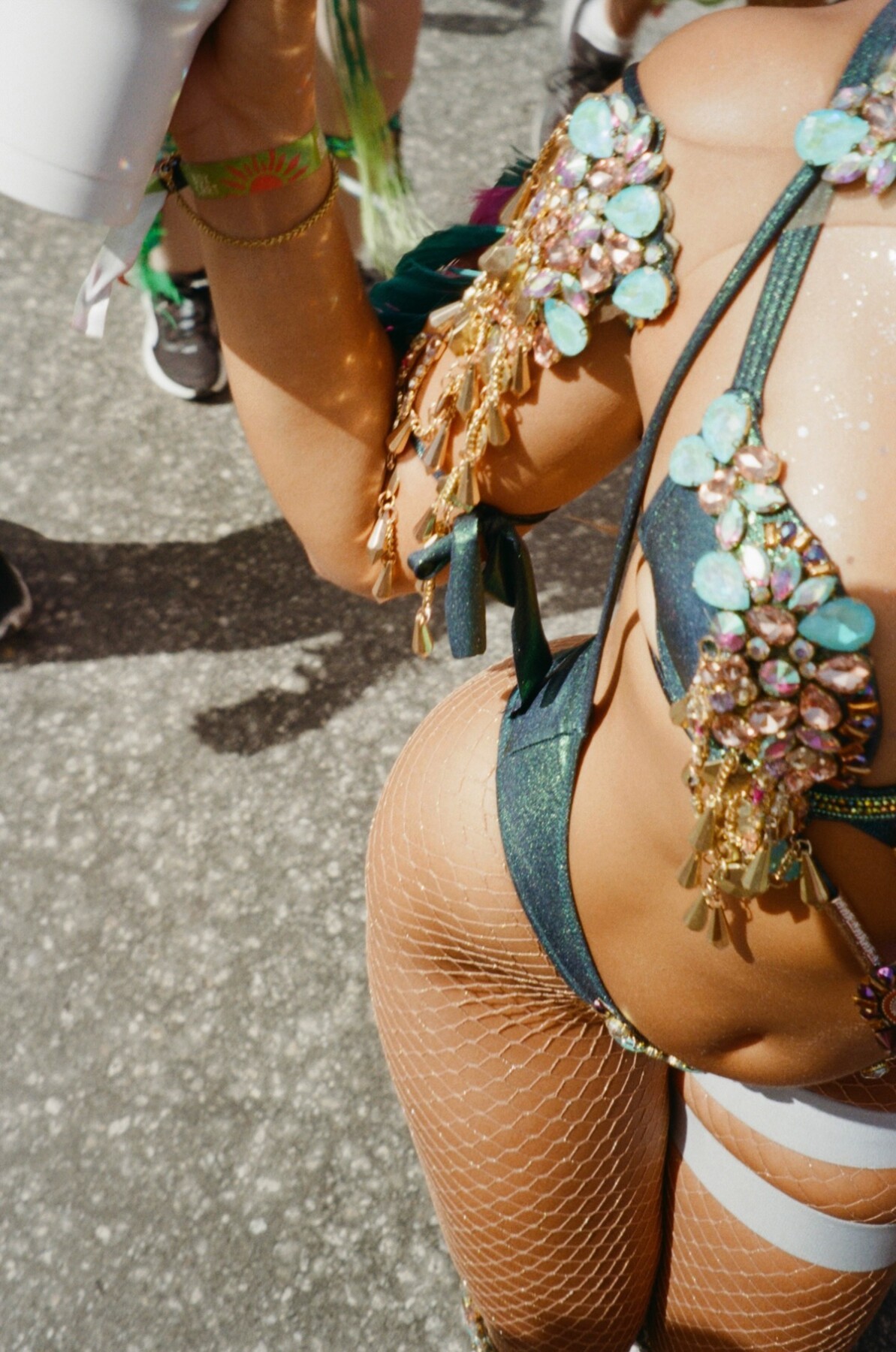
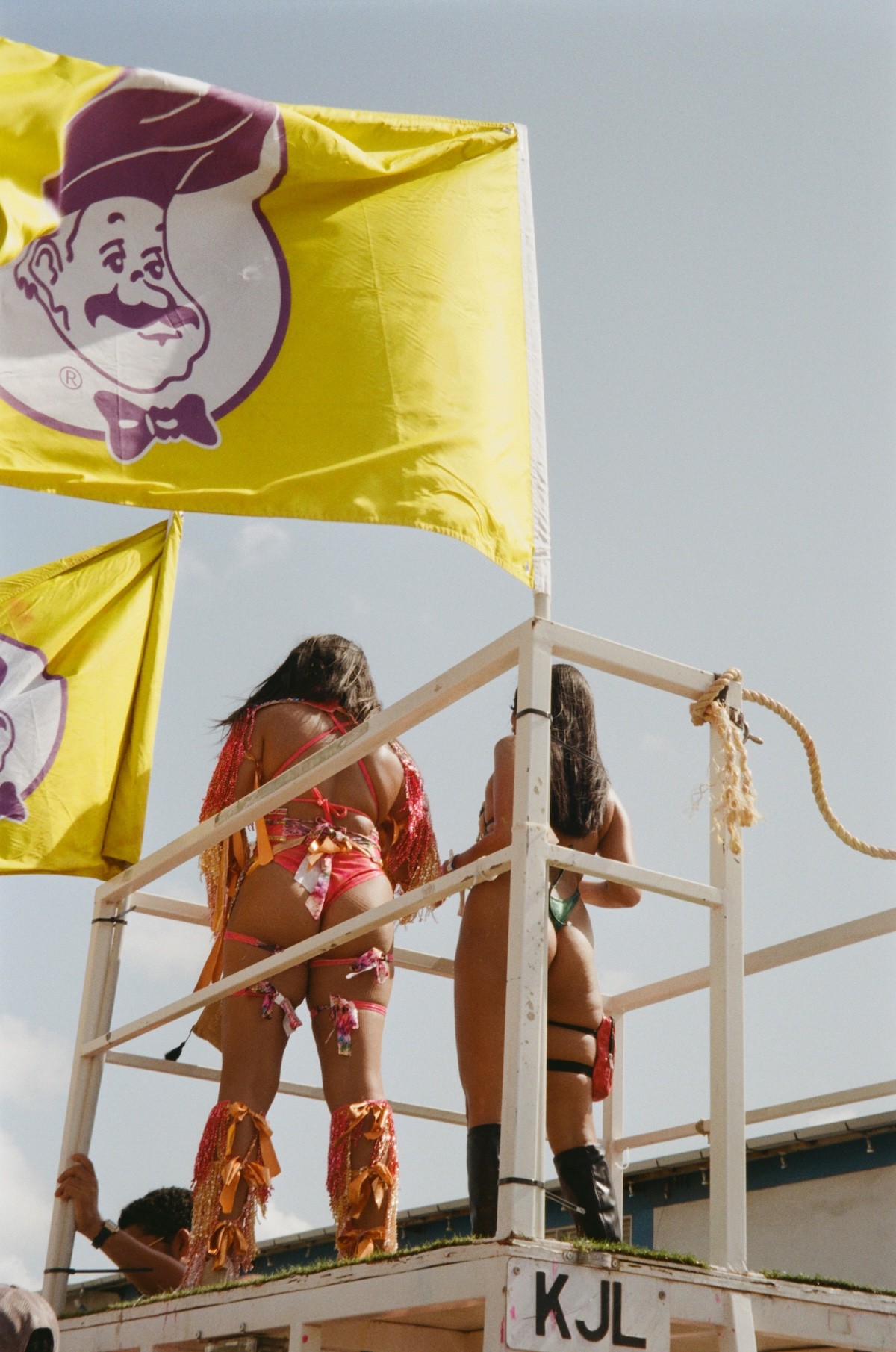
Handheld umbrellas are opened wide, the surface area of their brims shielding the rays, not rain. Those unable to escape the relentless force of the sun experienced its wrath in full force as it belted down aggressively on every inch of skin exposed, leaving evidence of the fishnet tights and bikinis that came before in the form of unfavorable tan lines. Some clawed onto Chefette—Barbados’ beloved homegrown fast-food chain—branded mini-electric fans that even on full blast barely provided a sliver of relief, and others retreated to garden hoses, pouring out lukewarm water along the way.
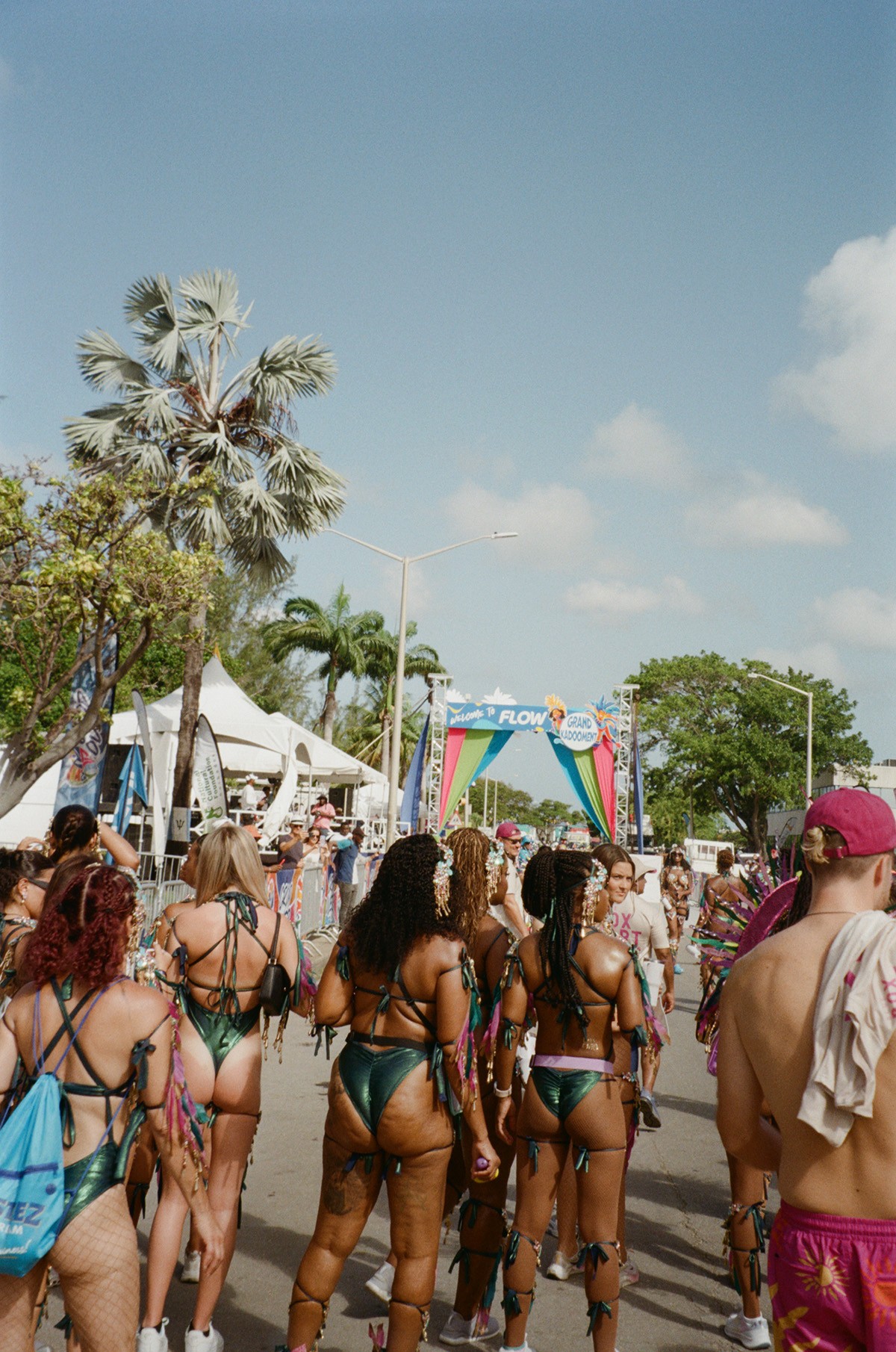
By the time we reached the bottom of Mighty Gryner Highway, the pace had slowed, and the energy levels started hitting the reserves. Feathers wilted, makeup surrendered, and the rum was nearly out. But Crop Over doesn’t end when the music stops; it lingers in your body, in your costume, in the heat caught behind your knees. For that one day a year, Barbados moves as a single organism—a sweating, singing, whining one—and when the sun sets, you start counting down the days to do it all again next year.