In New York, Designers Lead With Presence For Fall
Fashion — 19.02.26
Words: Gabriella Onessimo
In New York, it’s somewhat true that the Fall/Winter season is the less regaled. But perhaps the absence of spectacle makes way for something sharper: clothing that holds up under scrutiny, and storytelling that lives in the cut of a sleeve, the tension of a seam, the weight of a fabric.
Stripped of overt theatrics, designers reveal character through construction, offering considered takes on the feminine wardrobe—and a reminder that even the most grounded ones still call for a touch of fantasy. Below, discover the New York Fashion Week highlights that provoked as much thought as they did a double take.
PROENZA SCHOULER
-
- Courtesy of Proenza Schouler
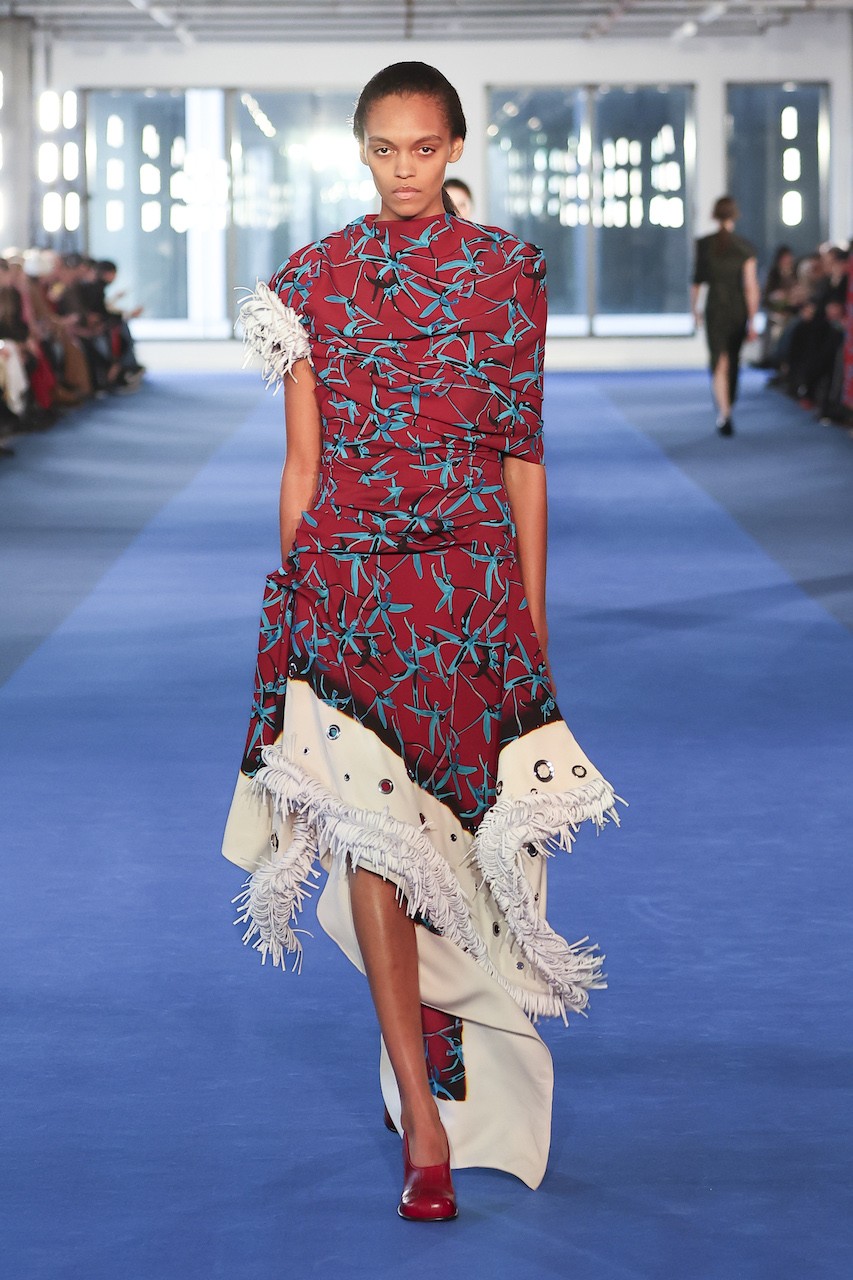
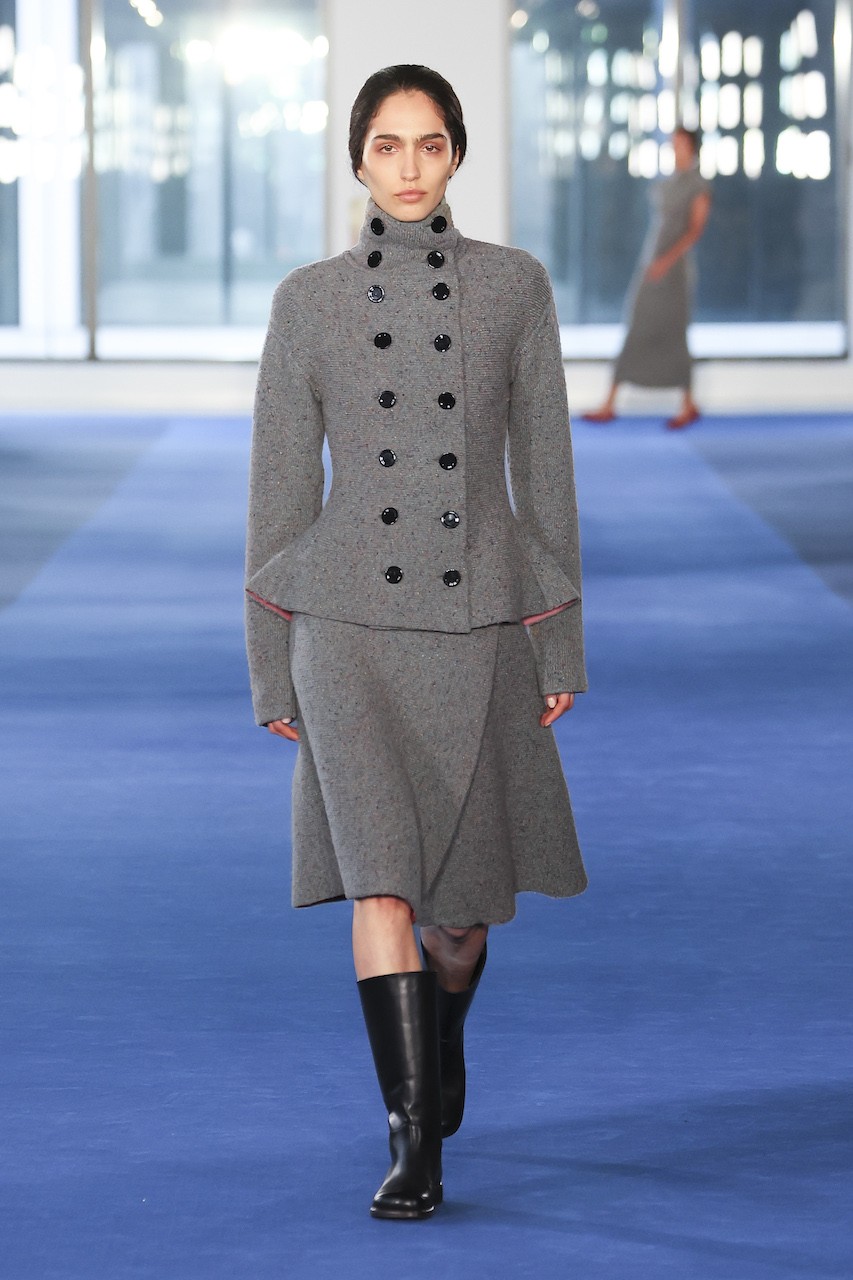
Rachel Scott’s highly anticipated debut as creative director was the best of both worlds—transforming the New York label’s signature polish into something a bit more undone. Dresses arrived lightly rumpled with irregular tucks, while frocks twisted across the back and fastened with button closures that felt caught mid-motion. Silhouettes were sharp but never stiff: truncated waists, elongated legs, and softened tailoring in double-faced wool, matte viscose, and Donegal knits. Vivid florals appeared in painterly prints and on hand-treated leather, interrupted by grommets and half-cut fringe that introduced subtle friction. Grounded by a clear point of view on who the modern Proenza Schouler woman is, Scott affirms both her sharp intelligence and artfulness.
CULT GAIA
-
- Courtesy of Cult Gaia
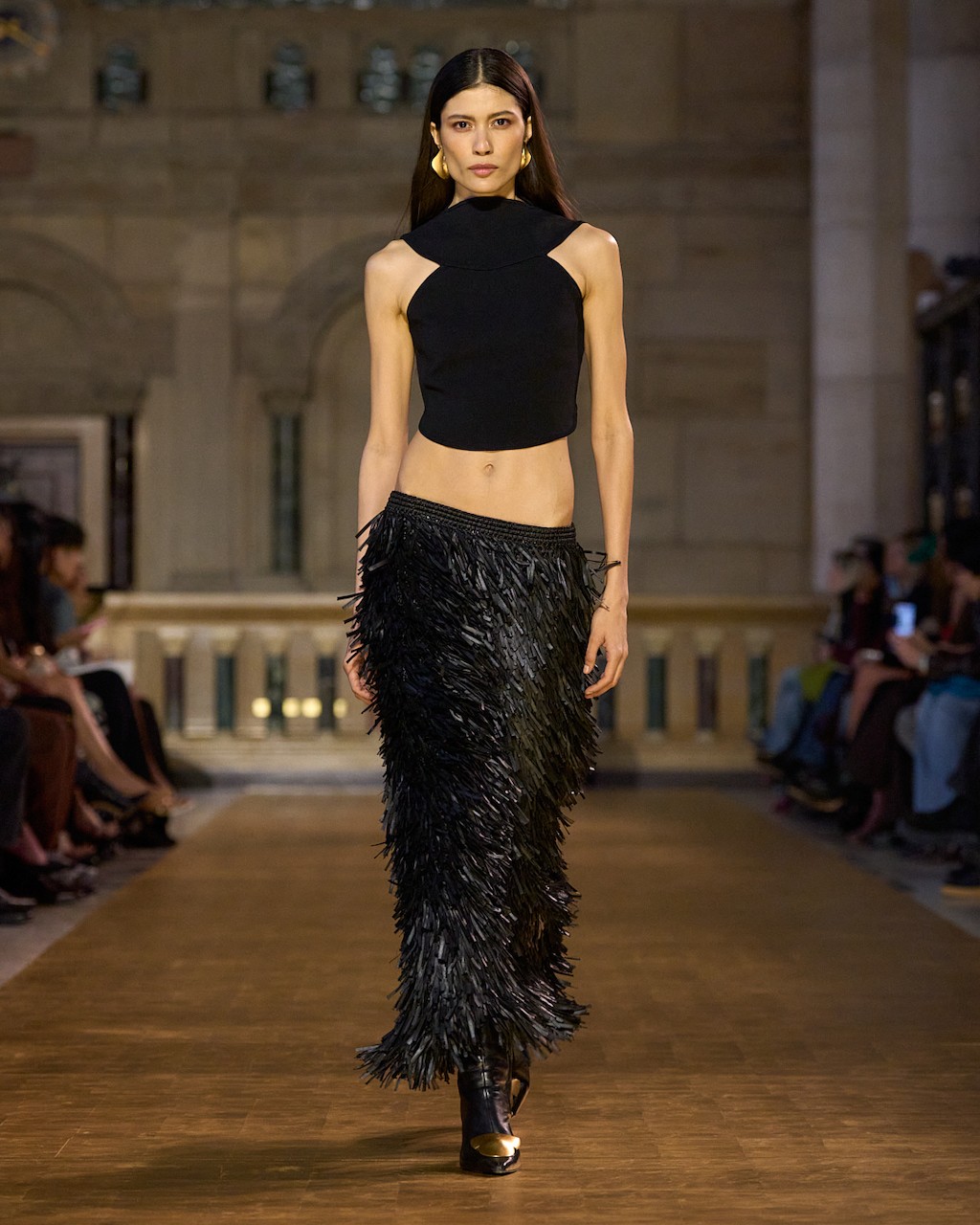
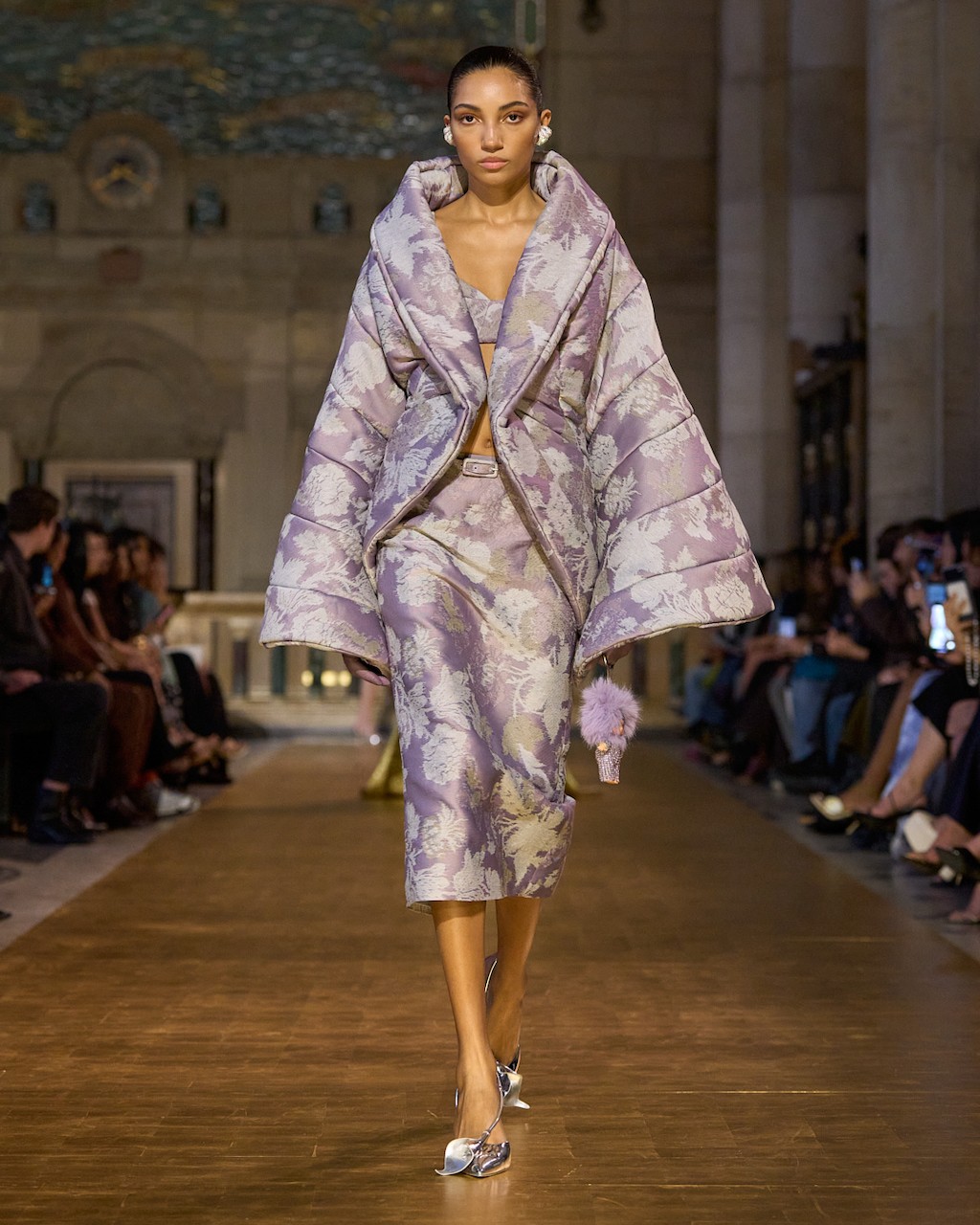
At the helm of the brand, founder Jasmin Larian Hekmat continues to build worlds that blur art and adornment. Titled Shirzan—“lioness” in Farsi—the collection channels soft power through sculpture and embellishment, channeling a sense of empowerment derived from heritage. Engineered pleats create volume through ribboned layers, while dense crystal work and intricate embroidery scatter light across the body. Architecture remains central, expressed in handbags that double as objets d’art and in evolved calla lily motifs blooming across pumps and cast-metal hardware. Along with the guest appearance of little Bratz doll charms—where Hekmat also serves as creative director—femininity is explored through play and polish.
COLLEEN ALLEN
-
- Photographed by Andrew Jarrett
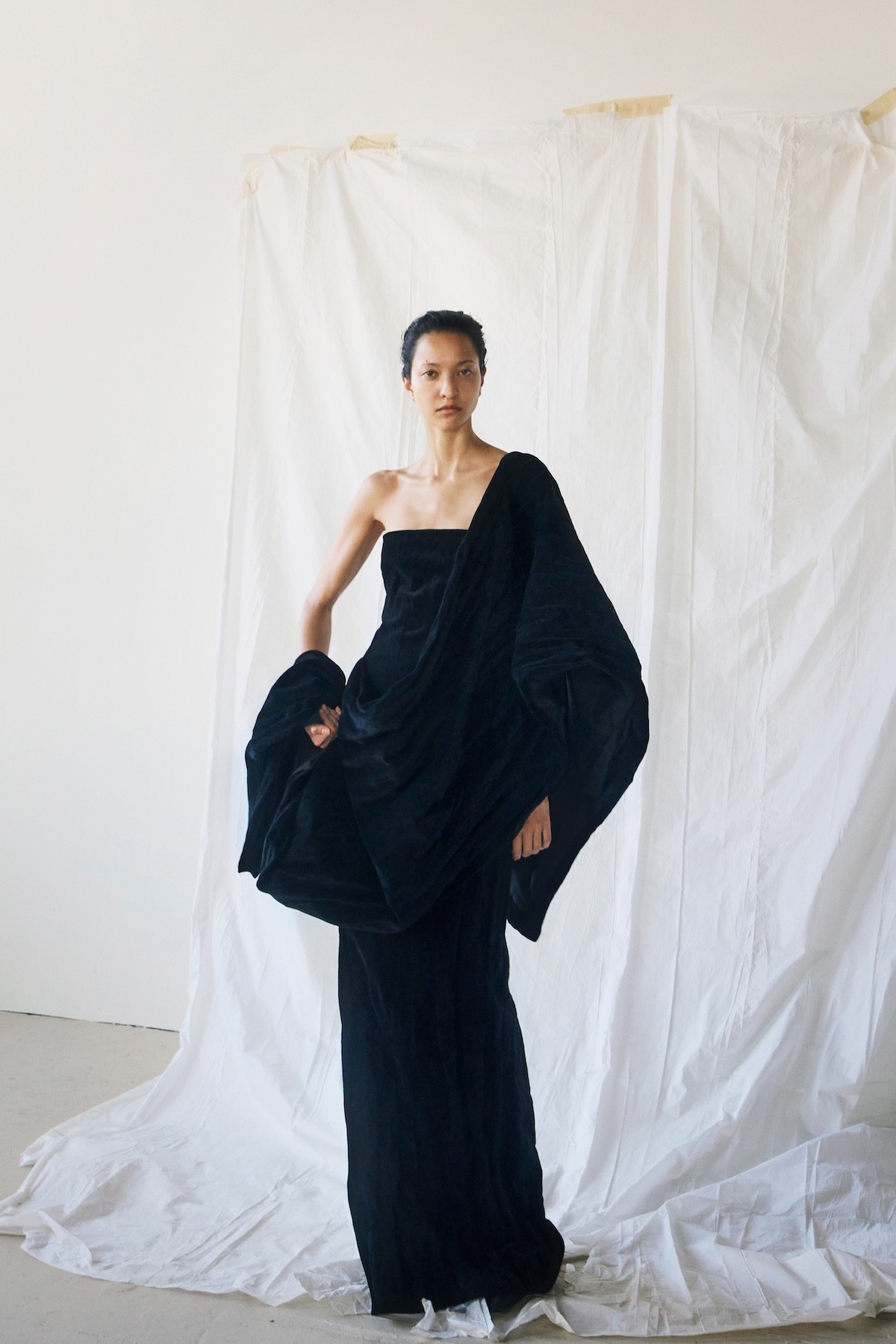
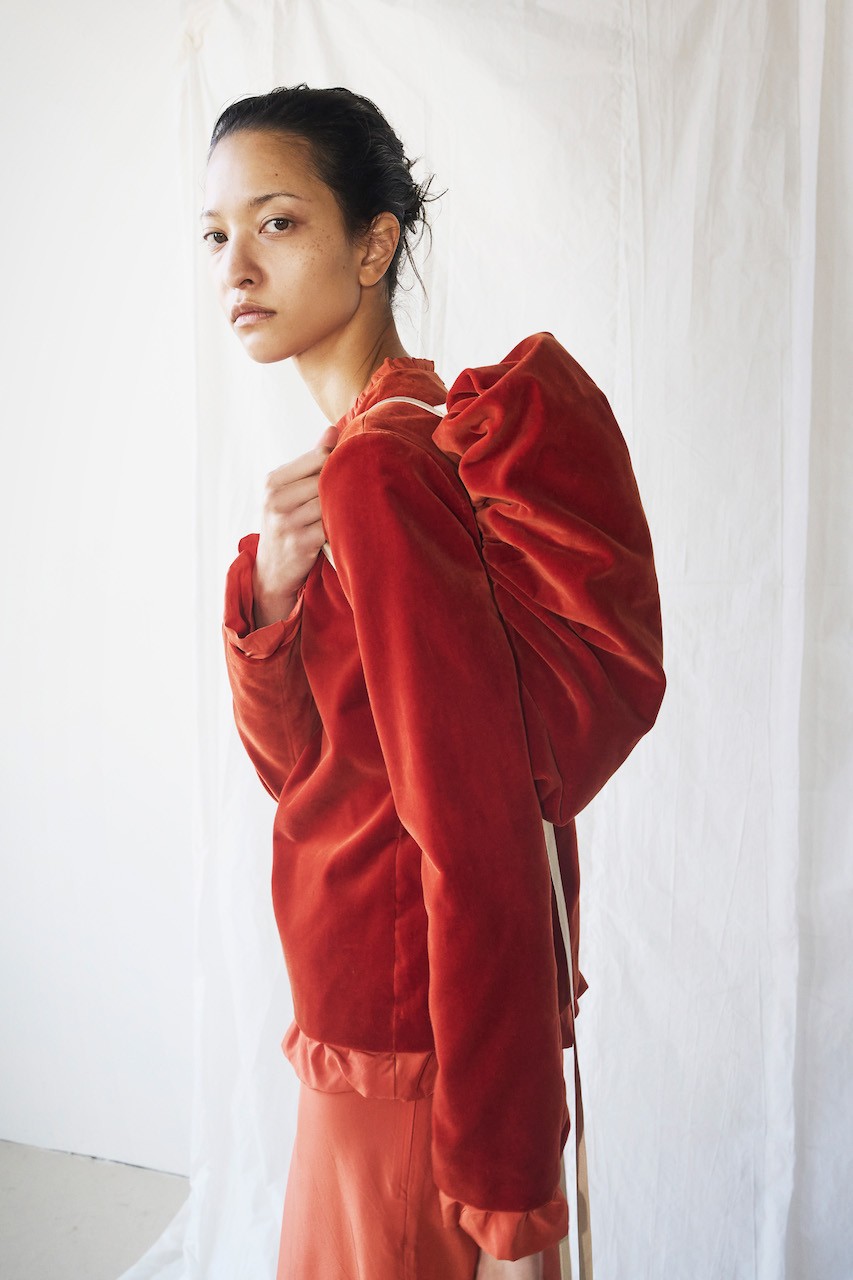
Each season, the rising designer deepens her command of complex form and gothic romanticism. Signature bustles return, reworked through wrapping gestures that shift shape as the body moves. Dense terry and metallic-like velvet lend weight and tactility, while pieced textiles and torn lace invoke a haunted edge that is becoming an ever-stronger signature. Still, color finds its place: saturated persimmon and soft iris punctuate the beautifully somber blacks. New this season is the Bustle bag—a slouchy, sculptural companion that mirrors her liquid draping.
DIOTIMA
-
- Courtesy of Diotima
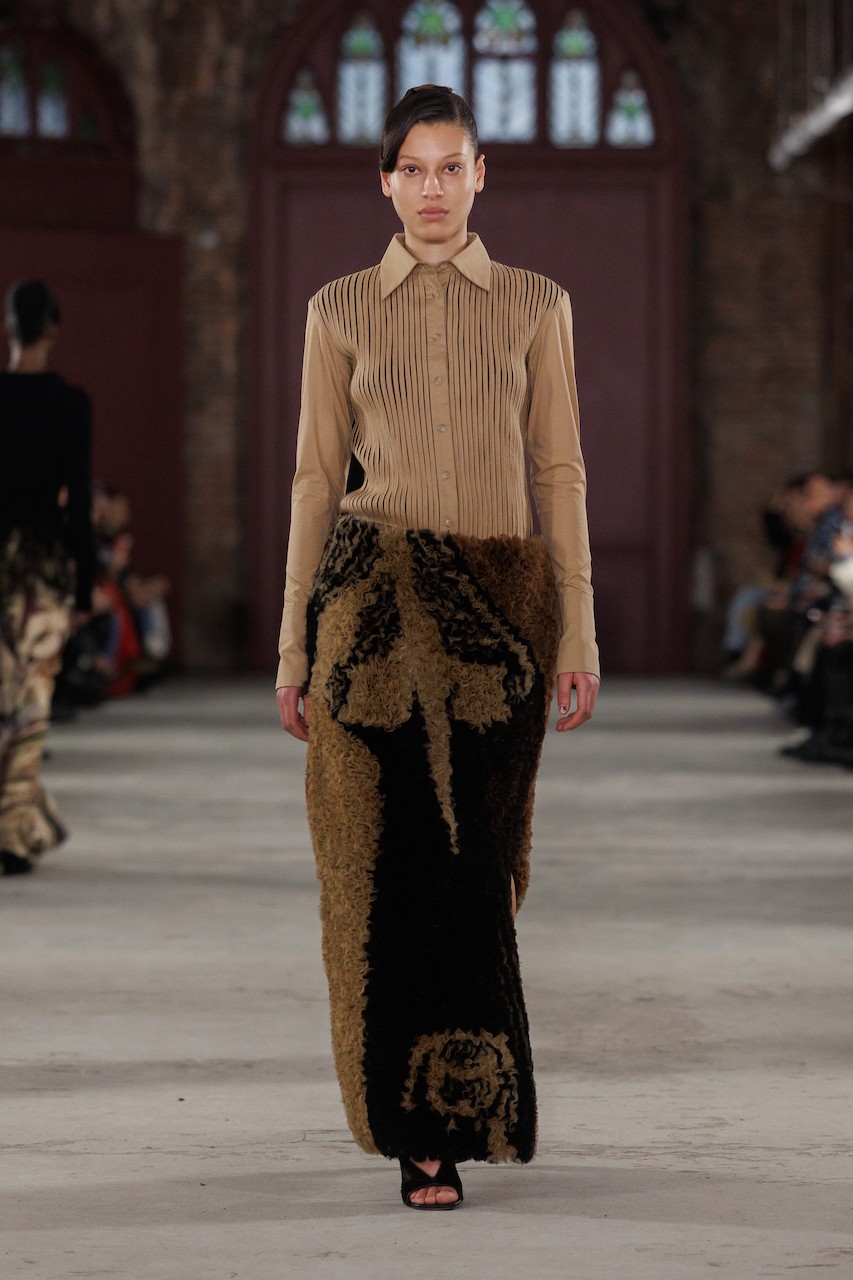
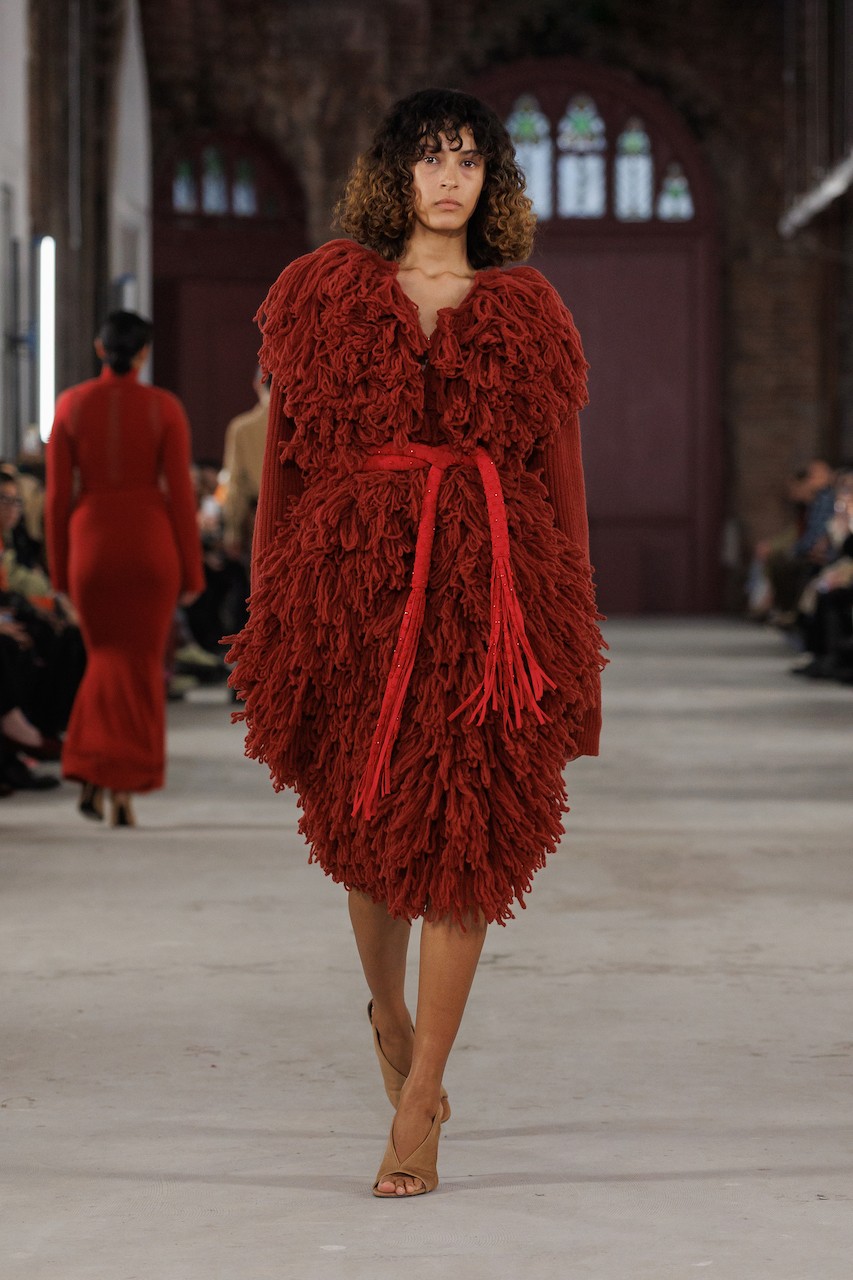
At her own label, Scott explored sensuality and lineage with even greater freedom. Drawing from the work of Afro-Cuban artist Wifredo Lam and his horse-human hybrid figures—the femme cheval—the collection unfolds, placing the form at the core. Sheer layers and split knits reveal skin with intention, while equestrian-inflected tailoring exaggerates the hip and elongates the torso into statuesque columns. Fringe and linear detailing nod to mane and whip from a more conceptual standpoint, as pressed mohair with razor-sharp lapels mimics the density of fur. Here, Scott roams freely in her imagination, elevating heritage while allowing fashion to speak with clarity.
JANE WADE
-
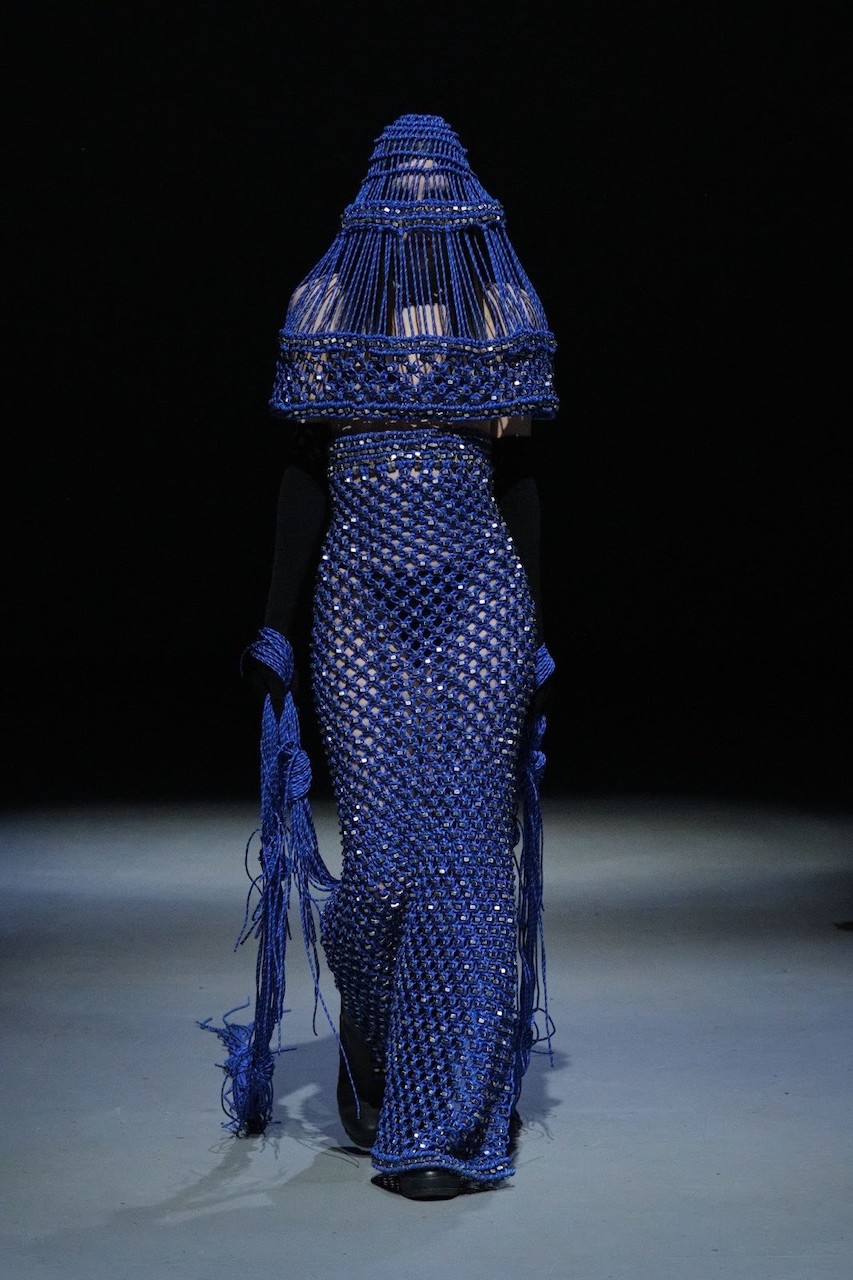
- Courtesy of Jane Wade
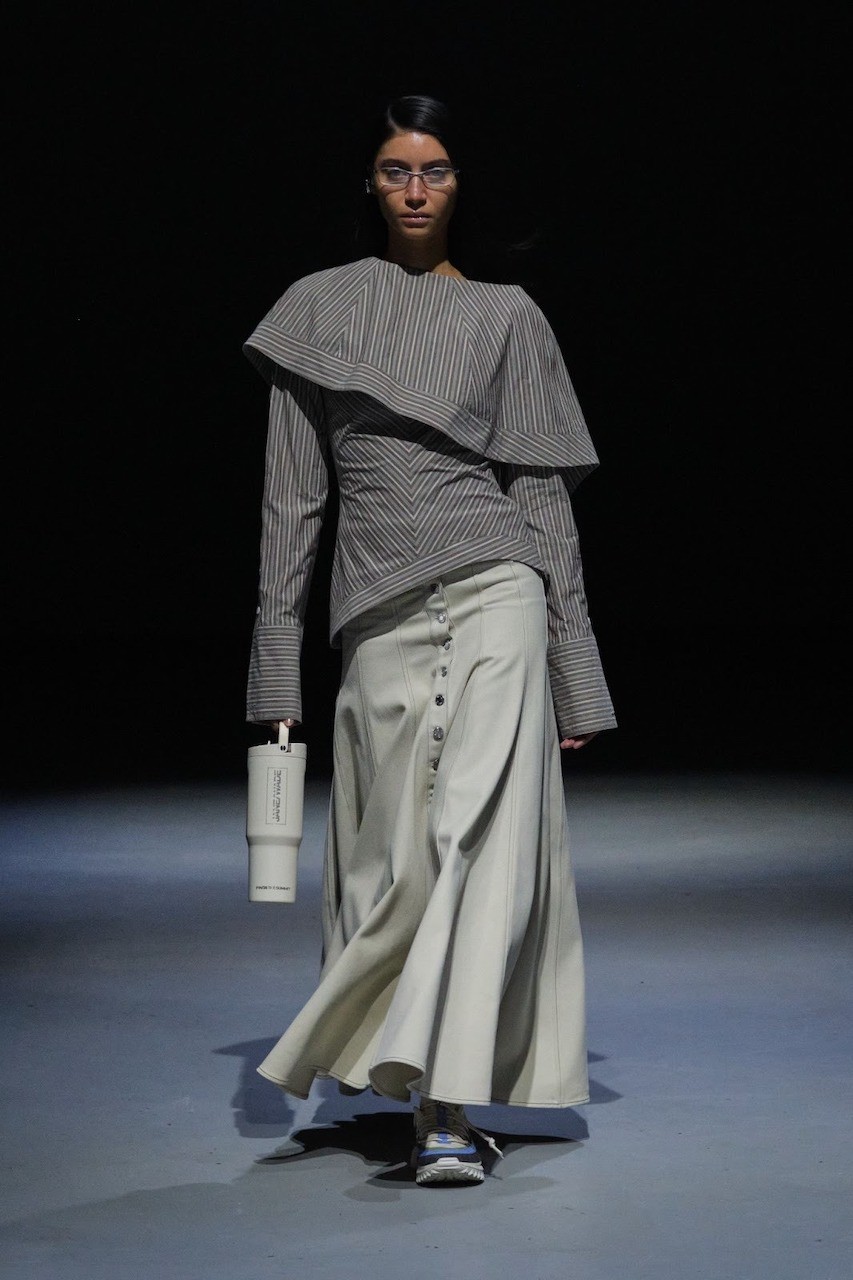
“The Summit” might be the Brooklyn designer’s most monumental collection yet, taking her office-uniform codes into utility and expedition wear and pushing them to elevated heights. Modular construction drives the collection, with convertible silhouettes and zip-off boot elements created through her Sorel collaboration. Performance details anchor the styling, yet form and function are continually subverted. A standout blue gown, crocheted entirely from paracord and paired with a sculptural headpiece, shifts her language from its utilitarian roots to something almost celestial. These juxtapositions create a tension between corporate structure—the internal drive to be useful—and the resulting desire to break free.