Mortica Is Turning Conformity on Its Head
Fashion — 20.12.25
Words: Amber Louise
Photography: Mico Corvino
Styling: Tashie Jane
Makeup: Joshua Hilario
Hair: Aidan Rodriguez
Production: Gabriella Onessimo
Casting: Cearah Peck
Model: Jenevieve at Anti-Agency
For Liv Masterson, fabric isn’t just material—it becomes narrative. Through her New York-based label, Mortica, the textile designer holds a mirror to society while exploring texture, process, and form.

Masterson has the magic touch—quite literally. Rather than beginning with silhouette or proportion, she approaches design with materiality in mind. With just one touch, the 26-year-old textile designer can decipher exactly what a fabric wants—even needs—to become. When we speak over Zoom, she’s sitting in her studio in New York, reflecting on this very instinct: “I grew up always touching fabric before looking at the silhouette.”
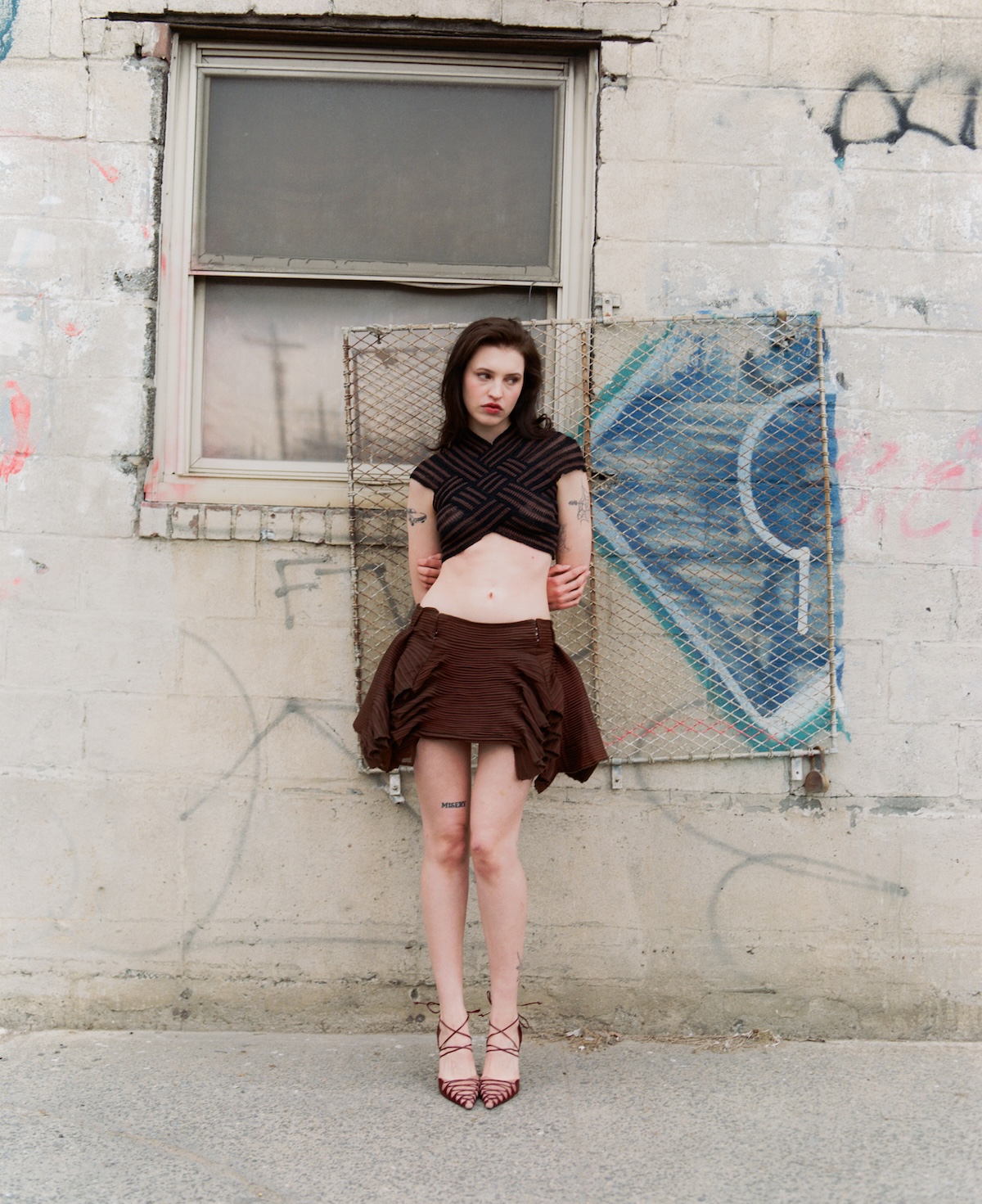
It’s no surprise, then, that her emphasis on materiality became the heart of her brand. The label centers on giving new life to discarded materials—even down to its name, which comes from the Latin word for death, mort. Deriving from an upcycling project Masterson completed during her studies at the Rhode Island School of Design, the brand was born in 2021 as a way “to have more agency on what the garments themselves are saying, and wanting to build the shape and structure from the ground up, as opposed to working within the parameters of reworking something.”
Growing up in a private preparatory school setting—her father was a teacher at The Masters School in New York City—Masterson has long been drawn to the hidden meanings behind uniforms, particularly the ways they shape identity and the idea of “being crystallized in an object.” This obsession is tied, like an invisible string, to each body of work she produces, alongside her fascination with “traditional regimented patterns, like tartans, stripes, plaids, argyle, and things of that nature, and distorting them or warping them to have moments of fluidity and organic-ness.”
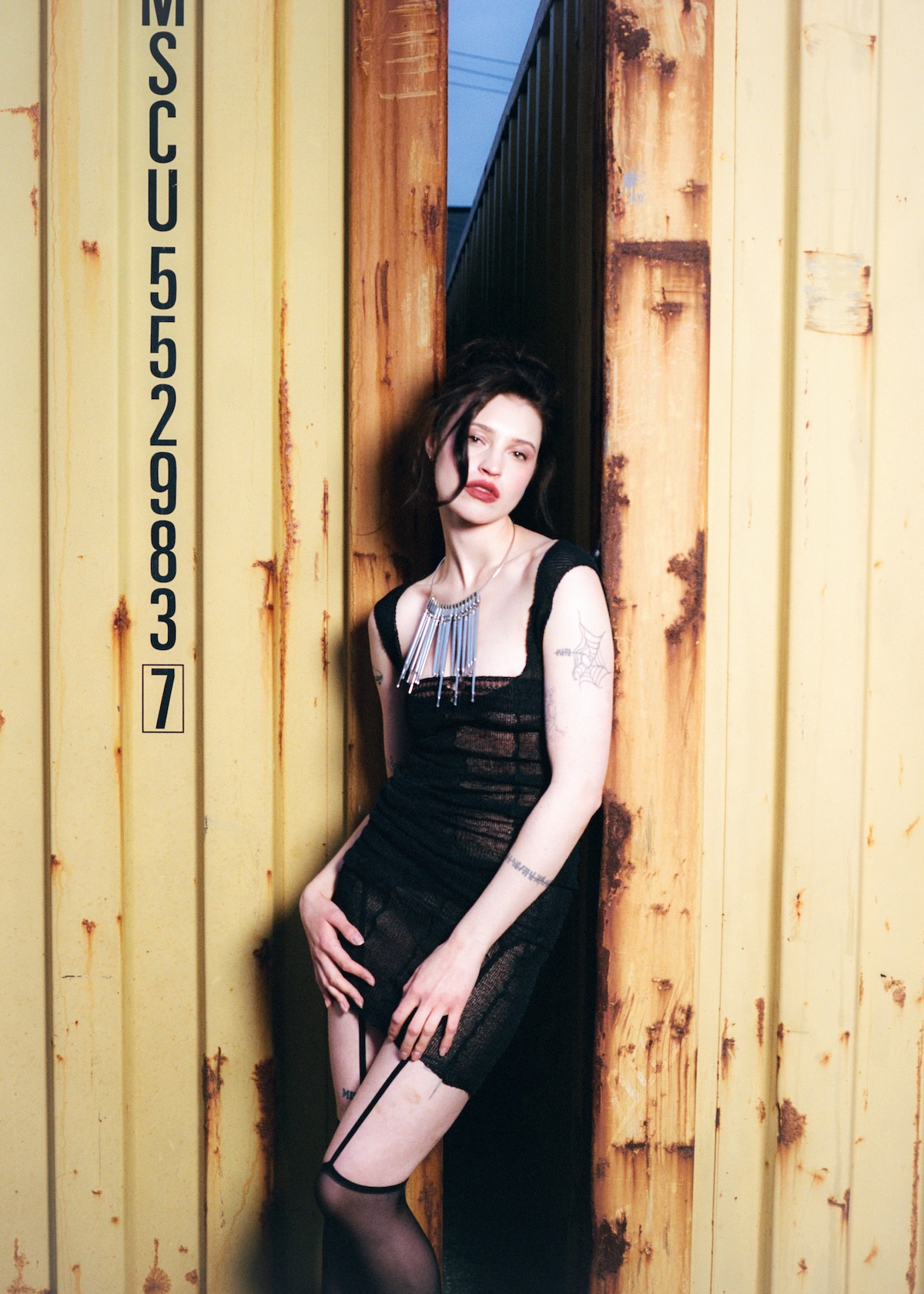
While she has scaled the accessibility, artwork, and couture elements of the brand over the last four years, she has stayed true to the sincerity of its origin in a way that feels distinctly her own. The waste—dye trials, swatches, and deadstock fabric scraps—from each collection is gathered and saved, then sewn together to create the final garment in each body of work. “It feels very meditative, and because it’s very laborious to sew all these tiny little pieces together, it’s almost an embodiment of my own reflection of the ways that even this confined body of work has [been] produced,” Masterson shares.
For her fourth collection, Follow Suit, the scraps were transformed into a patchwork banner dress with raw, fraying hems. More than a reflection of Masterson’s command of textiles, the collection serves as a social commentary explored through two seemingly opposite (but evidently parallel) motifs: Wall Street and baseball, ‘America’s Game.’ “What I was pointing to in this collection was the gamification of work in today’s culture and how our national game now often feels like work—but I could argue it’s also our life game.” Nods to early baseball uniforms and classic suiting appear through pinstripe wool, diamond patterns, and crinkled fabrics that mimic the marks of a rolled-up sleeve, underscoring her textile background.

It’s also the first time Masterson has incorporated menswear, a concept that has been at the back of her mind since she started her label. Her interpretation, however, moves beyond black and white and lands in androgyny. “Gender is being dismantled,” she says, “and how it’s shown in collections doesn’t have to be a binary at all.” The asymmetrical, pinstripe, fencing-esque suit jacket and matching low-waisted, wide-leg pleated trousers were photographed on both male and female models, reinforcing the push and pull between fluidity and rigidity.
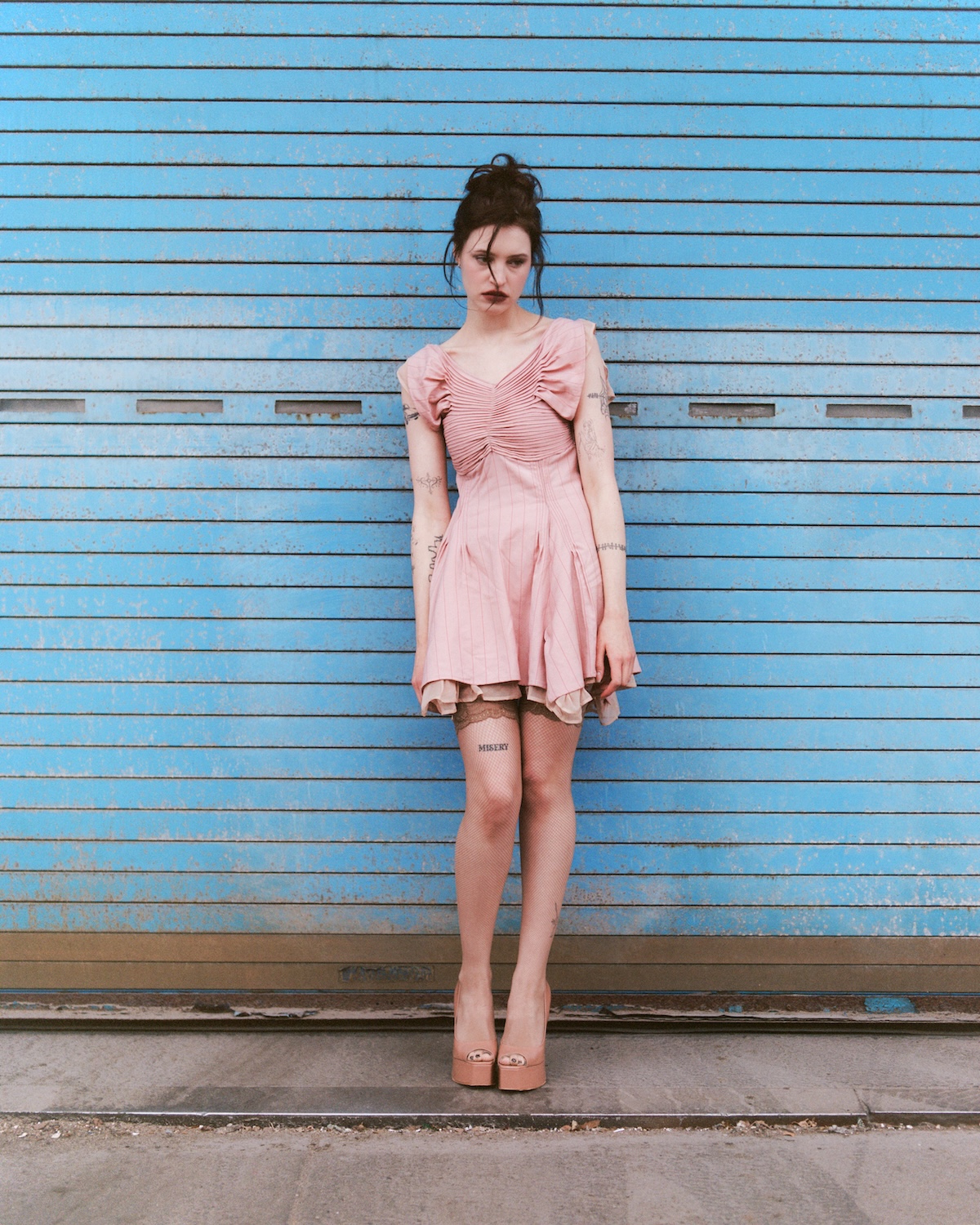
Beyond menswear, she’s eager to develop a line of core garments—pieces that maintain their original design yet are reinterpreted with each new collection, steered by strict guidelines. “Designing within parameters is the same feeling as working within tradition and uniform,” she details. “I often think about the approach to jazz music: You have this structural template, and then you work off of that to create newness, spontaneity, and novelty.”

For Masterson, examining themes of work, wealth, and performance within a collection—specifically Follow Suit—is crucial. “It’s something that is almost negligent not to think about,” she emphasizes. “We’re at a stage where there is both extreme mass consumption and mass production—and a high population of people on the earth—which is part of this whole tornado of ideas. There’s intense individuality, but then there’s also intense anonymity, conformity, and loss of identity.”
“I’m excited about using these bodies of work as vignette studies of a larger cultural or societal theme,” she notes, careful not to reveal too much about where her work will take her next. Still, she makes it clear that parallels will continue to be manifested through her designs—what those parallels will be, though, are for Masterson to know and us to discover. As we round out our conversation, she tells us, “Each collection is a chapter to a larger study that I’m upon,” and we’re at the edge of our seats waiting for chapter five.
Discover the world of Mortica on their website and Instagram.