In Search of Utopia: A Conversation With Mats Rombaut
Fashion — 08.12.25
Words: Gabriella Onessimo
As humans, it’s in our nature to contemplate what’s to come. For some, that means existential questions; for others, the drive to build what doesn’t yet exist—or simply the unease that comes after an anxious bout of doom-scrolling. Wherever you fall on the spectrum, the future feels vaguely real, yet always hanging on the precipice.
In a fashion context, these ambiguities take on a tangible anatomy; a “futuristic” silhouette becomes a marker of our evolutionary progress, shaped by cultural signifiers. Since 2013, Rombaut has been a resident of this liminal, future-facing space, using footwear as both a technical and metaphysical vehicle for moving the needle in perhaps the most grounded way possible—merging organic materials with sculptural forms built for today and imagined for tomorrow.
On the heels of a second collaboration with Puma—an earth-bending sequel to their wildly successful first run—TEETH joined founder Mats Rombaut in conversation to explore the brand’s creative ecosystem, layer by layer.
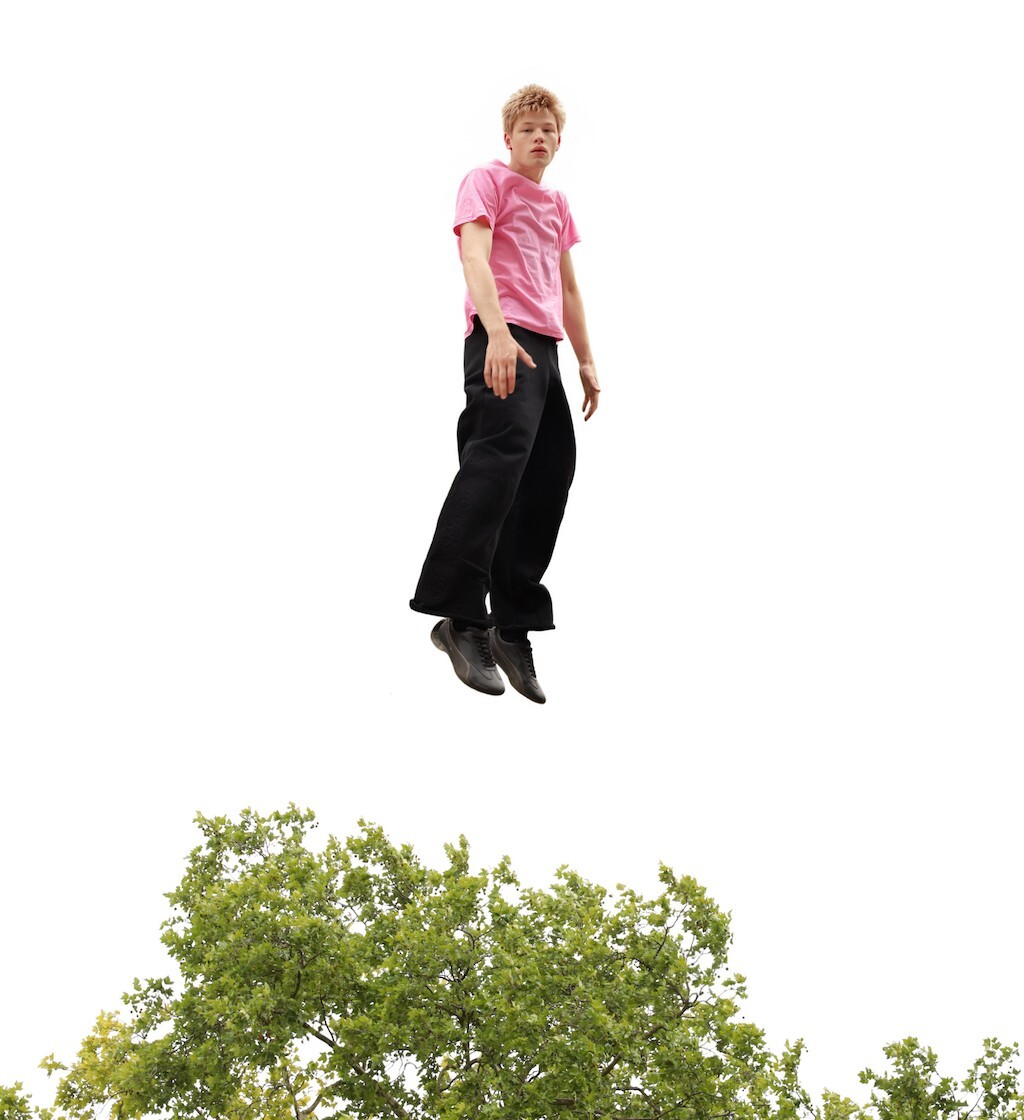
Courtesy of Rombaut
You’ve been in the industry for quite some time. How has your design sensibility evolved, and what helps you keep your ideas feeling fresh? When I launched Rombaut, my focus was very clear: to make footwear that was vegan, ethically made, materially experimental—shoes I would want to wear, but that wouldn’t compromise my values. I was working with bark cloth from Uganda, tree bark materials, coconut fiber insoles, plant-based linings, and so on.
Over time, I realized that purely natural materials are great, but they come with limits—durability, cost, scale. I shifted to a hybrid mindset: maintain the ambition of sustainability and innovation, but allow myself more flexibility in materials and design so the product is viable and wearable.
Also, I’ve become less dogmatic about chasing novelty for its own sake and more interested in meaningful evolution—in materials, form, and message. I recently said I no longer chase constant novelty but prefer to focus on meaningful creativity and a healthier work–life balance.
In short, the sensibility has matured from “let’s do something radical” to “let’s do something radical with intention and endurance.” And I stay curious about what’s possible next in materials, silhouette, and cultural reference.
Outside of fashion, what disciplines—think architecture, industrial design, art, anything of that nature—play a role in shaping your visual vocabulary?
Music—specifically the New Beat, ’80s and ’90s raves, which I love the aesthetic of. It was a reaction to society, and anything with a rebellious, anti–status-quo story attracts me. I’m inspired by the intersection of music, culture, and the techno/party scene background I have. For example, I’ll listen to certain tracks as we develop a collection, and the mood from that filters into shapes, silhouettes, and the chiseling of footwear.
I’ve been very into martial arts for a while: the discipline, the philosophy, the etiquette, the rituals behind it, as well as the visual language. Nurturing mind and body—that’s the effect I want my shoes to have.
Lately, I’m also obsessed with the nature of reality; our limited perception as humans, the fabric of spacetime, all the randomness, and the unknown of quantum physics. I’m not into any religion, and I don’t believe in ghosts or gods in the traditional sense, but life and the universe are actually very mysterious and magical. This translates into the chaos of our upcoming collection.
-
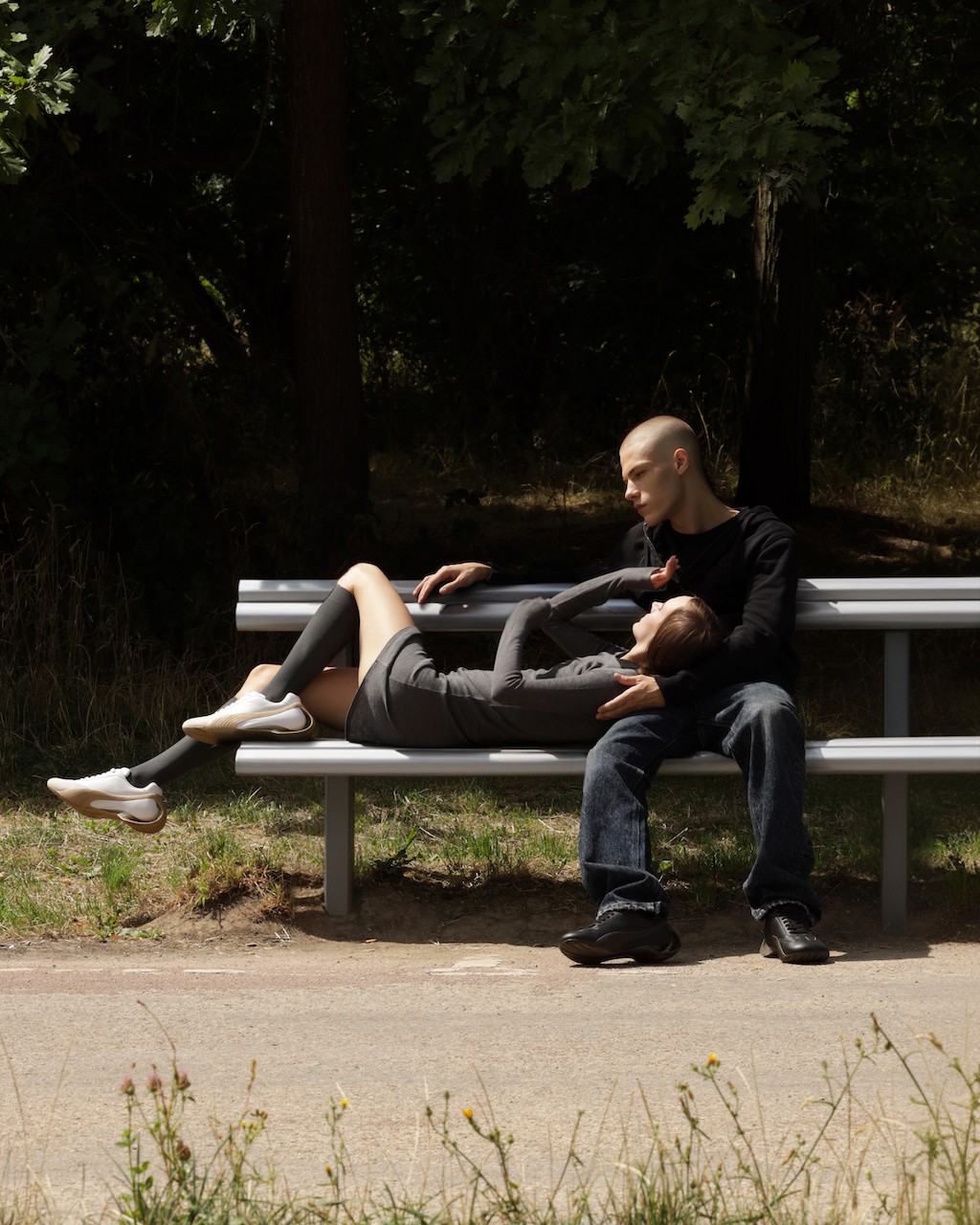
- Courtesy of Rombaut
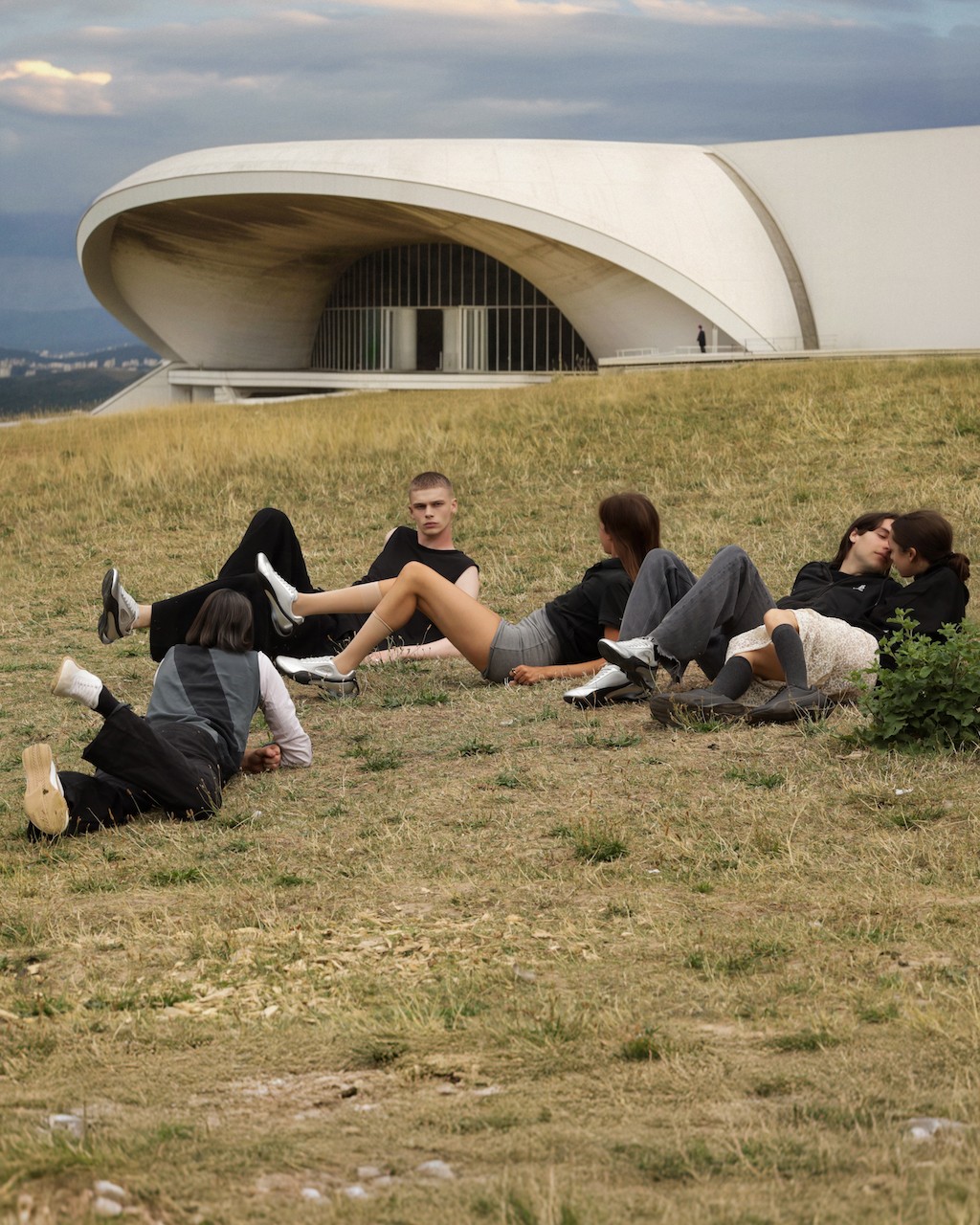
Your collaboration with PUMA has been strong from the outset. When you merge your design language with a huge brand’s identity, how do you challenge both your own perspective and theirs? In collaborating with a brand like PUMA, the key is respect. You respect what they have built—their heritage, their audience. But you also bring your point of view. The challenge is finding the intersection; in this case, where Puma’s DNA meets my own without diluting the other.
You push both sides. I push myself to integrate into a broader brand system, exploring how my visual language can be legible but still distinct within theirs. And I ask Puma to accept a slightly different way of thinking about materials, shape, silhouette, and even attitude. For example, in our collaboration, you see sculptural soles, sock-like uppers, unconventional hybrid boot/sneaker shapes that push the envelope.
It’s a balancing act: you don’t want to feel like a guest with no voice, but you also don’t want to override the partner brand so strongly that they feel you’ve hijacked it. The best collaborations are generative—each side elevates the other. The result is hopefully something neither could have done alone.
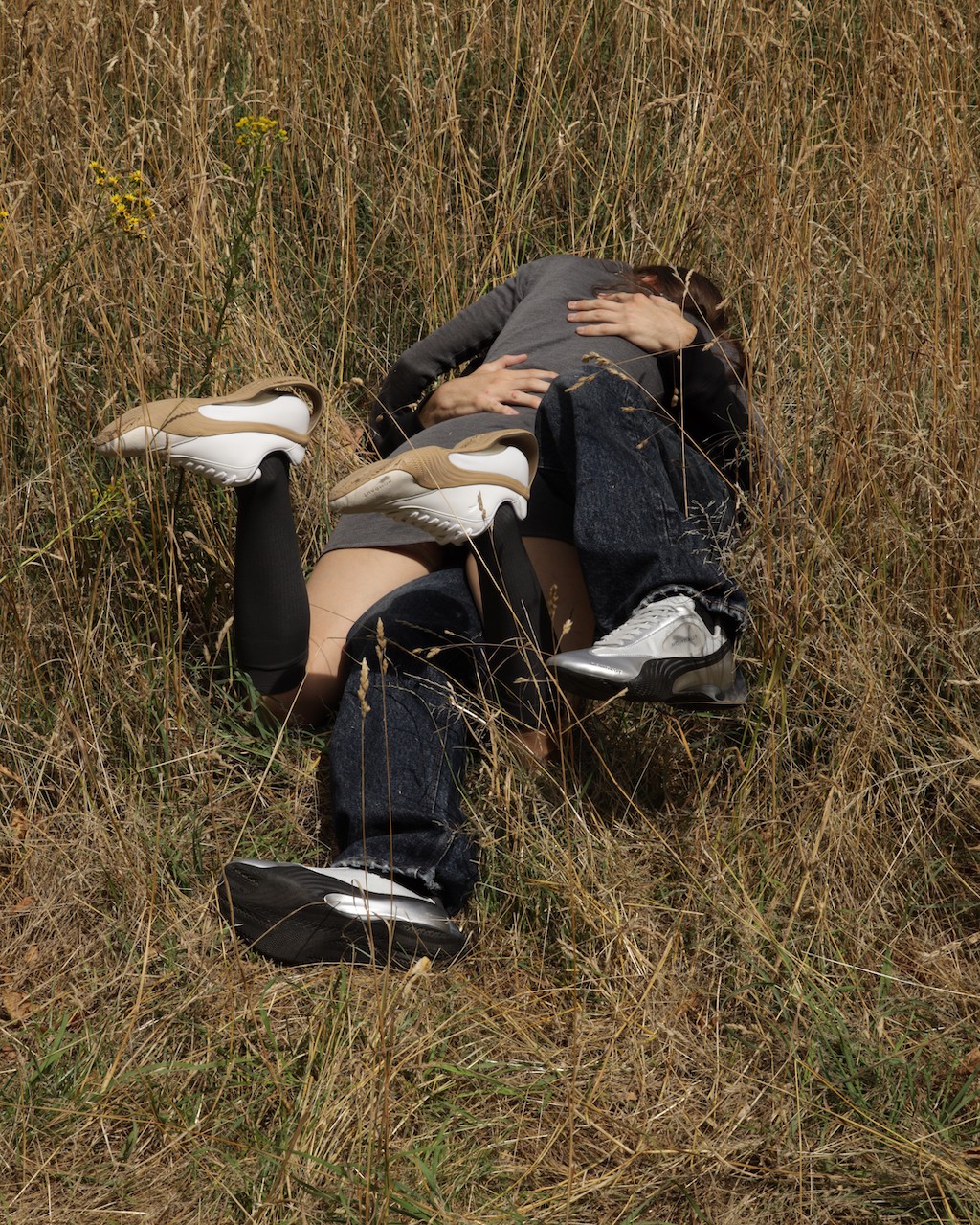
Courtesy of Rombaut
Footwear is such a technical, utilitarian category at its core. How do you still find ways to push the boundaries of it, especially when you’re working in a sportswear context?
It’s all about imagineering.
Culture is always shifting, but since the start, Rombaut has always leaned into an unconventional, near-future lens. Now that the “future” feels both here (and not at all the utopia we imagined), how do you keep pushing that vision forward?
This tension you mention is exactly what drives me. The future is uneven—we have tech, we have material innovation, we have cultural change, but we also have an ecological crisis, supply chain challenges, and consumer fatigue. That paradox becomes fuel. For Rombaut, the near-future isn’t a shiny utopia; it has friction. Some days I see it more bleak than others.
I try to push forward in a few ways. I’m constantly asking “what if” in materials: What new bio-based matter can we use? Where can we go beyond leather, fur, and conventional synthetics? I’ve used pineapple fiber (Piñatex), apple leather, and algae-blended resin. I embrace forms and silhouettes that hint at future architecture, future bodies, hybrid functions, like boots that are part sneakers, clogs that are almost sculpture, and pieces that treat footwear as more than the domain of the “safe shoe.”
I also acknowledge challenges rather than ignoring them. “Utopia” may not arrive cleanly, so my design can ask questions rather than pretend everything is perfect. For example, I’ve said I want less cynicism and more positivity—I’m done being sad about it, and I want to propose something hopeful.
For designers who are still finding their footing, what would you say about holding onto a distinct point of view in such a crowded landscape?
Don’t get discouraged when people don’t get it. Try to enjoy the process. I said I did, but it wasn’t true. The first years were full of anxiety, insecurity, and financial turmoil. Growth is painful. Be open to adapt on certain points, because change is the only constant. Stay true to yourself and your beliefs, if that’s what makes you happy. If you’re still suffering after 10 years, call me for help.
Dive into the world of Rombaut on their website and Instagram, and shop the Puma collaboration here.