At London Fashion Week, Fantasy Felt Grounded
Fashion — 03.03.26
Words: Sophie Winfield
This Fall/Winter season, London Fashion Week unfolded in a spirit of community, togetherness, and creativity. From witches and mystical horses to the power of plants and an unnamed wanderer, one thing became unmistakably clear: designers followed an unbridled kind of muse—drawing inspiration from the practical and the ethereal.
With British stalwarts like Erdem presenting alongside emerging talents such as Pauline Dujancourt, London Fashion Week reaffirmed that its greatest strength lies in its collective voice. Below, discover the highlights that left us spellbound.
ERDEM
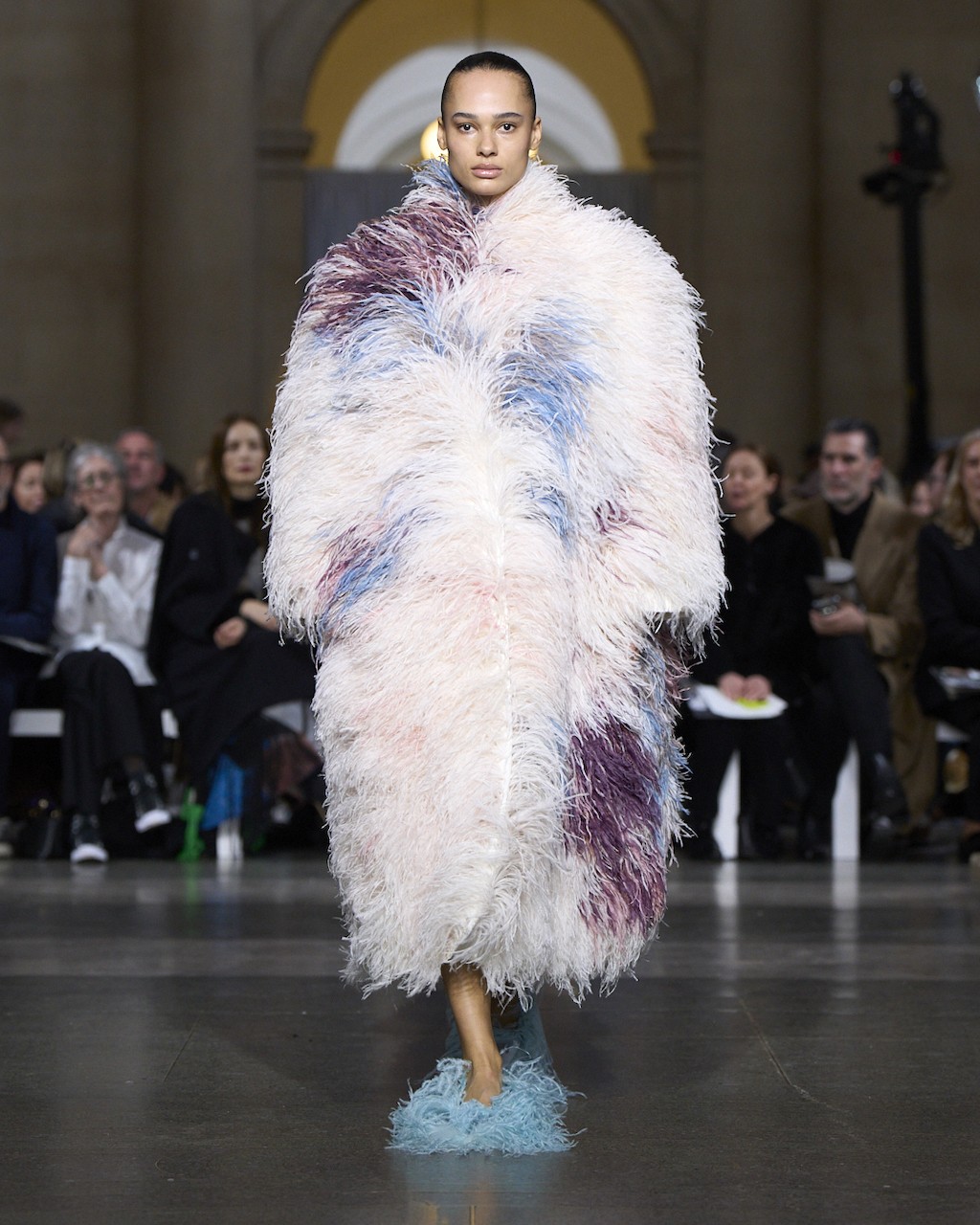
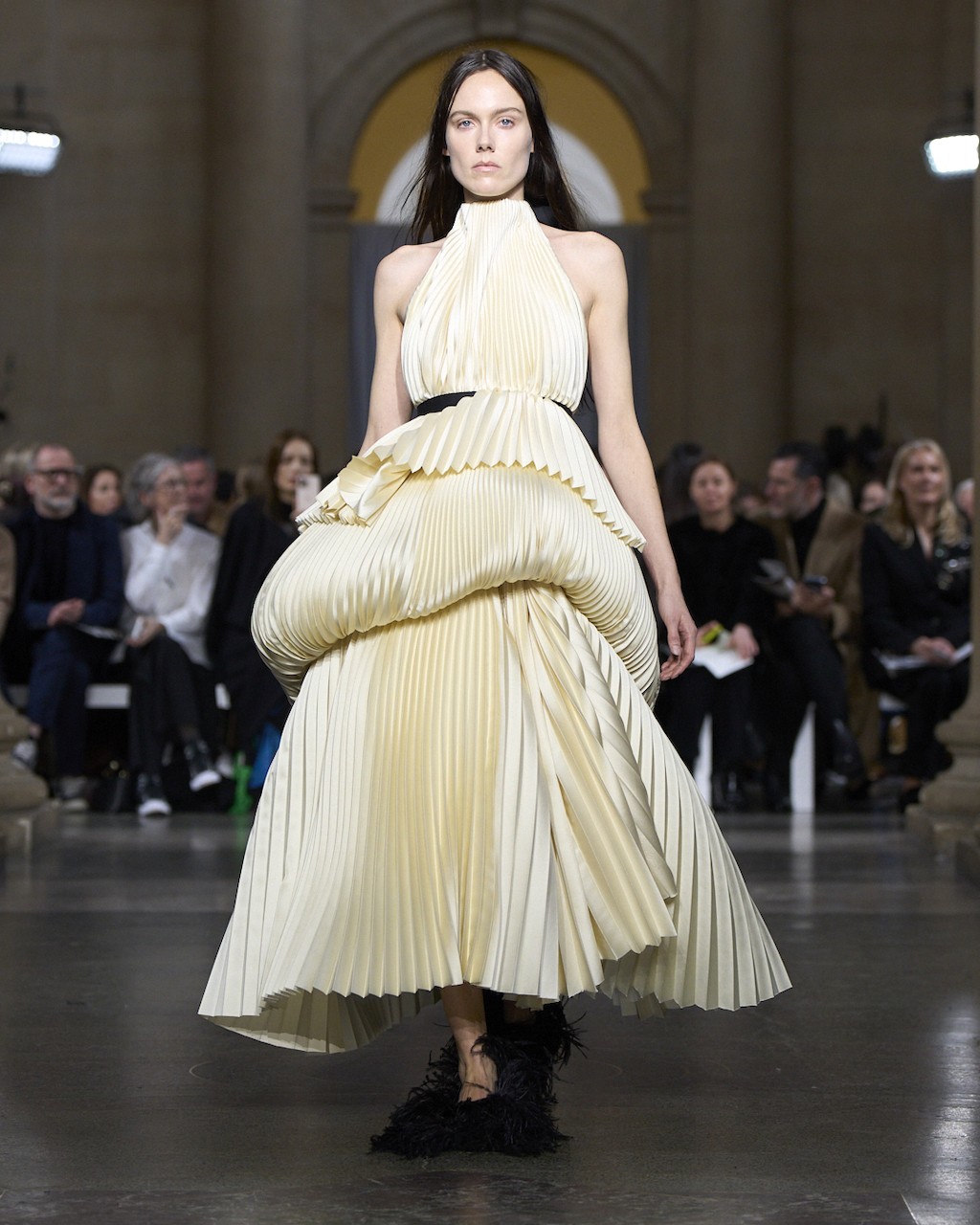
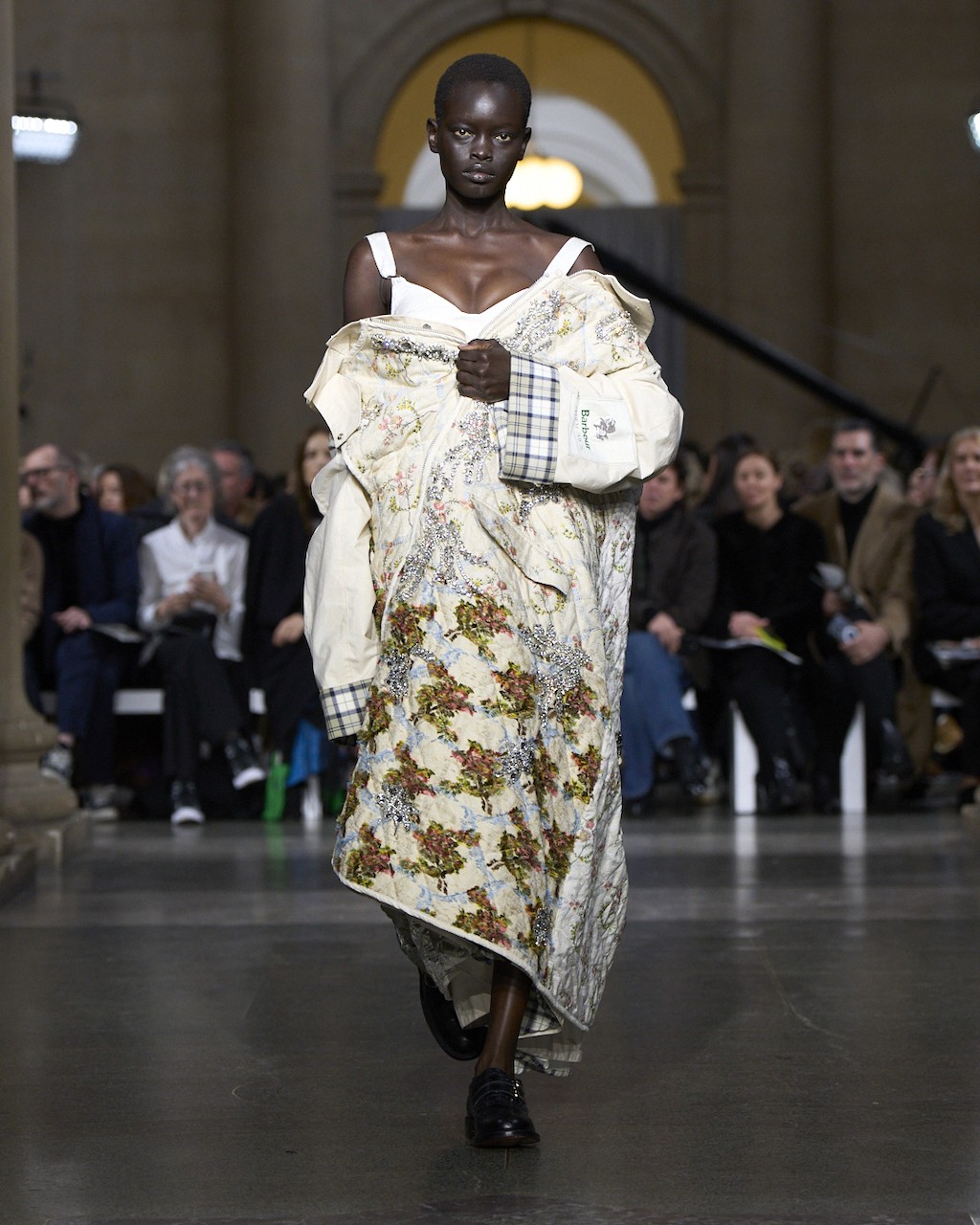
Entitled The Imaginary Conversation, the narrative-driven designer continues to root his practice in a romanticism drawn from art and literature. Marking two decades of his independent house, the Autumn/Winter 26 collection reads as a living archive—past muses resurfacing, silhouettes revisited, and signatures reshaped with new intention.
-
- Courtesy of Erdem
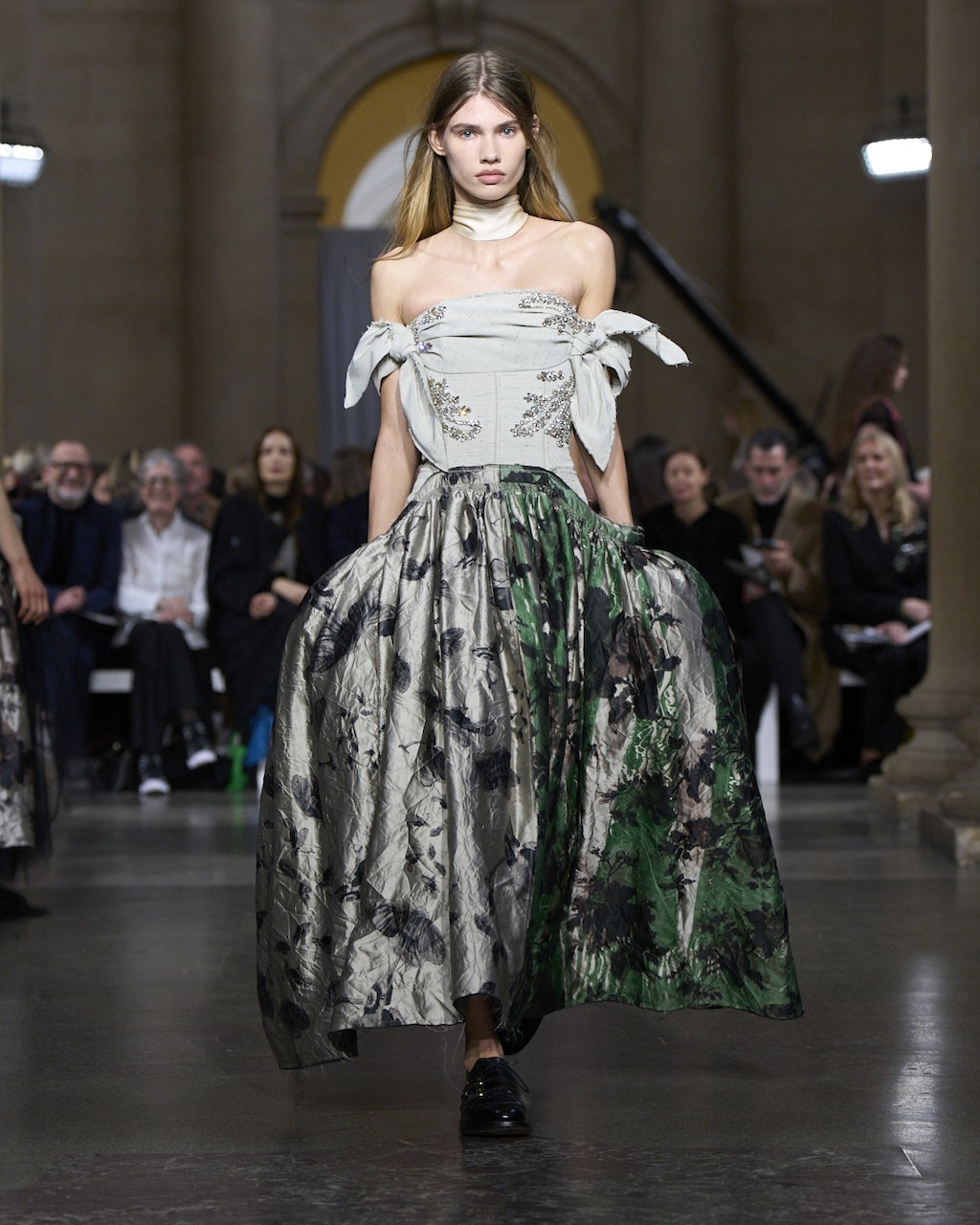
Rather than looking back sentimentally, he stages a dialogue between eras. Familiar gowns and coats return altered in cut, proportion, and fabrication; motifs are spliced, layered, and reworked as if lifted from memory and rewritten for the present. The result holds that signature Erdem tension—garments suspended between preservation and reinvention, characters caught mid-transformation.
-
- Courtesy of Erdem
There is something poetic in the collision of then and now: draped florals meeting sharper tailoring, archival bridal volume reimagined with renewed defiance. It feels less like a retrospective and more like evolution in motion—a wardrobe unpacked, reconsidered, and composed again. Twenty years on, the conversation doesn’t conclude; it deepens.
PAULINE DUJANCOURT
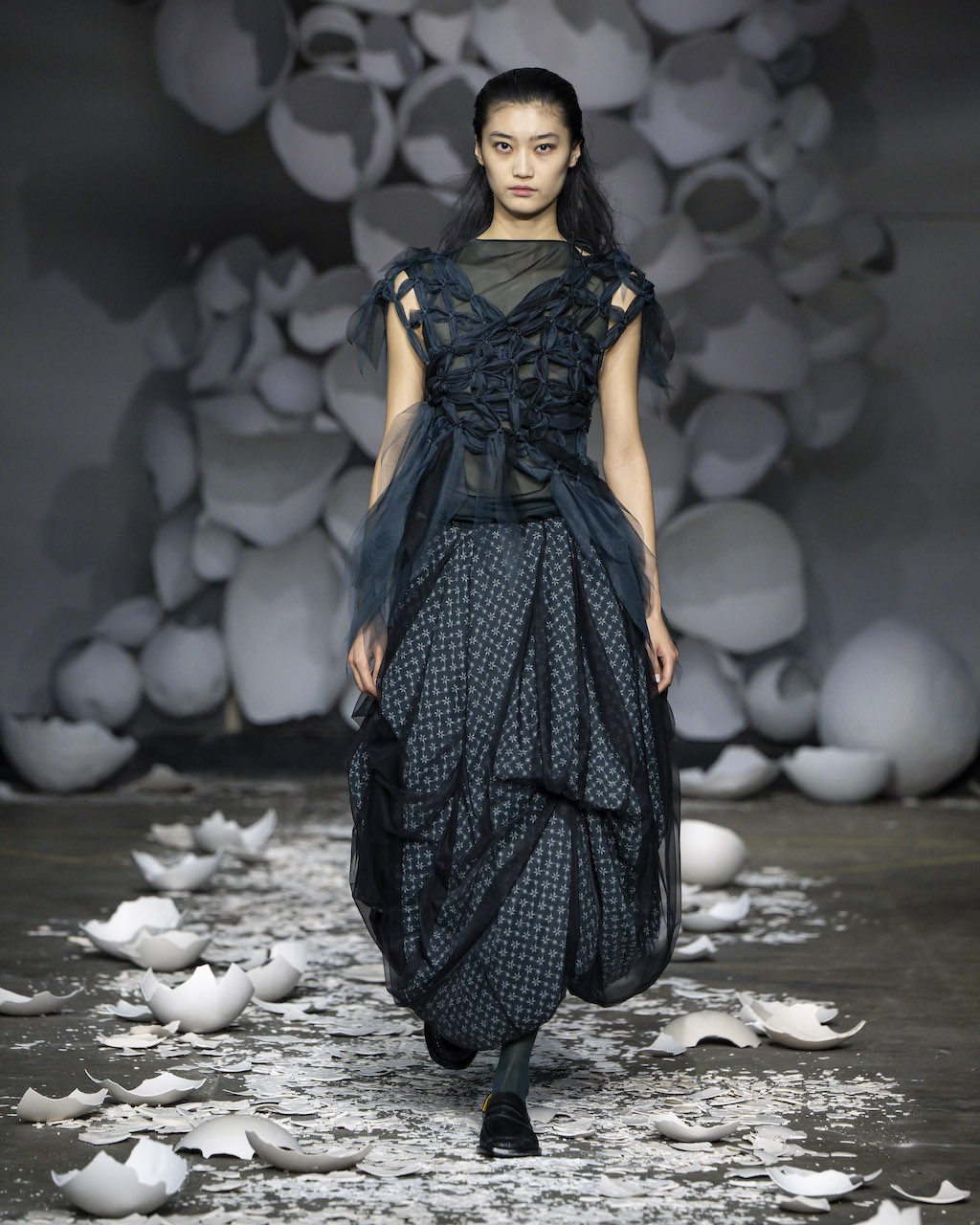
The Paris-born designer drew inspiration from Mona Chollet’s In Defence of Witches: The Legacy of the Witch Hunts and Why Women Are Still on Trial, translating its themes of female solidarity and persecution into a collection rooted in craft and quiet rebellion.
-
- Courtesy of Pauline Dujancourt
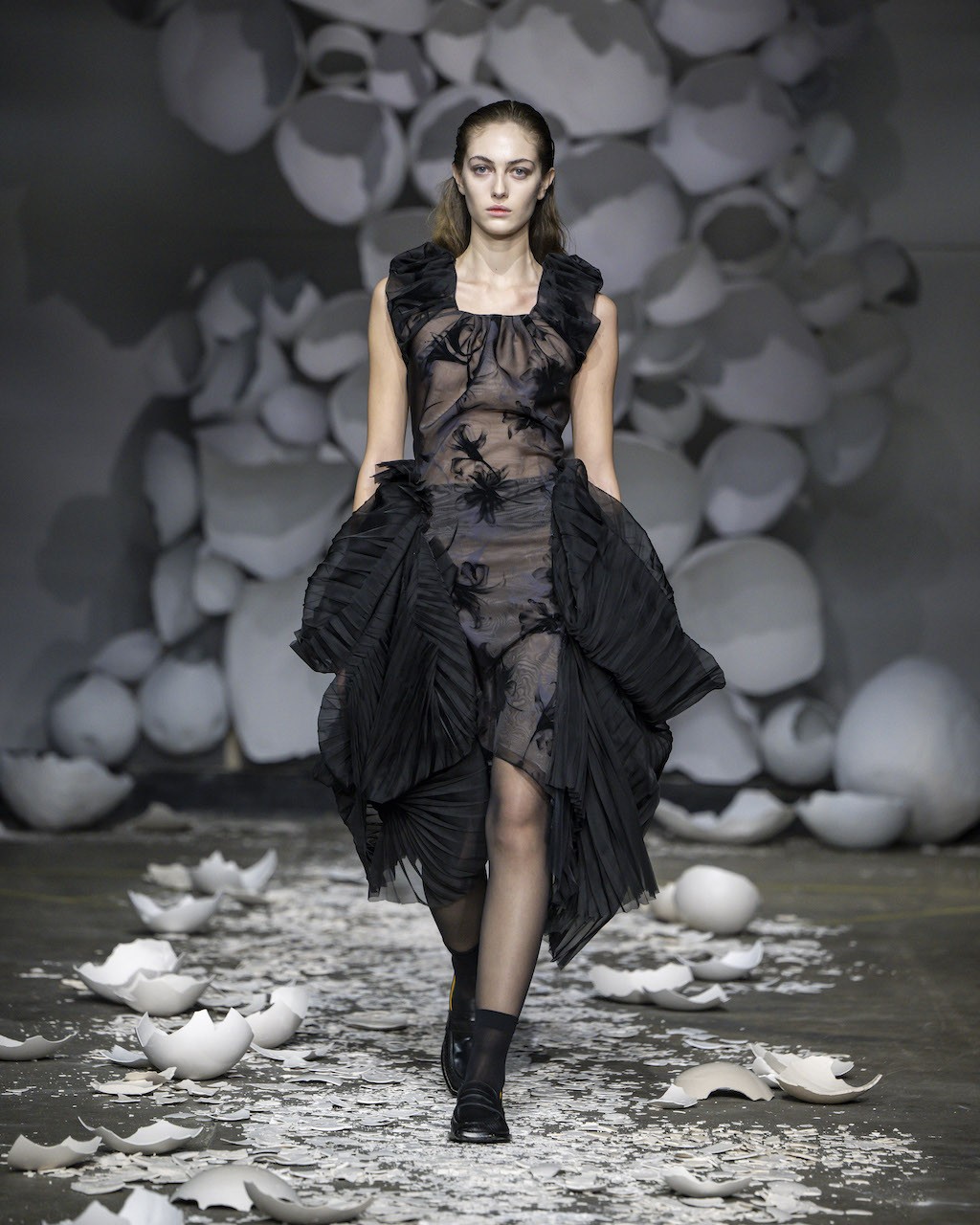
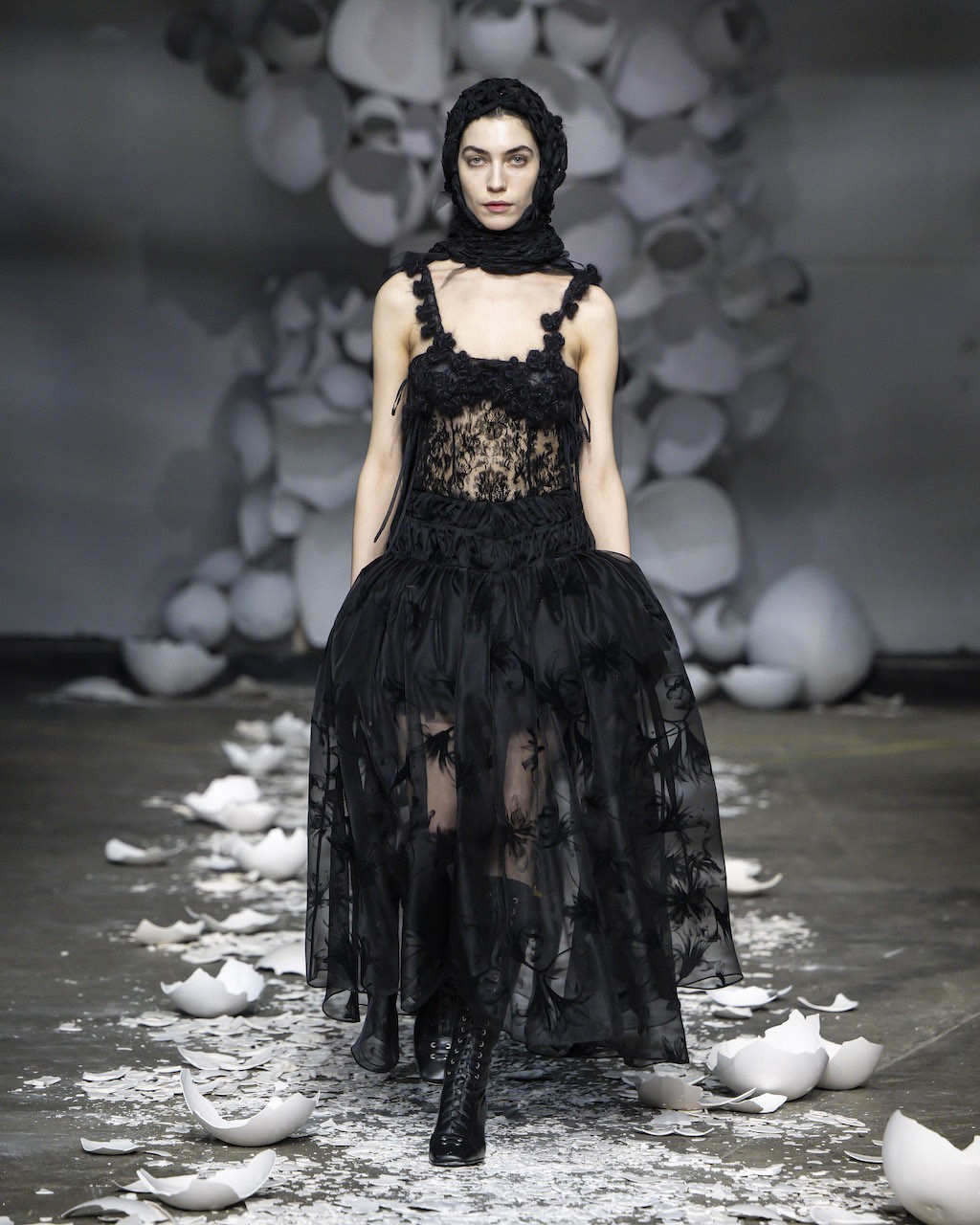
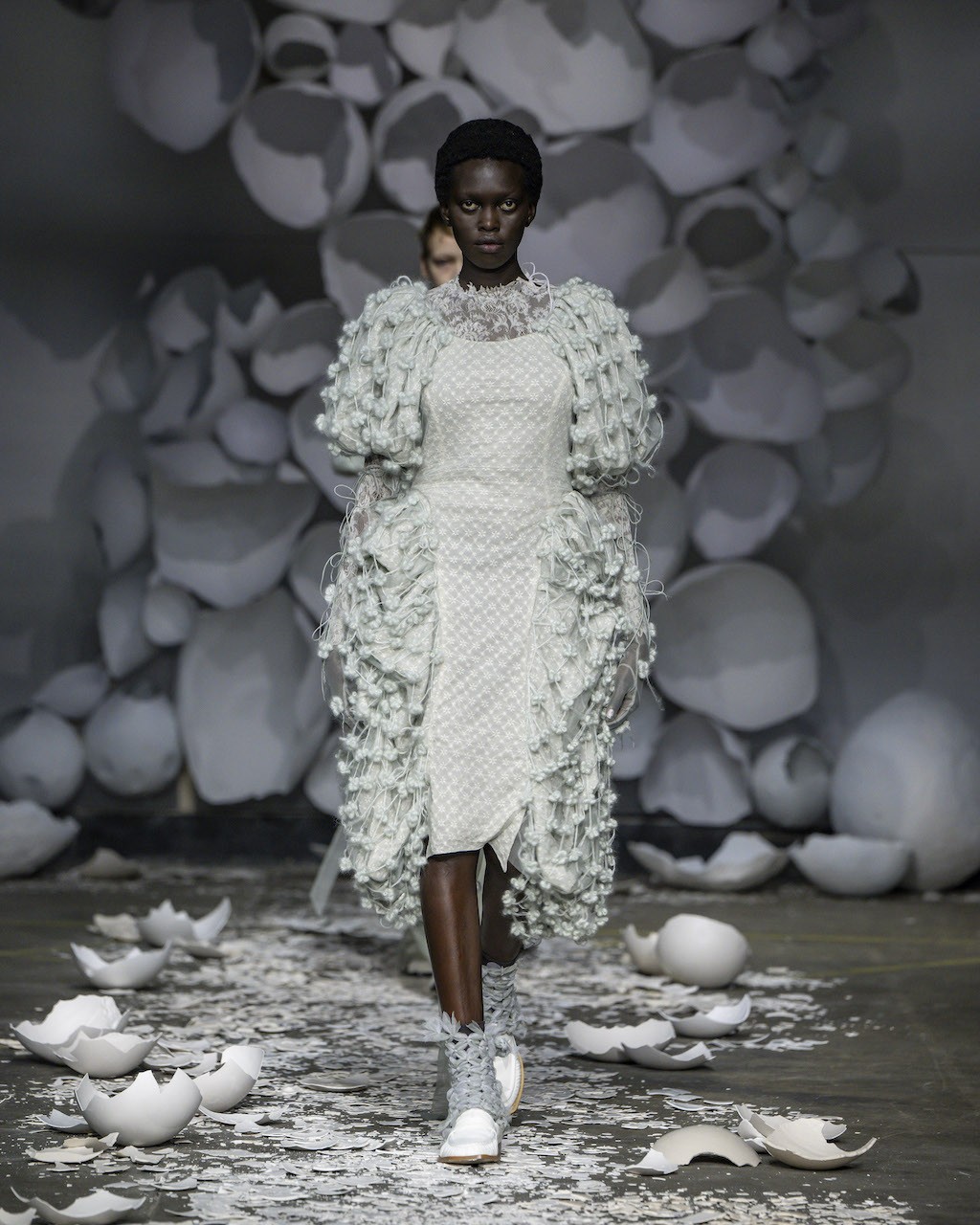
Only her third collection, Dujancourt continues to refine a distinct visual language defined by intricate knitwear and emotional storytelling. Models with softly backcombed hair walked across a runway scattered with cracked eggshells—a poetic nod to avian symbolism and the fragility inherent to womanhood.
-
- Courtesy of Pauline Dujancourt
The show opened in darkness, with pleated silk skirts, lace dresses with knitted bell sleeves, and layered crochet establishing a subdued mood before gradually softening into airy knits in duck egg blue, green, and lavender. Standout tulle macramé pieces, constructed from more than 80 woven fabric strips, demonstrated extraordinary craftsmanship while maintaining a featherlight presence.
Handwoven by Dujancourt’s close-knit team of female artisans, the collection echoed the communal spirit described in Chollet’s writing. In reimagining the figure of the witch not as an outsider but as a maker among women, Dujancourt delivered a meditation on craftsmanship, reclamation, and collective strength.
PHOEBE ENGLISH
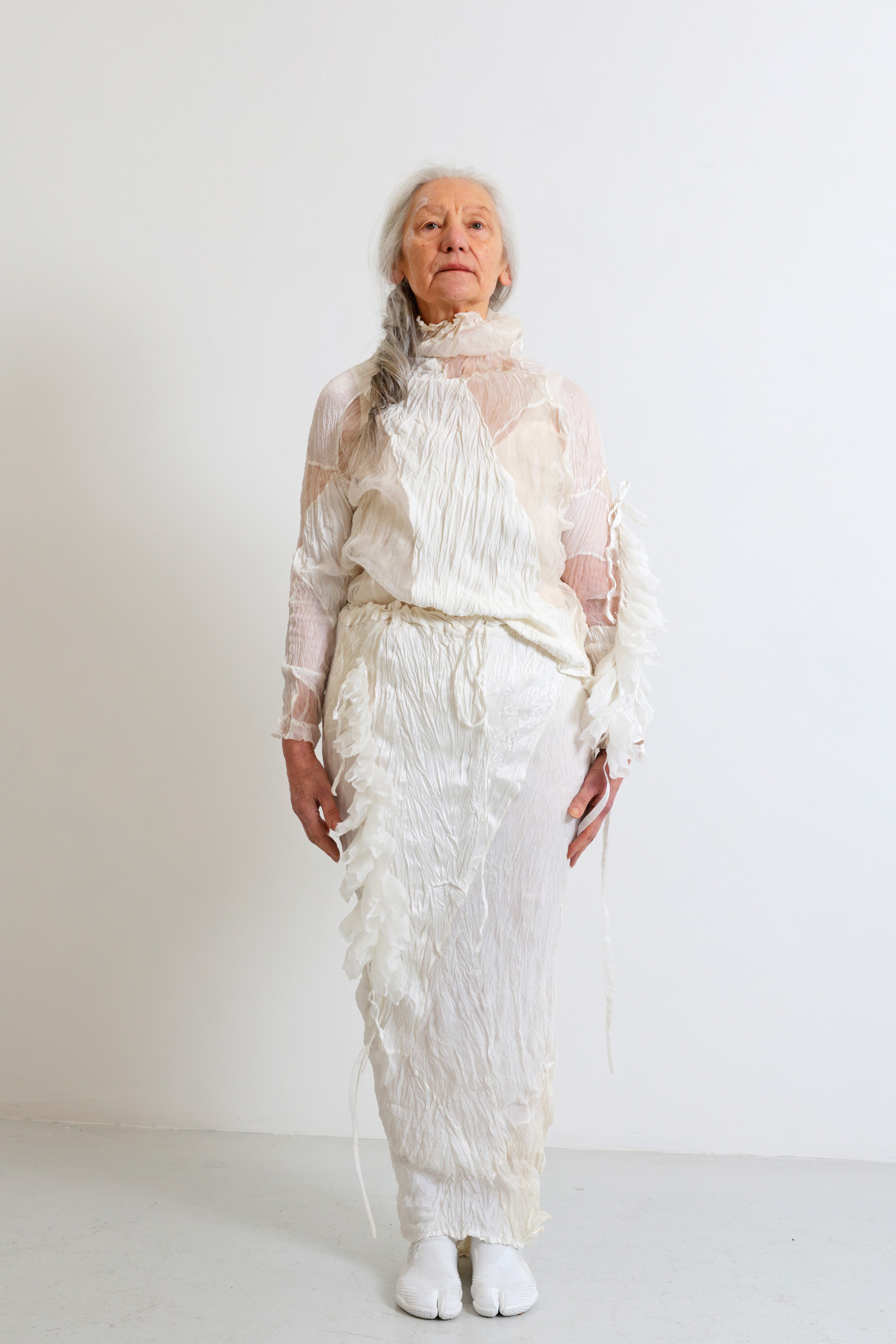
Marking her return to the Fall schedule, the London designer presented her most ornamented collection to date, rooted in the restorative power of the natural world. Structured as a 12-look narrative representing the months of the year, each silhouette drew from a flower or plant that sustained the designer personally—snowdrops, nettles, and dandelions appearing as sculptural adornments that mirrored their natural forms. For English, decoration became protection: an exploration of dressing the body as a means of care rather than embellishment.
-
- Courtesy of Phoebe English
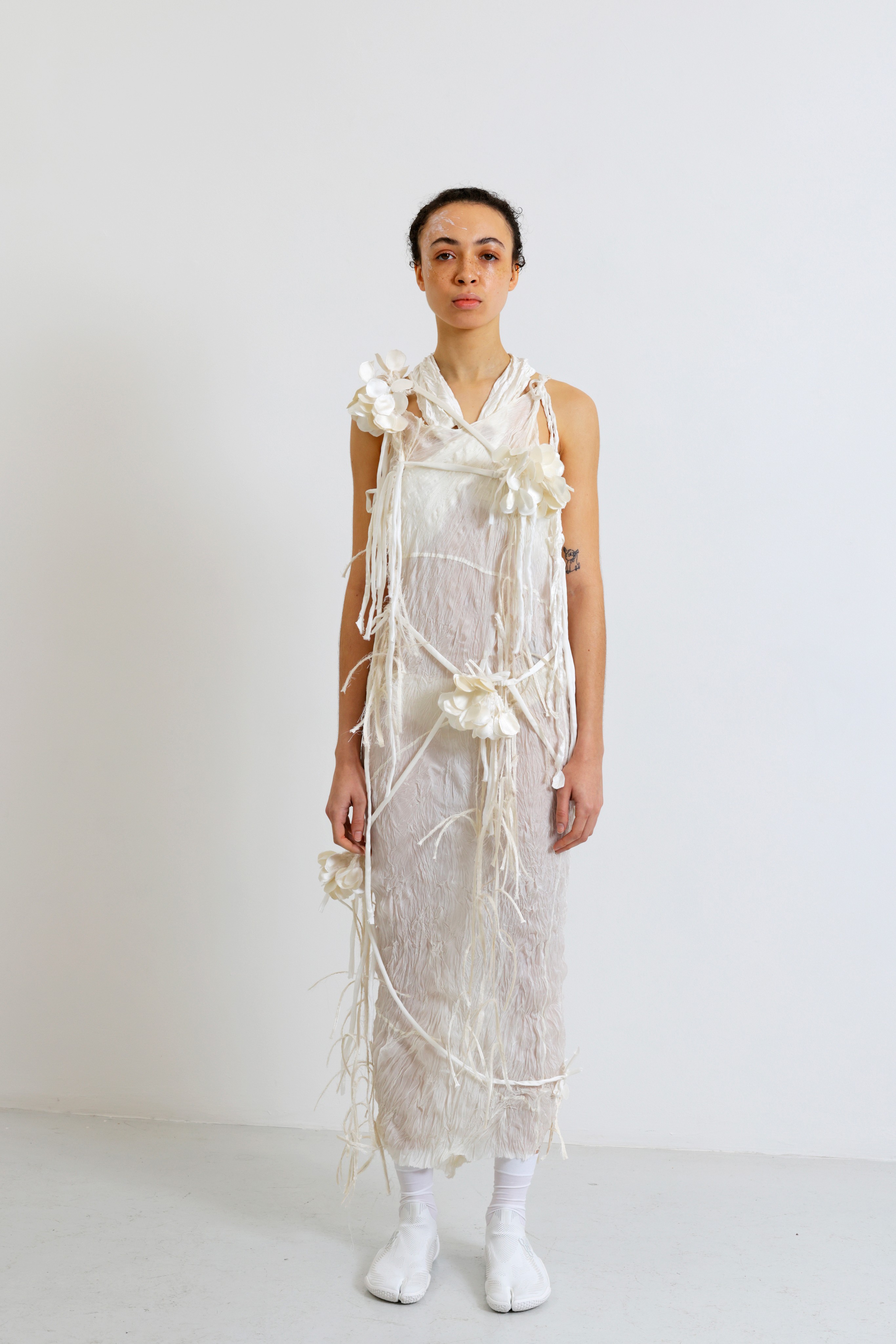
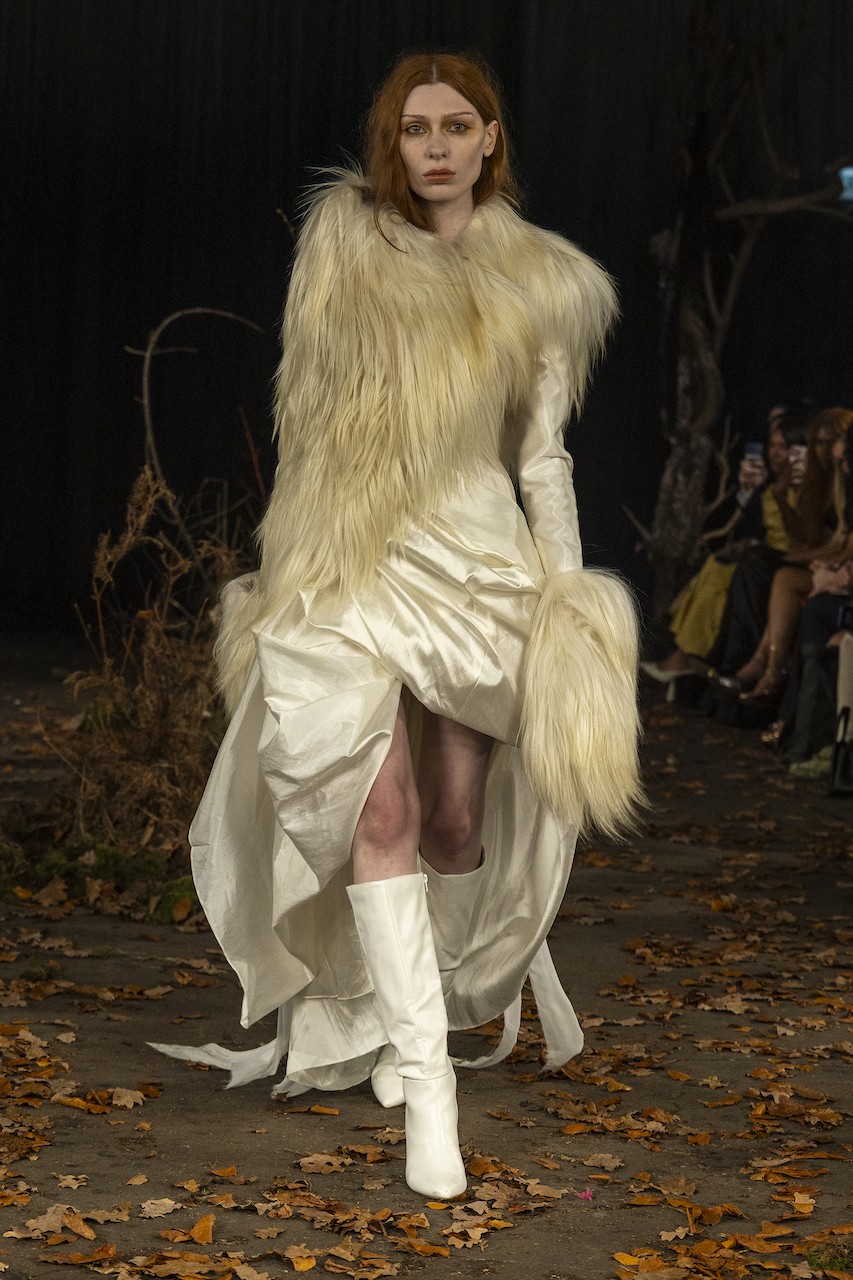
Rendered entirely in white using reclaimed bridalwear offcuts, the collection balanced overt symbolism with visual restraint. Asymmetry, trailing ribbons, and delicate gathering techniques introduced movement and softness, each garment shaped through slow processes of twisting, crinkling, and hand manipulation.
AGRO STUDIO
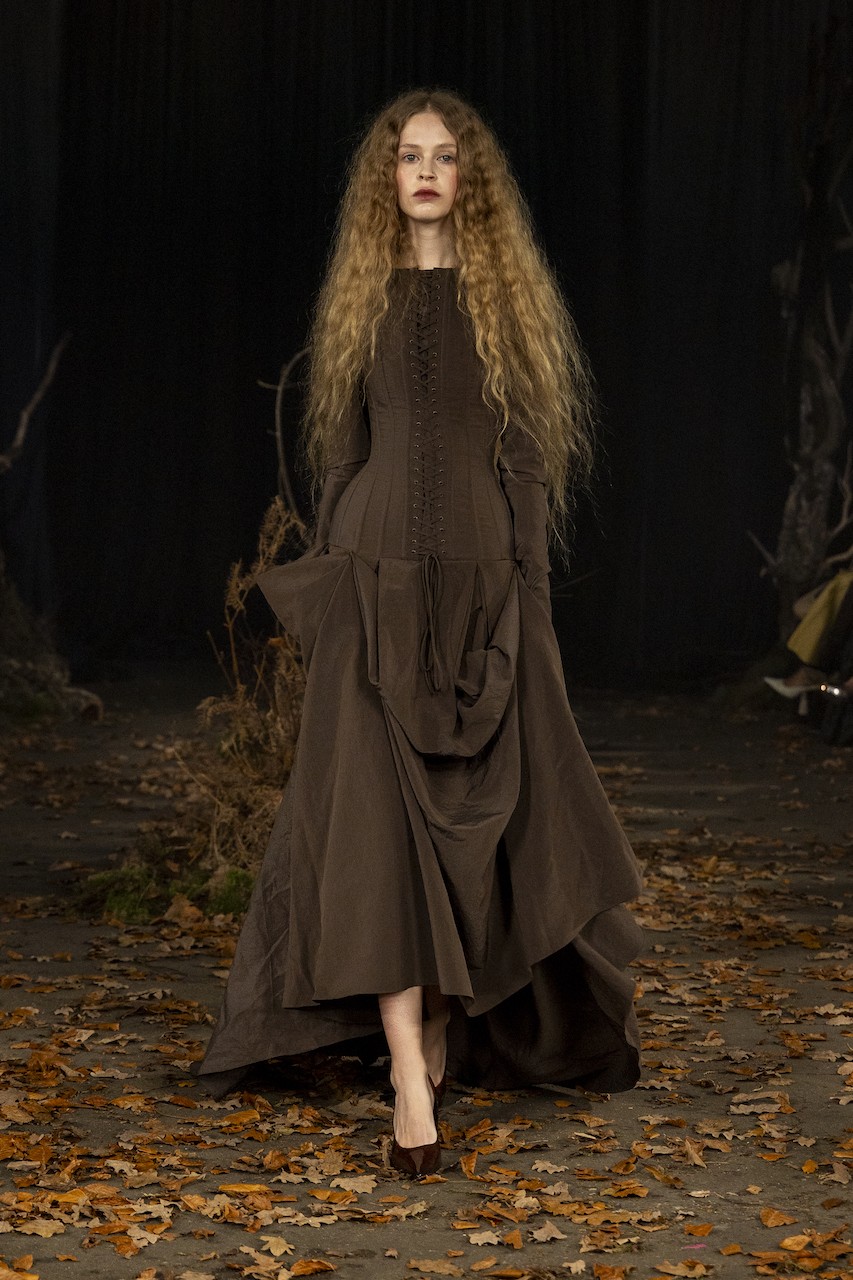
Designers George Oxby and Angus Cockram presented The Wanderer, inspired by archetypal figures caught in an endless journey, both literal and psychological.
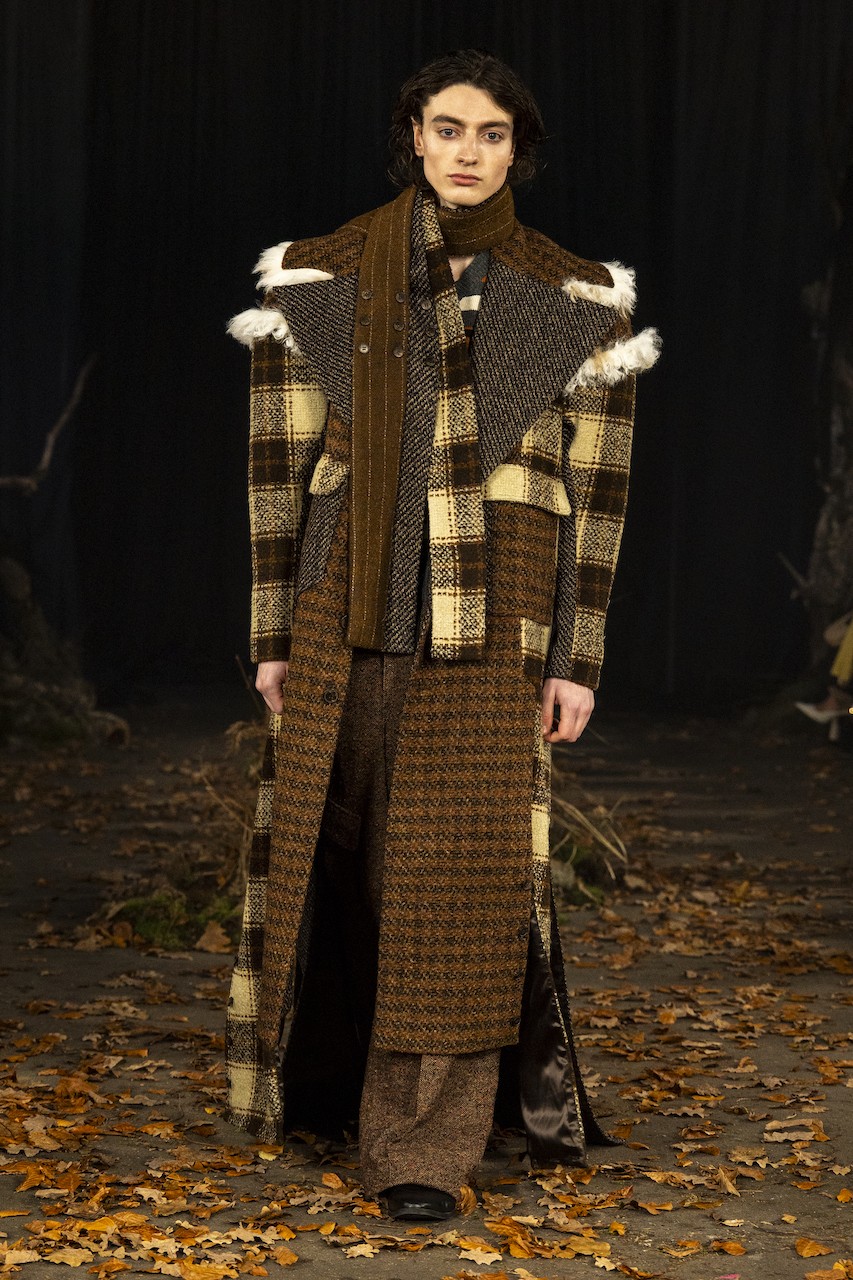
Irreverent yet controlled, the collection showcased the brand’s instinctive world-building. Icelandic sheepskin, leather aviator layers, and glossy, armor-like metallics merged to create a wardrobe that felt grounded in the present yet unmistakably futuristic—as if designed to accompany its wearer wherever the road leads.
-
- Courtesy of Agro Studio
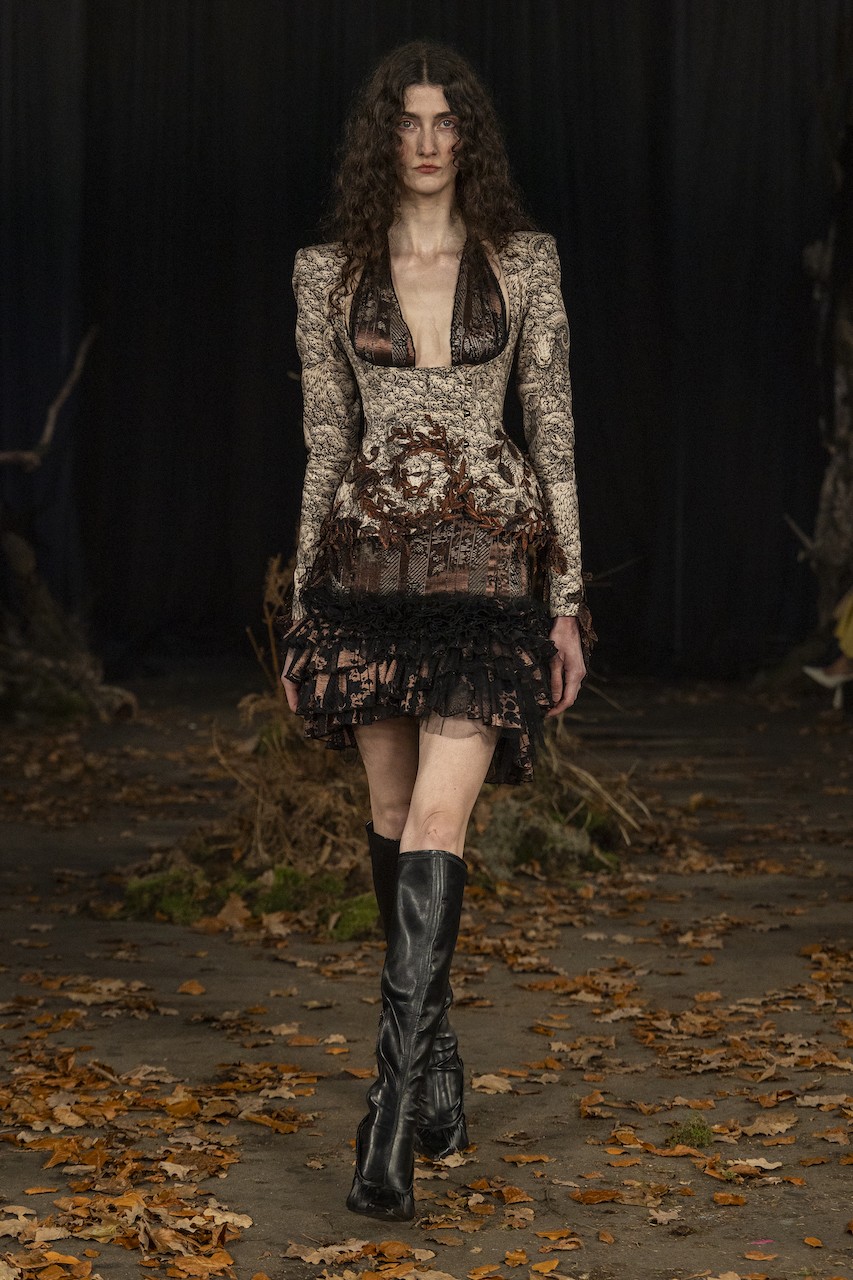
Natural hides and heritage fabrics were set against contemporary textiles developed in-house from tinsel and crystal, while denim and leather embellished with ram and bull motifs reinterpreted Americana through a folkloric lens. Presented within a mildly chaotic landscape of leaves and tree trunks, the show reinforced the label’s ability to treat design as an act of construction, storytelling, and character formation.
-
- Courtesy of Agro Studio
With traditional dressmaking disciplines and precise tailoring underpinning each silhouette, AGRO Studio continues to navigate the line between couture sensibility and contemporary experimentation with ease—and with an unmistakably British point of view.
DI PETSA
Founder Dimitra Petsa turned to Medusa, the gorgon nymph transformed into a monster, as her central muse. Refusing history’s familiar (and patriarchal) retelling, Petsa instead reframed the myth through agency and eroticism, exploring a woman who ultimately transforms her curse into power.
-
- Courtesy of Di Petsa
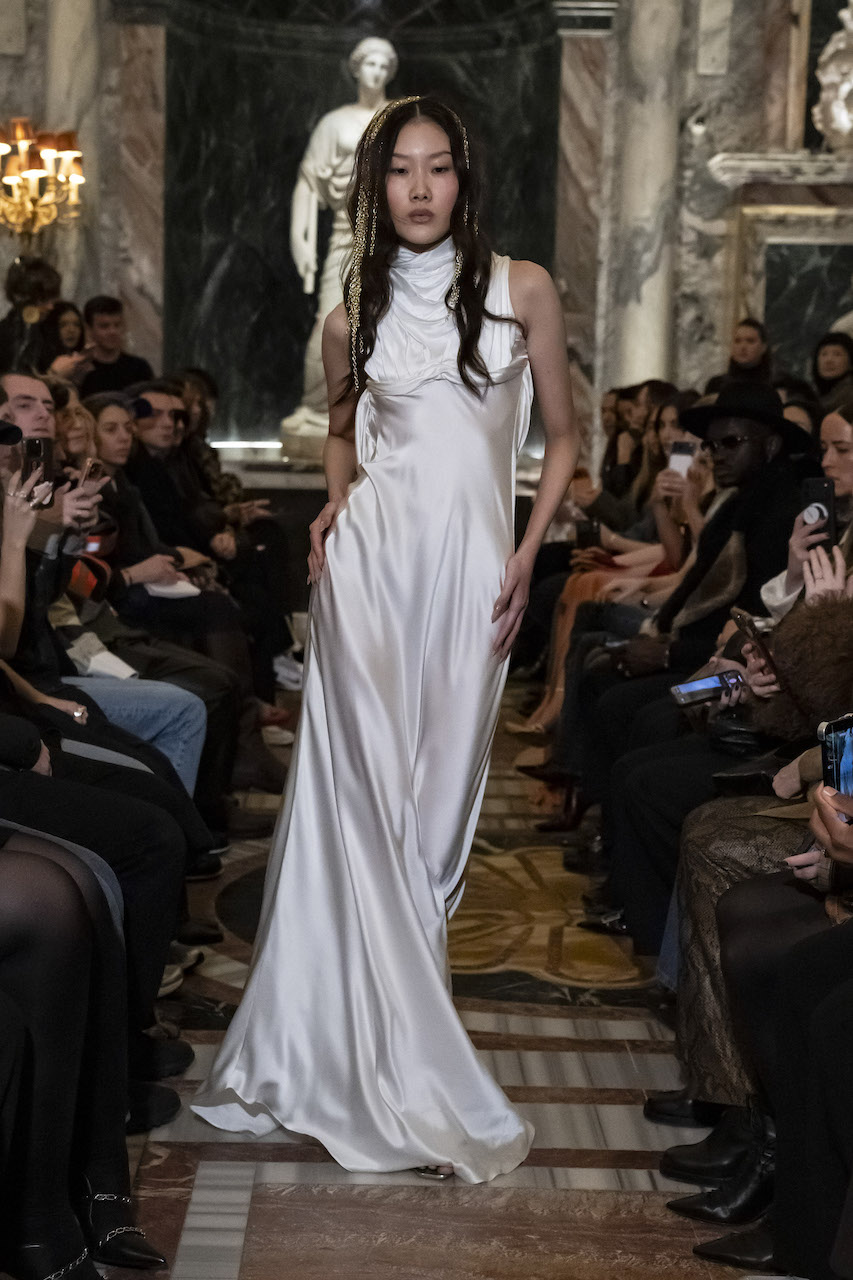
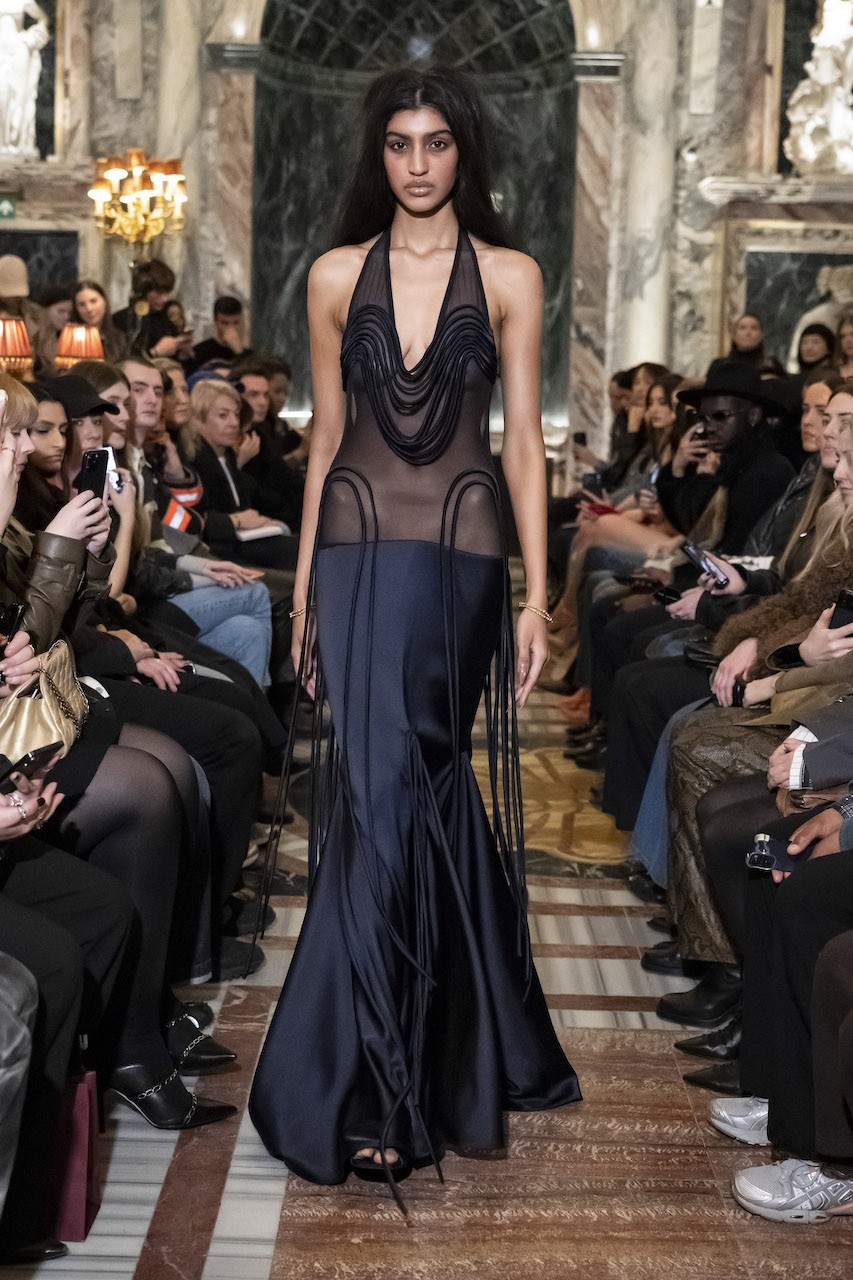
Throughout the collection, the brand introduced new draping techniques reminiscent of snakeskin mid-shed, focusing not on the end of transformation but the vulnerability of becoming itself. Di Petsa’s signature Wetlook—worn by the likes of Gigi Hadid—evolved beyond previous iterations into prints that morph from serpent scales into nude illusion, revealing a half-woman, half-snake hybrid.
The tension between concealment and revelation appeared in bodysuits carved with strategic cut-outs tracing the body’s contours. Low-slung leather waistlines dripped with gold, sea-inspired charms, and decorative gussets, while the hips remained a “center of sacral, divine transformation,” positioned as the anatomical anchor of the collection.
Appropriately staged in Apollo’s Muse bar at Damien Hirst–designed Bacchanalia, models moved—almost slithered—among sculptures imagined as Medusa’s past lovers. Unfolding like a dream remembered upon waking, the collection became a powerful reclamation narrative: a woman reauthoring her own myth.